


A Complete Guide to Different Types of GRP Handrail Systems
GRP handrail systems are used in many industries. You can find them in railways, offshore plants, and water facilities. The fiberglass handrail market was worth $2.1 billion in 2023. Experts think it will grow by 7.8% each year until 2032. GRP is strong and lasts a long time. It does not rust or break down easily. These handrails need less care than steel or wood. They also save more money over time. Picking good grp handrail gives you the best value.
Key Takeaways
GRP handrails are strong and light. They do not rust. This makes them good for many places.
These handrails need very little care. This saves time and money. Steel and wood need more work.
GRP handrails can last 25 to 50 years. You will not need to replace them often.
The modular design helps you install them fast. It is easy to put them together. They work well for factories and stores.
GRP handrails do not carry electricity. This keeps people safe near electrical machines.
You can get GRP handrails in many colors and styles. They can match any look, modern or classic.
GRP handrails resist chemicals very well. They are great for tough places like factories and by the sea.
Picking GRP handrails saves money over time. They last long and need little care.
What Is GRP
GRP Definition
GRP means glass-reinforced plastic. It is made by mixing glass fibers with plastic resin. The glass fibers make GRP strong and stiff. The resin keeps the fibers together and protects them. GRP is a composite material. Many industries use GRP because it is tough and lasts long.
Making GRP takes a few steps:
First, resin is mixed with a catalyst.
Next, glass fibers are cut and mixed with resin.
Then, the mix goes into a mold and is heated and pressed.
There are different ways to shape GRP. The hand lay-up method uses hands to place fibers and brush on resin. The compression molding method uses a metal mold and lots of pressure.
GRP Properties
GRP has many good features for handrails. The table below lists some important ones:
Property | Description |
|---|---|
High Chemical Resistance | Handles acids, alkalis, salts, and other chemicals. |
Superior Mechanical Strength | Can hold heavy weight but is still light. |
Easy Installation | Simple to put together because it is light and modular. |
Design Flexibility | Comes in many shapes and colors for different uses. |
Corrosion Resistance | Does not rust or corrode, even in tough places. |
Corrosion Resistance
GRP does not rust or corrode. This makes it great for places with water, chemicals, or salt. Metal can break down in harsh places, but GRP does not. This helps GRP handrails last longer and need less fixing.
Strength
Glass fibers give GRP a lot of strength. GRP handrails can hold heavy things without bending or snapping. This makes them safe for public places, factories, and busy spots.
Lightweight
GRP is lighter than many other materials. Workers can carry and install GRP handrails easily. Being light also lowers shipping costs and makes building faster.
Why Use GRP for Railings
GRP has many benefits over old materials. It is strong and does not rust. GRP can last 50 to 100 years. Steel or cast iron may only last 20 to 30 years. This means you replace GRP less often and save money. GRP also helps the environment by making less waste. Many industries pick GRP for handrails because it is strong, light, and lasts a long time.
Types of GRP Handrail Systems
Modular Round Section
Features
Modular round section grp handrail systems use round shapes for railings. These systems have grp tubes and fittings that connect easily. The modular design helps workers build fast and change layouts. Each part fits together without welding, so installation is simple. The base rail holds up the whole structure.
Tip: Modular round section railings work well for projects needing quick setup and easy changes.
A table compares features of different materials:
Feature | GRP Handrail | Steel Handrail | Aluminum Handrail |
|---|---|---|---|
Corrosion Resistance | Excellent | Prone to rust | Moderate |
Maintenance | Low | High | Moderate |
Weight | Lightweight | Heavy | Lightweight |
Installation | Easy modular assembly | Welding required | Fasteners used |
Electrical Conductivity | Non-conductive | Conductive | Conductive |
Lifespan | 20+ years | 10-15 years | 15-20 years |
Benefits
Modular round section grp handrail systems have many good points. They do not rust, so they last longer in tough places. The light weight makes moving and installing easier. Non-conductive parts help keep people safe near electricity. Low maintenance means you spend less time and money fixing them. These handrails work well for many railing styles.
Applications
Modular round section grp handrail systems fit many uses. They are good for water plants, factories, and walkways. Their flexible design works in both industrial and commercial places. These railings are also used in schools and hospitals.
Profiled Systems
Features
Profiled grp handrail systems use shaped pieces for more strength and safety. These systems have pre-made parts that make building faster. The materials do not spark, rust, or conduct electricity. Profiled railings meet strict safety rules like BS EN 13706. They come in bright colors such as yellow and grey, so you do not need to paint them.
A table shows important features:
Feature | Description |
|---|---|
Ease of Installation | Pre-assembled components for quick installation |
Safety | Non-sparking, non-corrosive, non-conductive |
Compliance | Meets BS EN 13706 E23 grade performance |
Colors | High-visibility yellow or grey |
Strength | Lightweight fibreglass sections with high strength |
Load Capacity | Withstands minimum live load of 200lb concentrated load |
Testing | Load/deflection tests for reliability |
Dimensions | Various sizes for handrail components |
Note: Profiled grp handrail systems use strong resins and lots of E-glass for extra toughness.
Benefits
Profiled grp handrail systems give great safety. The non-conductive and non-sparking materials protect people. Bright colors help keep busy areas safe. These railings need little care and resist fire, meeting UL94 V-0 and ASTM rules. The modular design lets workers build fast and change styles for different places.
Applications
Profiled grp handrail systems work in many places. You see them in factories, public buildings, and businesses. Their strong and safe design makes them good for stairs, platforms, and walkways. These systems also do well in marine areas because they do not rust.
All Round Tubes
Features
All round tubes grp handrail systems use round grp tubes for a smooth feel and modern look. The parts come ready to put together. Bolt fastening and concrete pouring keep the railings steady. The modular design helps workers build quickly and change things easily.
A table compares how to install and how long they last:
Aspect | GRP Handrail Systems | Traditional Materials (Steel) |
|---|---|---|
Installation Process | Pre-cut, bolt fastening, concrete pouring | Welding, heavy machinery |
Installation Speed | Faster, modular, lightweight | Slower, heavy, complex assembly |
Support and Stability | Enhanced with specific support points | Depends on welds and joints |
Fast and easy installation fits many jobs.
Prefabricated modular grp posts help workers build faster.
Grp profiles are easier to cut and drill than steel.
Benefits
All round tubes grp handrail systems last long and need little care. They do not rust and only need simple cleaning. The light weight lowers labor and shipping costs. These railings give strong support and stay steady for busy places.
Applications
All round tubes grp handrail systems work in many places. They are good for factories, warehouses, and public spots. Their smooth grip and modern look fit offices and schools. These railings are also used outside and near water because they resist weather and chemicals.
All Square Tubes
Features
All square tubes grp handrail systems use square grp profiles for railings and fencing. These systems look modern and give strong support. The square shape makes the handrail steady and easy to hold. Workers can put these grp rails together fast because no welding is needed. Cleaning is easy, and the surface does not stain. There are many sizes and colors, so designers can match any place.
The table below shows important features and uses:
Features | Applications |
|---|---|
Light but strong | Stair guardrail |
Great anti-corrosion | Pool guardrail |
Tough and long-lasting | Walkway guardrail |
Quick to install | FRP/GRP fencing |
Easy to clean | |
Saves money | |
Many sizes and colors |
Tip: Square tubes grp handrails are good for places that need strong barriers that last a long time.
Benefits
All square tubes grp handrail systems have many good points. The grp material does not rust, so the rails last longer near water or chemicals. The handrails stay strong after many years. They are light, so moving and installing is easier. The tough build helps the rails handle heavy loads and hits. Cleaning is simple, so maintenance teams save time. These grp systems are a good deal because they need fewer fixes and replacements.
Applications
Many industries use all square tubes grp handrail systems. Workers put them on stairs in factories and schools. Pool areas use these grp rails because they do not rust in wet places. Walkways and bridges like the strong design and easy cleaning. Fencing projects pick grp square tubes for their strength and simple setup. These handrails work inside and outside, so they are a good choice for safety and style.
Channel Top Handrails
Features
Channel top handrails use grp profiles with a channel-shaped top for better grip and support. These grp systems are strong and last a long time. They help keep people safe at work and in public places. The grp material does not break or rust, so the rails last in tough spots. Workers find these handrails easy to put in because they are light. The surface does not carry electricity, so it protects people near wires. UV resistance keeps the rails looking good after years in the sun.
FRP is strong and lasts long.
Does not break or rust.
Light and simple to install.
Does not carry electricity and resists UV.
Note: Channel top grp handrails meet OSHA strength rules and pass British Standard EN ISO 14122-3:2001 tests. These rails can take a heavy bag hitting them with a force of 216.5 ft-lb (293.6 N-m).
Benefits
Channel top grp handrail systems keep workers and visitors safe. The grp build is strong and does not carry electricity, so it helps stop accidents. These handrails meet strict safety rules, so companies can trust them. The rails stand up to weather, chemicals, and sunlight, so they last and need little care. Easy setup saves time and money. The surface does not carry electricity, so it protects people near wires.
Applications
Channel top grp handrails are used in many places. Factories use them to keep walkways and platforms safe. Public projects use these grp rails for stairs and ramps. Businesses pick channel top handrails for their modern look and strong support. Marine places like the rails because they do not rust and resist sun. Homes use these grp systems for balconies and garden fences where safety and style are important.
GRP Handrail Benefits
Durability
GRP handrail systems are known for being tough. Many industries pick glass-reinforced plastic for railings. It does not get damaged by chemicals or saltwater. GRP tubes and fittings do not rust or wear out. They stay strong in chemical plants and marine places. The base rail and other parts keep their strength for years. GRP uses isophthalic resin to fight corrosion in acid. This makes grp handrail good for wastewater plants and offshore platforms.
GRP stands up to chemicals, so it works in processing plants.
GRP does not rust or break down in saltwater or bad weather.
The anti-slip surface helps people stay safe in wet spots like stairs.
GRP handrails need no upkeep in places with chemicals and heat.
Offshore platforms, ports, and ships use GRP because it lasts.
GRP products last a long time and need few repairs. GRP handrails keep looking good after many years.
Cost-Effectiveness
GRP handrail systems save money over time. The first price may be higher, but you save later. GRP is light, so shipping costs are low. Workers can install grp handrails fast, which saves on labor. GRP lasts long, so you do not replace or fix it often.
Material | Maintenance Requirements | Replacement Costs |
|---|---|---|
GRP | Lower due to durability | |
Steel | High; frequent inspections and coatings | Higher due to corrosion |
Aluminum | Moderate; coatings and inspections | Moderate; can deteriorate |
GRP handrails need less care than steel or aluminum. The design of grp tubes and fittings makes them easy to put together. You need fewer tools to build them. This makes grp handrails a smart buy for companies that want to save money.
Low Maintenance
GRP handrail systems need very little care. Workers just do simple checks and cleaning. GRP does not stain or rust, so it stays strong and looks nice. GRP is light, so it is easy to move and clean. Steel needs painting and fixing, but grp handrails stay good with little work.
Cost Factor | GRP Handrails | Steel Handrails |
|---|---|---|
Initial Price | Higher | Lower |
Shipping | Lower (lightweight) | |
Installation | Easier, less labor | More labor, machines |
Maintenance | Very low | High |
Lifespan | Long, low upkeep | Long, needs upkeep |
Best for | Long-term savings | Low upfront budget |
GRP handrails help companies spend less on care and replacements. The style and design of grp products make them great for busy places where safety matters.
Longevity
GRP handrails last a very long time. Many industries use them because they work for decades. They stay strong in tough places like factories and outdoors. The material does not get damaged by weather, chemicals, or water. This means the handrail does not get weak or break. Metal handrails can rust, but grp does not. Wood can rot or bend, but grp keeps its shape.
GRP handrails are strong but not heavy. This helps them last longer. They do not break easily when hit or used a lot. That makes them good for busy places. GRP handrails need fewer repairs and replacements.
Most companies make grp handrails to meet strict rules. These rules include BS EN ISO14122-3:2001 and BS5395-1-2010. Following these rules keeps the handrails safe and strong for years. Some handrails have warranties for up to 25 years. This helps building owners feel safe.
Tip: Picking grp handrails can save money over time. They last long and need little care, so costs stay low.
The table below shows how long different materials last:
Material | Expected Lifespan | Common Issues |
|---|---|---|
GRP | 25-50 years | Minimal, easy to fix |
Steel | 10-20 years | Rust, corrosion |
Wood | 5-15 years | Rot, warping |
GRP handrails keep their color and finish for many years. They do not fade in the sun because of UV resistance. This makes them great for outdoor places. Their long life helps keep people safe and cuts down on waste. Companies and public areas do not need to replace them often.
Safety
Safety is very important for any railing system. GRP handrails have many features that help protect people. GRP does not carry electricity, so it is safe near wires. Workers and visitors are safe from shocks.
GRP handrails do not make sparks. This helps stop fires in places with flammable things. The material can take hits without breaking, so people do not get hurt if they fall. The surface often has anti-slip textures. These help stop slips and falls, even when wet or oily.
Many grp handrail systems meet safety rules like:
BS EN ISO14122-3:2001
BS5395-1-2010
These rules make sure the handrails give good support and protection. GRP handrails are strong and do not bend or break easily. They do not rust, so they stay safe in chemical plants or near the sea.
Note: GRP handrails stay safe and work well for years. Their design helps stop accidents and keeps places secure.
Comparing GRP Railings to Other Materials
GRP vs Steel
Steel is used for railings in many places. People know steel is strong. But GRP railings have more benefits. GRP does not rust in wet or salty areas. Steel can corrode outside or near chemicals. GRP is much lighter than steel. Workers can carry and install GRP easily. Steel needs welding and heavy tools to set up. GRP uses modular parts and simple tools. This saves time and money.
GRP does not conduct electricity. This makes it safer near electrical equipment. Steel can carry electricity, so extra safety is needed. GRP railings need less care. Steel railings need painting and rust checks often. Over the years, GRP keeps its strength and color. Steel may need repairs or new parts.
Tip: Use GRP railings where corrosion and safety matter most.
GRP vs Aluminum
Aluminum railings are lighter than steel. They do not rust fast. Still, GRP railings have clear advantages. GRP is 30–50% lighter than aluminum. This makes it easier to move and install. The table below shows how GRP and aluminum compare:
Criteria | GRP Railings | Aluminum Railings |
|---|---|---|
Weight | 30–50% lighter | Heavier |
Corrosion Resistance | Excellent | Moderate |
Maintenance | Minimal | Requires regular protection |
Cost Over Lifecycle | Lower | Higher |
GRP railings resist corrosion better than aluminum. This is true in tough places. Aluminum needs regular care to stop damage. GRP needs very little care. Over time, GRP costs less because it lasts longer. Aluminum may look nice at first. But it can lose strength and color after years.
GRP vs Wood
Wood railings look classic and feel nice. But they need lots of care to stay safe and pretty. GRP railings do not need painting or sealing. Wood needs regular work to stop rot and decay. GRP can be cleaned with soap and water. Wood needs more work to stay good.
The table below compares GRP and wood:
Material | Maintenance Requirements | Environmental Impact |
|---|---|---|
GRP | Low maintenance; does not require painting or sealing | Reduced impact during production; longer lifespan reduces raw material use |
Wood | Requires regular maintenance (staining, sealing) | Higher impact due to logging and preservation methods |
GRP railings last much longer than wood.
GRP production uses fewer raw materials over time.
Wood railings need more repairs and replacements.
GRP lasts longer, so fewer new railings are needed.
Making GRP causes less harm to nature than wood.
Note:GRP railings help the environment and save time on care.
Choosing GRP Handrails
Picking the right GRP handrail depends on where you use it. You should think about what features matter most. Good materials and smart design help you get your money’s worth. They also keep people safe for a long time.
Environment Assessment
Industrial
Industrial places can be tough on handrails. Workers need barriers that stand up to chemicals and water. GRP tubes and fittings do not rust or break down. GRP is light, so it is easy to install in big factories.
Commercial
Offices and malls want railings that look nice and last long. GRP handrails have a modern style. They fit many design themes. GRP stands up to sunlight and weather. You can use them inside or outside.
Residential
Homes need railings that are safe and look good. GRP handrails work for balconies, stairs, and garden paths. They are light, so workers can install them fast. The base rail keeps the handrail steady. Homeowners can pick from many colors and styles.
Tip: Always check the place before picking a handrail. The right material lasts longer and needs less care.
Environmental Factor | Description |
|---|---|
GRP is best for places with chemicals or water. It does not break down. | |
UV Resistance | GRP can handle lots of sunlight. It works well outside. |
Lightweight Nature | GRP is much lighter than steel. This makes it easy to use and install. |
Selection Criteria
Safety
Safety is the most important thing. GRP handrails do not carry electricity. This keeps people safe near wires. The non-slip surface and strong build help stop falls.
Load Capacity
Handrails must hold weight and stand up to daily use. GRP handrails use strong materials and a sturdy base rail. Always check the load rating before you buy.
Aesthetics
Railings should look good and work well. GRP handrails come in many colors and finishes. Their design fits modern or classic styles. They work for any project.
Pick materials that last and are easy to install.
Think about the place and if it has harsh weather or chemicals.
Check if you can install the handrail yourself or need help. This can save money.
Installation & Maintenance
Assembly
Putting the handrail together the right way keeps it safe. Workers should get the site ready and anchor the handrail well. Using the right tools helps. Ask experts for help if the job is hard.
Upkeep
GRP handrails need little care. Clean them often and check for loose parts. Owners should make a schedule for checks. This stops big problems later.
Standards Compliance
Handrails must meet safety rules for public and private places. GRP handrails pass strict tests for strength and durability. Following these rules keeps everyone safe and saves money.
Installation Practices | Maintenance Schedules |
|---|---|
Get the site ready | Clean and check for loose parts often |
Anchor the handrail well | Walk through after installing to check all fasteners |
Work with engineers if needed | Tell owners how often to check and clean |
Be careful on waterproofed roofs and balconies | Check often to stop big repairs that can cause problems |
Note: Pick good materials and follow best steps when installing and caring for your GRP handrail. This helps it last longer and work better.
Applications of GRP Handrails
Industrial Facilities
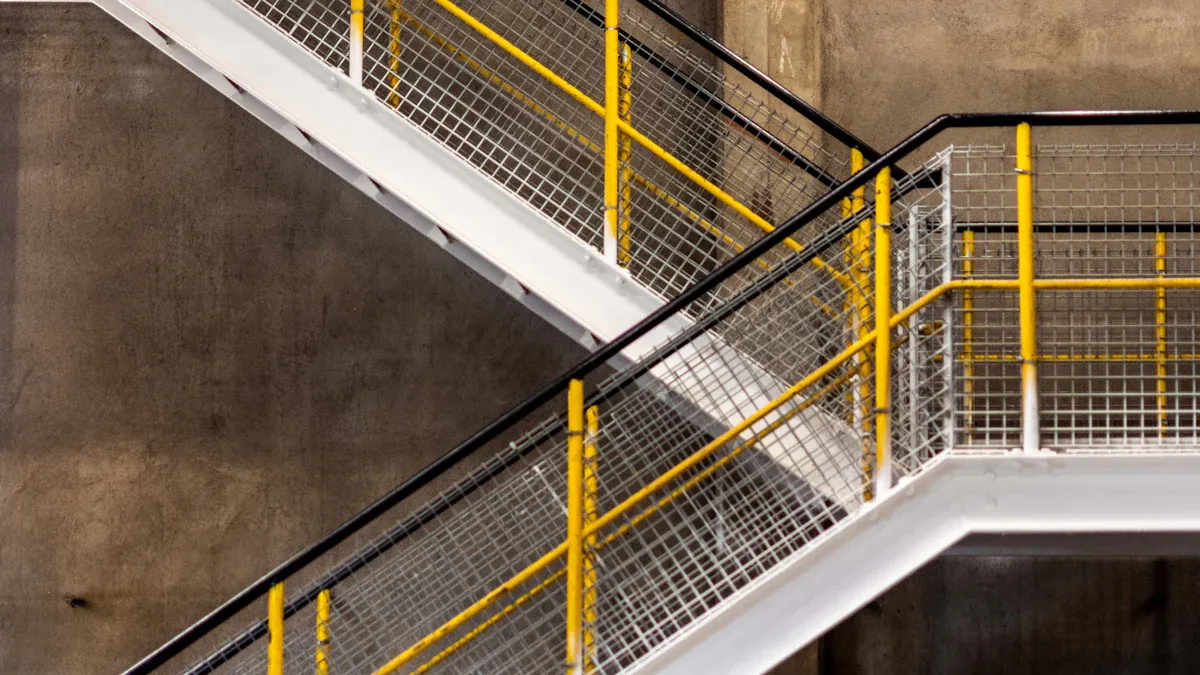
Industrial places can be tough for railings. Workers need rails that stand up to chemicals and water. GRP handrails are strong and work well in these spots. Engineers test them for strength using ASTM D638 and ASTM D790. These tests show GRP rails can hold heavy things and do not bend easily.
A table below shows important facts for factories:
Specification Type | Details |
|---|---|
Tensile and Flexural Strength | Tested to ASTM D638 or ASTM D790 |
Modulus of Elasticity | Controls how much the rail bends under weight |
Allowable Spans and Post Spacing | Designed for safety and stability |
Corrosion Resistance | Withstands chemicals in fertilizer plants and wastewater facilities |
UV Resistance | Keeps color and strength outdoors |
Fire Performance | Meets safety standards for flame spread (ASTM E84) |
Operating Temperature Ranges | Performs well in hot and cold environments |
GRP rails do not rust, even with acids or saltwater. Their UV resistance keeps them looking new. Fire safety ratings help protect workers. These features make GRP rails a good pick for factories and chemical plants.
Public Infrastructure
Bridges, walkways, and stations need safe and strong rails. GRP handrails are great for these places. They are lighter than steel or aluminum. This makes putting them in faster and cheaper. GRP rails are strong but do not add much weight.
The table below lists key benefits for public places:
Benefit | Description |
|---|---|
Corrosion Resistance | Ideal for areas with chemicals, saltwater, or moisture |
Lightweight and Easy Installation | Reduces labor and equipment costs |
High Strength-to-Weight Ratio | Matches or exceeds traditional materials |
Durability and Longevity | Resists cracking, warping, and weather damage |
Low Maintenance | No need for painting or frequent checks |
Electrical and Thermal Insulation | Safe for areas near electrical systems |
Customizability | Available in many colors and sizes |
GRP rails do not carry electricity or heat. This keeps people safe in busy places. Their tough build means cities spend less on repairs. Designers can pick colors and sizes to match any project.
Commercial Buildings
Offices, malls, and schools need safe and nice-looking rails. When picking GRP handrails, engineers look at a few things:
Rails must hold people and extra weight like snow.
The rail height should keep people safe and not trip them.
Rails need to handle bumps or damage.
Rails must stay in place during accidents.
Other things to think about:
Rails must be strong for people leaning on them.
They should last indoors and outdoors.
The look of the rail matters for style and cost.
Fiberglass-reinforced plastic is strong and does not rust or break. It is light, so workers can install it easily. It does not carry electricity, so it is safe outside. These features make GRP rails a smart choice for offices and schools.
Residential Projects
GRP handrails are now a top pick for homes. People like them because they are strong and look modern. You can use these railings on balconies, stairs, decks, and garden paths. GRP fits many home styles, so lots of people choose it.
GRP railings have many good points for houses:
Durability: GRP railings are strong but not heavy. This makes them easy for workers to put in place.
Low Maintenance: These railings do not rust, rot, or get sun damage. Homeowners save time and money because they do not need much care.
Safety Features: The surface is not slippery. This helps stop falls, especially on stairs or outside steps.
Environmental Resistance: GRP can handle bad weather. It does not bend or rust, even after years outside.
Aesthetic Versatility: GRP railings come in many colors and styles. They look good with both new and old homes.
Families want railings that are safe and look nice. GRP railings give safety and style at the same time. Builders like that GRP is light, so it is easy to move and install. This helps save money and finish jobs faster.
Sometimes, there can be problems when putting in GRP railings. Workers must make sure all parts are tight and safe. The railings also need to follow local safety rules. But the modular design of GRP makes these steps easier. Homeowners like that GRP railings do not need paint or sealant. Just washing with soap and water keeps them looking good.
Tip: When picking railings for your home, think about the weather and how much sun or rain you get. GRP railings work well almost anywhere and last a long time.
Marine Environments
GRP handrails are used a lot near water. Docks, piers, and walkways by the water need strong railings. Saltwater and wet air can hurt wood and metal fast. But GRP railings stay strong and look good for a long time.
The table below shows how GRP handrails compare to other materials for marine use:
Feature | GRP Handrails | Traditional Materials (Steel/Wood) |
|---|---|---|
Corrosion Resistance | Excellent (does not rust or corrode) | Poor (prone to rust and rot) |
Weight | Lightweight | Heavier |
Durability | High (resistant to environmental factors) | Moderate (degrades faster) |
Maintenance Requirements | Low (minimal upkeep needed) | High (requires regular maintenance) |
GRP railings do not rust or rot, even in salty water. They are light, so workers can carry and install them easily. No big machines are needed to move them. GRP does not fade in the sun, so the color stays bright.
Safety is very important near water. GRP railings have a surface that is not slippery. This helps stop people from falling on wet docks or paths. GRP railings last a long time and keep people safe. That is why they are a smart choice for places near water.
GRP Handrail Maintenance
Routine Care
Routine care helps GRP handrails stay strong for years. Cleaning the surface gets rid of dirt and chemicals. Workers should look at all parts for cracks or chips. If they see small problems, they should fix them fast. This stops bigger problems from happening later. Changing broken or worn parts keeps the handrail safe. Keeping notes about maintenance helps plan future checks.
Clean GRP surfaces often to remove dirt and chemicals.
Check all parts for cracks, chips, or other damage.
Fix small problems quickly to stop bigger ones.
Change broken or worn parts to keep safety.
Write down maintenance to help with future checks.
Tip: Regular care makes GRP handrails last longer and helps stop accidents.
Common Issues
GRP handrails do not have many problems, but some can happen. Cracks may show up if the handrail gets hit hard. Chips can happen from sharp things or rough use. The color may fade after being in the sun for a long time. Fittings or posts can get loose if not put in right. Chemical spills can stain the surface, especially in factories. Checking for these problems helps keep the handrail safe and looking nice.
A table shows common issues and how to fix them:
Issue | Cause | Solution |
|---|---|---|
Cracks | Impact or heavy load | Inspect and repair |
Chips | Sharp objects or rough use | Replace damaged parts |
Fading color | Sunlight exposure | Use UV-resistant materials |
Loose fittings | Poor installation | Tighten or replace |
Stains | Chemical spills | Clean with mild soap |
Note: Fixing small problems fast keeps the handrail safe for everyone.
Lifespan
GRP handrails last much longer than most other materials. Most systems work well for 25 to 50 years, even in tough places like factories or near water. Their strong build and resistance to rust, rot, and chemicals help them stay in good shape. Regular care and quick repairs help them last longer. Safety stays high when workers follow maintenance plans. GRP handrails keep their color and strength for many years, making them a smart choice for places that need safe barriers.
Safety and strength make GRP handrails a great pick for long-term use.
GRP handrail systems come in many types. You can pick modular, profiled, round, square, or channel top railings. These railings are strong and last a long time. They do not need much care. Good railings help keep people safe. They also save money over the years. Each kind works best for certain places. Homes, businesses, and factories all have different needs. People should look at their project first. It helps to ask experts for advice. Picking the right railings makes every place safer and better.
FAQ
What makes GRP handrails different from metal handrails?
GRP handrails do not rust or corrode. They weigh less than metal rails. Workers can install them quickly. GRP also does not conduct electricity, which makes it safer in many places.
Can GRP handrails be used outdoors?
Yes, GRP handrails work well outdoors. They resist sunlight, rain, and chemicals. The color stays bright for years. People use them on bridges, walkways, and near water.
How long do GRP handrails last?
Most GRP handrails last 25 to 50 years. They keep their strength and color for a long time. Regular cleaning helps them last even longer.
Are GRP handrails safe for use near electricity?
Yes, GRP handrails do not carry electricity. This makes them safe for areas near wires or electrical equipment. Many factories and stations use them for this reason.
Do GRP handrails need much maintenance?
GRP handrails need very little care. Cleaning with soap and water keeps them looking good. Workers should check for loose parts or damage during routine inspections.
Can GRP handrails be recycled?
Some GRP handrails can be recycled. Specialized facilities handle GRP recycling. This helps reduce waste and supports environmental goals.
Are GRP handrails easy to install?
Yes, GRP handrails use modular parts. Workers can cut and fit them with simple tools. The light weight makes installation faster and easier than with metal rails.
What colors and styles are available for GRP handrails?
GRP handrails come in many colors and shapes. Designers can choose bright or neutral colors. Styles include round, square, and channel top rails to match different projects.