


Choosing the best FRP box section for outside use means you need to think about a few important things. You should look at durability, corrosion resistance, UV protection, strength, and cost. Weather outside can be tough. Picking the right box section for your project helps it work well and last longer. The table below shows how FRP box sections and steel box sections are different in these ways:
| Property | FRP Box Sections | Steel Box Sections |
|---|---|---|
| Durability | Lasts longer in bad weather | Can rust and get weaker over time |
| Corrosion Resistance | Stays strong against acids, salt, gases | Can rust in tough weather |
| UV Protection | Does not crack or fade fast | Needs special coatings |
| Strength | Good for medium loads, does not bend | Best for very heavy and hard jobs |
| Cost | Costs more at first, but needs less care | Costs less at first, but needs more care |
Key Takeaways
Pick FRP box sections for outdoor jobs because they last long and do not rust.
Think about things like water and chemicals when you pick materials.
FRP box sections are light, so putting them in is easy and safe.
Make sure the FRP has UV protection to stop sun damage like fading or cracking.
Check how much weight the box section can hold for your project.
You do not need to do much upkeep; just clean and look for damage sometimes.
Choose the right size and thickness to stop bending and keep things safe.
Always look at costs over time; FRP might cost more at first but needs less fixing later.
FRP Box Section Basics

What Is an FRP Box Section
An FRP box section is made from fiberglass reinforced plastic. Manufacturers use pultrusion to make these sections. Pultrusion pulls fiberglass strands through resin and heat. This creates strong shapes that stay the same. These shapes are good for outdoor structures.
FRP box sections have different properties than metals. The table below shows some main differences:
| Property | FRP Value | Steel Value |
|---|---|---|
| Density | 1.5–2.1 g/cm³ | 7.85 g/cm³ |
| Electrical Conductivity | Insulator (resistivity > 10¹⁰ ohm·m) | Conductive |
| Thermal Conductivity | 0.25–0.35 W/m·K | 50 W/m·K |
FRP box sections are light, do not conduct electricity, and handle temperature changes well.
Outdoor Advantages
FRP box sections are great for outdoor use. They do not get damaged by moisture, salt, or chemicals. This makes them good for tough places. Steel and aluminum can rust, but FRP does not. The table below compares FRP with steel and aluminum:
| Advantage | FRP | Steel/Aluminum |
|---|---|---|
| Corrosion Resistance | Immune to electrochemical corrosion | Prone to rust and corrosion |
| Weight | Lightweight | Heavier than FRP |
| Maintenance | Minimal, long lifespan | Requires regular maintenance |
| Lifecycle Costs | Lower over time | Higher due to maintenance costs |
FRP box sections weigh less than metal ones. This makes structures lighter and easier to build.
FRP is a good insulator for electricity and heat.
Many FRP products last over 50 years outside. They do not need repairs for corrosion.
FRP works well in places with salt, humidity, or chemicals.
Some GRP sections have surfaces that do not slip. This helps keep people safe in wet areas.
Tip: FRP can make things up to 40% lighter but still strong. New FRP products are made to work better and do more things.
Common Uses
FRP box sections are used in many outdoor places. They are strong and last a long time in bad weather.
Patios and garden sheds use FRP because it looks nice and resists weather.
Farms use FRP panels to handle ammonia and other strong chemicals.
Bridges and overpasses use FRP because it can handle tough conditions.
Walkways and platforms use FRP for safety and durability.
Offshore decks need FRP to survive harsh marine weather.
Water treatment plants and public projects use FRP for reliable performance.
These uses show that FRP box sections are strong, safe, and last a long time outside.
Looking for High-Quality FRP Box Sections?
Get expert guidance on selecting the perfect FRP box section for your outdoor project. Our team provides customized solutions backed by years of industry experience.
Request a Quote NowKey Selection Criteria for FRP Box Section
Environmental Factors
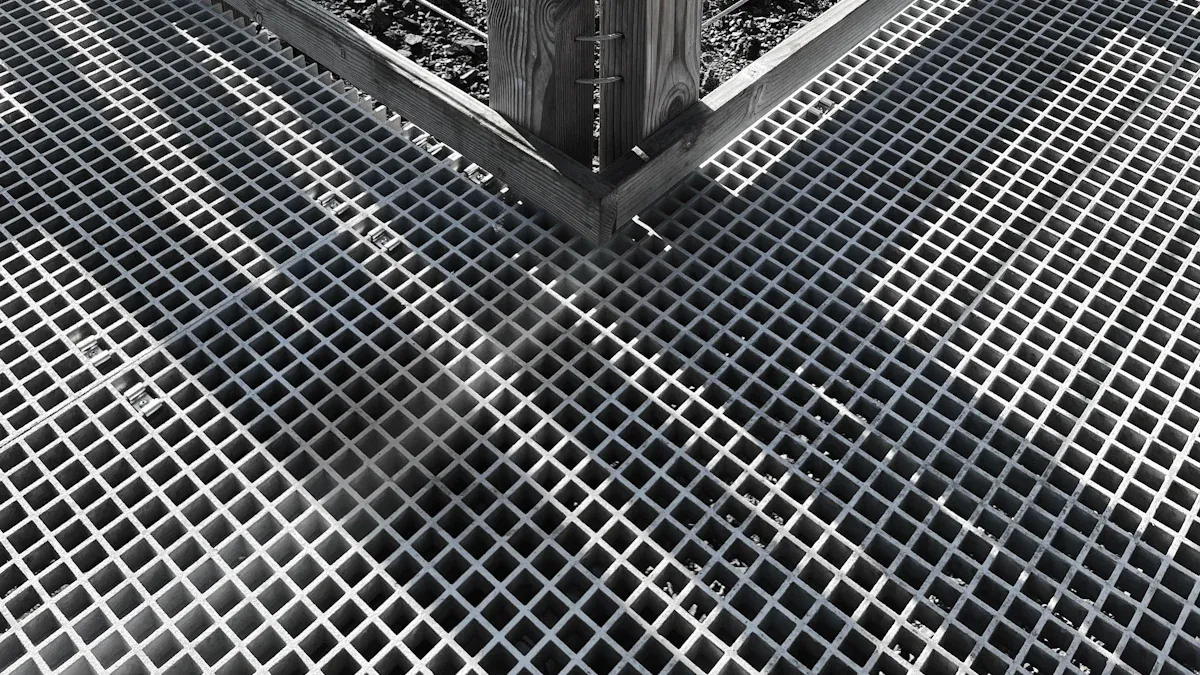
Weather outside can change fast. You need to pick an FRP box section that works well in different places. The table below lists the main things in the environment that can change how FRP works:
| Environmental Factor | Description |
|---|---|
| Corrosion Resistance | FRP shows strong resistance to various corrosive elements, outperforming traditional materials like steel and wood. |
| Weatherability & UV Resistance | High-quality FRP maintains mechanical strength and color stability due to UV stabilizers, preventing degradation. |
| Low Maintenance Requirements | FRP components require less maintenance compared to steel and wood, reducing lifecycle costs significantly. |
Corrosion Resistance
Corrosion resistance is very important. FRP box sections do not rust. They also do not get weak from acids or salt. This makes them good for places near water or where it is damp. Steel can get weak from chemicals or water, but FRP does not.
UV Protection
The sun can hurt many materials. FRP box sections have UV stabilizers. These keep their color and strength. They do not crack or fade fast. UV protection helps them last longer in sunny places. According to ASTM International standards, proper UV testing ensures long-term performance of composite materials in outdoor environments.
Chemical Exposure
There are often chemicals in the air or water outside. FRP box sections do not get damaged by these chemicals. They stay strong even with cleaning agents, fertilizers, or fumes. This makes them safe for farms, factories, and water plants.
Load and Strength Needs
Every project needs a box section that can hold the right weight. The table below explains what you need to know about load and strength:
| Aspect | Description |
|---|---|
| Strength-to-Weight Ratio | FRP box sections exhibit a high strength-to-weight ratio, allowing them to support heavy loads while remaining lightweight. This is advantageous for ease of handling and installation in construction. |
| Load Capacity | FRP can handle moderate loads and is resistant to bending, making it suitable for structures that do not require extreme compressive strength. It maintains performance over time, especially in harsh environments. |
Static and Dynamic Loads
You need to check if the FRP box section will hold steady or changing weight. Static loads do not move, like a roof. Dynamic loads change, like wind or moving machines. FRP can handle both, but you must pick the right size and thickness.
Safety Margins
Safety margins help stop accidents. They show how much extra strength the box section has. Always pick a box section with a safety margin. This keeps people and equipment safe.
Material Grades
Material grade changes how well the FRP box section works outside. FRP square tubes do not rust or grow mold. UV coatings help them last longer in bad weather. FRP stands up to water, chemicals, and tough weather. It stays strong in sun, rain, salt fog, and wind. These things make FRP box sections smart for rooftops, cooling towers, and other outdoor jobs.
Tip: Always pick the right material grade for your project. High-grade FRP box sections protect better and last longer.
Size and Thickness
Picking the right size and thickness is important for safety. FRP box sections come in many sizes and wall thicknesses. Each size can hold different weights and fits certain jobs. The table below shows some common sizes, thicknesses, and weights:
| Size (mm) (L1 x L2) | Thickness (mm) (T) | Weight (kg/m) |
|---|---|---|
| 40×20 | 2.1 / 2.5 / 3 / 4 | 0.45 / 0.54 / 0.65 / 0.86 |
| 40×30 | 4 | 1.01 |
| 48×35 | 3 | 0.90 |
| 50×28 | 3 | 0.84 |
| 50×30 | 3 | 0.86 |
| 60×30 | 3 | 0.97 |
| 60×50 | 2.5 | 0.99 |
| 72×45 | 4 | 1.68 |
| 80×30 | 3 | 1.19 |
| 100×50 | 4 / 5 | 2.16 / 2.70 |
| 105×78 | 7.5 | 4.94 |
| 120×80 | 4 | 2.88 |
You can get more sizes and wall thicknesses, from 2.1 mm to 12.7 mm, for special jobs.
Thicker walls make the box section stronger. They can hold heavier things. Bigger sizes help cover more space or reach farther. The right size and thickness stop bending or breaking outside. Always pick the size and thickness that matches the weight and weather.
Installation and Handling
Good installation and careful handling keep FRP box sections safe and strong. Workers should do these things:
Surface Preparation: Clean and make the base flat before you start. The ground must hold the weight and have less than 4% water. This stops glue problems.
Panel Layout and Planning: Plan where each piece goes. Leave space for the material to grow when it gets hot. Make joints so water does not stay there.
Quality Control During Installation: Check all sizes and make sure bolts are tight. Test the weight to make sure it is safe.
Maintenance and Long-Term Performance: Look at the project every month and year. Clean the surfaces and check bolts to keep everything safe.
Tip: Planning well and checking often helps FRP box sections last longer outside.
Cost Considerations
Cost is important when picking materials for outside jobs. FRP box sections cost more at first than steel or aluminum. But they save money later because they need less fixing. This is true in places with salt, chemicals, or lots of water in the air.
| Material Type | Cost Comparison | Factors Influencing Pricing |
|---|---|---|
| FRP | Higher initial costs, lower lifetime costs | Raw materials, production, size, market, installation costs |
| Steel | Lower initial costs | Corrosion resistance, maintenance needs |
| Aluminum | Similar to steel | Weight, corrosion resistance, maintenance needs |
FRP costs more at the start than steel.
Over time, FRP costs less because it does not need much work.
This is most true near the ocean, in chemical plants, or wet places.
FRP profiles do not need new paint or special covers. They do not rust or rot, so owners spend less on repairs and checks. These savings make FRP a good choice for outdoor projects in tough weather or with chemicals.
Step-by-Step FRP Box Section Selection
Define Application Needs
Picking the right FRP box section starts with knowing what your project needs. Every industry has its own problems. Construction jobs need strong and corrosion-resistant materials. Logistics want lighter materials to make work easier. Water treatment plants and marine places need materials that can handle chemicals and moisture.
To figure out what you need, follow these steps:
Find out why you need the FRP box section.
Decide how much weight and stress it must handle.
Think about rules for your industry, like safety or certifications.
Look at where you will install it, including space and handling.
Plan how you will check and care for it over time.
FRP products often have UV-resistant gel coats. These coats help them last longer outside. Many places use FRP stacks and ducts for years with regular checks. This proves you must match the product features to what your project needs.
Assess Environmental Demands
Outdoor places can be hard on materials. Before picking an FRP box section, check what things outside might hurt it. Use this table to see common ways to check:
| Method | Description |
|---|---|
| Life Cycle Assessment (LCA) | Looks at environmental effects from making the material to using it. |
| Cost-efficiency evaluations | Checks if using the material saves money in outdoor jobs. |
Life Cycle Assessment helps managers see how their choices affect the environment. Cost-efficiency checks show if the material saves money later. Both help make sure the FRP box section works well outside.
Compare Product Options
After you know your needs and check the environment, compare products. Look at important things to pick the best one:
Structural Performance Metrics: Check safety and how much it bends to make sure it holds the weight.
Environmental Resistance: Make sure it can handle sun, rain, chemicals, and temperature changes.
Compliance with Building Codes: Make sure it follows all safety rules.
Comparing these things helps you choose the right option. This step makes sure the FRP box section fits your project and lasts outside.
Shortlist by Key Criteria
Picking the right FRP box section for outside jobs means you must look at important things. Project managers and engineers use steps to make sure their choice is good. They use key points to make a list of the best options.
Find out what the project needs. They look for things that cannot change, like how strong it must be, safety, price, and how to use the material.
Check materials. They compare what each material can do with what the project needs. This helps them remove choices that do not work.
Make sure it fits. They test or check data to see if the material works well outside.
Tip: Making a clear list saves time and stops mistakes when putting things together.
When talking to suppliers like NHC, teams look at many things to pick the best one. The table below shows what they check:
| Factor | Description |
|---|---|
| Check the environment | Look for water, chemicals, or salt around. |
| Figure out load needs | Know the most weight the plate can hold. |
| Plan for installation | Decide if big machines can be used or if it must be quick. |
| Think about maintenance | Guess how often the plate needs cleaning or fixing. |
| Check safety | Look for surfaces that do not slip and features for electrical safety. |
| Compare costs | Think about the first price and how much it costs later. |
Teams use these points to compare choices and pick the FRP box section that fits their job best.
Request Samples or Data
After making a list, teams ask suppliers for samples or information. Samples let them see and test the material. Data sheets show how strong it is and how it handles weather and chemicals.
Teams ask for samples to check color, surface, and quality.
They look at data sheets to make sure it can hold weight and is safe.
They test samples outside, like in sunlight or wet places.
Note: Testing samples helps stop problems after putting them in and makes sure the material is right.
Asking for samples and data helps teams feel sure about their choice. It also helps them work with suppliers to make products fit special needs.
Comparison Checklist and Table
Selection Checklist
Picking the right FRP box section for outside is easier with a checklist. This list helps people remember what is most important. It helps project managers, engineers, and buyers compare products and make good choices.
Project Requirements - Write down what the project needs. This means the type of structure, what it will do, and any special rules.
Environmental Conditions - Check if there is moisture, salt, chemicals, or sunlight at the place.
Load and Strength Needs - Find out how much weight the FRP box section must hold. Check if the weight stays the same or changes.
Material Grade and Type - Pick the right grade for the weather and chemicals. Some jobs need UV protection or extra corrosion resistance.
Size and Thickness - Choose the right size and wall thickness for safety and strength.
Installation and Handling - Plan for easy installation and safe handling. FRP is light, so this step is easier.
Maintenance Needs - Ask how often the material needs cleaning or checks.
Cost and Budget - Look at the first price and the cost over time.
Supplier Support - Check if the supplier gives technical help, samples, or custom options.
Certifications and Quality - Ask for product certifications and quality checks.
Tip: Teams can use this checklist to compare FRP box sections from different suppliers. This helps them pick the best one for their project.
Sample Comparison Table
A table makes it easy to see how FRP box section options are different. The table below shows common FRP items for outside use, their descriptions, and their main advantages.
| Item Type | Description | Advantages |
|---|---|---|
| FRP Panels | See-through or cloudy panels for roofs and walls | Natural light, lightweight, strong, does not rust, quick to put in |
| FRP I-Beams | Used for outside platforms and support | Very strong, does not rust, no need for upkeep, holds heavy loads |
| FRP Angles | For equipment supports and frames | Lightweight, does not rust, insulates, easy to put in |
| FRP Grating | For stair steps and work platforms | Non-slip, does not rust, lightweight, no need for upkeep |
| FRP Handrail Systems | For railings on stairs and platforms | Handles weather, insulates, lasts a long time |
| Specialized Applications | Electrical boxes, cooling tower supports, landscape features | Great in bad weather and does not rust |
This table helps teams match the right FRP product to their outdoor project. They can see which item works best for roofs, platforms, supports, or safety rails. Each item has special advantages, like being light, strong, or safe in wet weather.
Note: Teams should always check what the project needs and compare these features before picking the final one.
Supplier and Product Quality Evaluation
Choosing a Reliable Supplier
Picking the right supplier for FRP box sections is important. A good supplier does more than just sell products. They help with technical questions and can make special products. They also talk clearly with you. Project managers should think about a few things before choosing. The table below shows what to check:
| Factor | Description |
|---|---|
| Technical Specifications | Check resin grade, profile complexity, and die length. |
| Compliance | Make sure the supplier follows RoHS/REACH and other standards. |
| Quality Assurance | Look for ISO certification and in-house quality control systems. |
| Cost Drivers | Review annual volume, minimum order size, and shipping costs. |
| Contract Hygiene | Set clear standards and acceptance rules in purchase orders. |
| Key Performance Indicators | Track on-time delivery and non-conformance reports. |
A supplier who knows about outdoor FRP can fix problems fast. They can also make special products for your project. Companies like NHC give technical help and custom products. This makes projects go better.
Product Certifications
Certifications show that FRP box sections are safe and good quality. These marks help builders, engineers, and owners feel sure. The most important certifications for outdoor FRP are:
Factory Mutual (FM) certification means the product passed tough fire safety tests.
Underwriters Laboratories (UL) certification means the material is safe and works well outside.
These certifications make FRP box sections more trusted. They also help teams follow building and safety rules. For more information on industry standards, refer to ISO standards for fiber-reinforced plastic composites.
Tip: Always ask suppliers to show proof of certifications before you buy.
Quality Verification Tips
Checking product quality before you build helps stop problems later. Teams should do these easy steps:
Read product data sheets for strength, UV resistance, and chemical safety.
Look at samples for smoothness, color, and evenness.
Test samples outside in sun and rain to see how they do.
Ask for records of quality checks and tests from the supplier.
Make sure the supplier helps after you buy and can fix problems.
A good supplier stands by their products and answers questions. Good FRP box sections last longer and work better outside.
Note: Picking the right supplier and checking quality keeps your project safe and helps it succeed.
Practical Tips and Mistakes to Avoid
Outdoor Installation Tips
Good installation helps FRP box sections last longer outside. Workers must get the site ready before starting. Clean and dry surfaces stop bonding problems. Sanding the area helps glue stick better. Use a laser level to keep beams straight. This stops beams from being crooked and keeps the structure safe.
When fastening FRP box sections, use a torque wrench. Tighten bolts to the right amount. If bolts are too tight, the material can break. Always check the manufacturer's instructions for the correct torque. For drilling, use carbide bits and keep the drill speed slow. Drilling too fast can make the resin crack or peel.
Put a UV-protective gel coat on after installation. This layer keeps the color and surface safe from sunlight. It also helps the FRP box section resist fading and cracking. Leave enough space between holes and the edge. Holes should be at least twice as wide as their diameter from the edge. This stops cracks and keeps the structure strong.
Tip: Check and clean FRP box sections often. Look at bolts, joints, and surfaces every few months.
Common Selection Errors
Many outdoor projects have problems because of simple mistakes. The table below shows common errors, their causes, and how to fix them:
| Mistake | Cause | Solution |
|---|---|---|
| Over-tightened bolts | Too much torque | Use torque wrench; follow limits |
| Uneven bonding layer | Bad surface prep | Sand and clean before glue |
| Edge cracking | Holes too close to edge | Keep holes ≥2× diameter from edge |
| Color fading | No UV topcoat | Put gel coat on after installation |
| Misaligned beams | No leveling tool | Use laser levels during layout |
| Resin delamination during drilling | Fast drilling | Drill slow; use carbide bits |
If you skip UV protection, the color can fade and the surface can get damaged. Always pick FRP box sections with a UV-resistant coating for outside. If you guess the load wrong, the box section can bend or break. Find the biggest load and add a safety margin.
Some teams forget to check the environment. Moisture, chemicals, and salt can change how FRP works. Pick the right material grade for each place. If you skip regular checks, small problems can get worse. Make a schedule for maintenance and follow it.
Note: Careful planning, correct installation, and regular checks help stop most problems. These steps keep FRP box sections safe and strong in outdoor projects.
Picking the right FRP box section for outside needs good planning. Teams should look at the weather, how much weight is needed, and if the supplier can be trusted. The table below shows which materials work best in different places:
| Material Type | Characteristics | Suitable Conditions |
|---|---|---|
| Polycarbonate | Light, protects from sun, strong | Lots of sunlight, houses |
| Metal | Strong, stops rust with special treatment | Factories, places with heavy use |
| FRP | Strong, does not rust | Near the ocean, places with chemicals |
If you want special help or samples, experts say to talk to trusted suppliers like NHC.
FAQ
What is an FRP box section?
An FRP box section is a hollow shape. It can be square or rectangular. It is made from fiberglass reinforced plastic. This makes it strong and tough. It does not rust or break down outside. That is why people use it for outdoor buildings.
Why choose FRP box sections for outdoor use?
FRP box sections do not rust or get damaged by water. They also resist chemicals. They last longer than many metals in bad weather. They are light, so workers can move them easily and safely.
How does FRP handle sunlight and UV exposure?
Manufacturers put UV stabilizers in FRP box sections. These help stop the material from fading or cracking in the sun. The box section keeps its color and strength outside.
Can FRP box sections support heavy loads?
FRP box sections can hold medium or heavy weights. Engineers pick the right size and thickness for each job. Always check the load rating before using them.
Are FRP box sections easy to install?
Yes. FRP box sections are light and simple to move. Workers can cut, drill, and attach them with normal tools. This makes the job faster and easier.
What maintenance do FRP box sections need outdoors?
FRP box sections need very little care. Just clean them and check them sometimes. You do not need to paint them or add special coatings.
How do I select the right size and thickness?
Look at how much weight your project needs to hold. Check the weather and other outside conditions. Use the manufacturer's data sheets to find the right size and thickness.
Are FRP box sections safe for electrical applications?
Yes. FRP does not carry electricity. It keeps people safe near wires or electrical equipment.
References
Composites World. "The Pultrusion Process." Available at: https://www.compositesworld.com/articles/the-pultrusion-process
ASTM International. "Standard Practice for Operating Fluorescent Ultraviolet (UV) Lamp Apparatus for Exposure of Nonmetallic Materials (G154)." Available at: https://www.astm.org/products-services/standards-and-publications/standards/g154.html
International Organization for Standardization. "Fiber-reinforced plastic composites — Determination of flexural properties (ISO 14125:1998)." Available at: https://www.iso.org/standard/45088.html
NHC FRP. "FRP Box Section vs Steel Box Section: Which Material Wins in 2026." Available at: https://www.nhcfrp.com/FRP-Box-Section-vs-Steel-Box-Section-Which-Material-Wins-in-2026.html