


What Makes GRP Staircases Ideal for Modern Buildings
Modern architecture demands solutions that combine strength, versatility, and efficiency. A grp staircase meets these needs by offering a lightweight structure, making transport and assembly easy for builders. Architects often choose grp staircases because they resist corrosion and require minimal maintenance over time. Their adaptability allows seamless integration into various building designs. The table below highlights key advantages that make grp staircases the preferred choice for contemporary projects:
| Advantage | Description |
|---|---|
| Corrosion Resistance | GRP staircases offer significant corrosion advantages over metal, leading to lower lifecycle costs. |
| Economic Benefits | They are much more economical over the life cycle compared to traditional materials. |
| Ease of Installation | Easy machinability allows for simple on-site adjustments, facilitating quicker installation. |
| Low Weight | Their low weight enables manual handling, reducing the need for cranes or heavy lifting equipment. |
| High Altitude Handling | Makes assembly at high altitudes much easier, which is beneficial for various construction projects. |
Key Takeaways
- GRP staircases are lightweight, making them easy to transport and install, which reduces project timelines.
- They offer excellent corrosion resistance, leading to lower maintenance costs and longer lifespans compared to traditional materials.
- The non-slip surface of GRP staircases enhances safety, making them suitable for wet or high-traffic environments.
- Customization options allow GRP staircases to fit unique architectural designs, enhancing both function and aesthetics.
- GRP staircases require minimal maintenance, saving time and resources over their lifespan.
- Their high strength-to-weight ratio ensures safety and reliability, even in demanding industrial settings.
- Choosing GRP staircases can lead to significant cost savings in labor and materials during construction.
- GRP staircases support sustainability goals through eco-friendly production and recyclability at the end of their service life.
GRP Staircase Benefits
Lightweight Structure
Easy Transport
A grp staircase features a lightweight design that simplifies transportation. Construction teams can move grp components without heavy machinery, which reduces logistical challenges on site. Glass reinforced plastic weighs about one third as much as steel, making grp staircases much easier to handle. This advantage allows workers to carry sections manually, even in areas with limited access or at high altitudes.
Tip: Lightweight grp staircases help minimize transportation costs and speed up project delivery.
Quick Installation
The low weight of grp staircases also leads to faster installation. Workers can assemble staircases quickly, often without specialized lifting equipment. This efficiency means less downtime and fewer delays during construction. The easy machinability of grp allows for on-site adjustments, so teams can adapt staircases to fit unique architectural requirements. Quick installation supports tight project schedules and reduces labor costs.
High Strength-to-Weight Ratio
Grp staircases deliver impressive strength despite their low weight. The material supports heavy loads, making it suitable for both commercial and industrial settings. For example, a 25mm, 1-metre-wide grp grating can withstand up to one third of a ton per square metre. A 38mm grating can support half a ton per square metre, and when the width decreases to 300mm, the same grating can handle loads exceeding 12 tons. This high strength-to-weight ratio ensures safety and reliability in demanding environments.
Industry standards validate the performance of grp staircases:
- BS EN 13706 classifies pultruded grp profiles by wall thickness and mechanical strength.
- BS EN 4592 defines safety standards for gratings, stair treads, and flooring, especially in wet or corrosive conditions.
- ISO 9001 certifies consistent production quality, ensuring that grp products meet strict manufacturing controls.
Corrosion Resistance
Grp staircases offer excellent resistance to corrosion, which makes them ideal for harsh environments. Unlike steel, grp does not rust or degrade quickly when exposed to moisture or chemicals. Studies show that the corrosion factor for grp ranges from 3.11 mm/h to 16.08 mm/h, depending on environmental conditions. Erosion rates vary from 0.063 g/h to 3.11 g/h, with chlorine and abrasive sand increasing the rates. Even in challenging settings, grp maintains its durability and structural integrity.
Note: The resistance of grp to corrosion extends the lifespan of staircases and reduces maintenance needs.
Minimal Maintenance
A grp staircase stands out for its minimal maintenance needs. Building managers often choose grp staircases because the material resists wear and damage in most environments. Unlike traditional staircases, grp does not require frequent painting or rust treatment. The surface stays clean and smooth, even after years of use.
Routine care for grp staircases involves simple tasks. Most teams focus on cleaning and periodic inspections. Repairs rarely occur, since grp maintains its structure and appearance over time. The table below shows the most common maintenance tasks and how often they are needed:
| Maintenance Task | Frequency |
|---|---|
| Cleaning | Regularly (part of preventive maintenance) |
| Inspection | Periodically (recommended to spot issues) |
| Repairs | As needed (when structural problems are identified) |
Regular cleaning helps keep grp staircases safe and attractive. Inspections allow teams to spot any issues early, but repairs are seldom necessary.
Facility owners appreciate the low upkeep costs of grp staircases. The material does not absorb moisture, so mold and mildew rarely form. Workers do not need to use harsh chemicals or special tools for maintenance. This advantage saves time and money throughout the lifespan of the grp staircase.
A grp staircase also supports sustainability goals. Minimal maintenance means fewer resources are used for cleaning and repairs. The durability of grp reduces waste and supports long-term value in modern buildings.
Safety Features
Non-Slip Surface
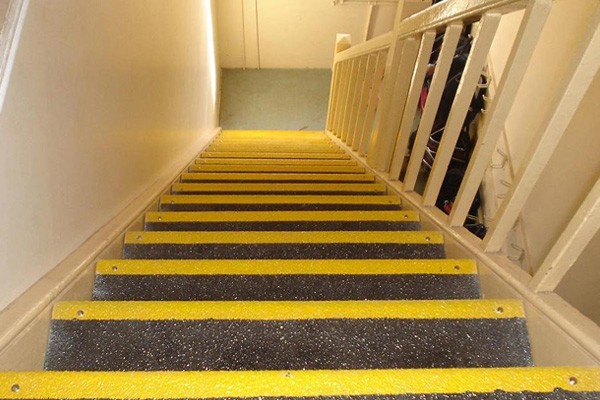
Safety remains a top priority in modern buildings. GRP staircases provide a non-slip surface that helps prevent accidents. The surface texture of grp treads offers reliable grip, even when wet or oily. Workers and visitors can walk confidently, knowing that the risk of slipping is low. The design of grp staircases meets recognized safety standards for slip resistance. The table below shows how grp staircases perform across different safety classes and angles of inclination:
| Safety Class | Angle of Inclination | Slip Resistance |
|---|---|---|
| A | 12° to 18° | Efficient |
| B | 18° to 24° | Efficient |
| C | More than 24° | Efficient |
This consistent slip resistance makes grp staircases suitable for a wide range of environments, including industrial, commercial, and residential buildings. Facility managers appreciate the exceptional durability of grp surfaces, which maintain their grip over time.
Tip: Regular cleaning helps preserve the non-slip properties of grp staircases, ensuring long-term safety for all users.
Fire Resistance
Fire safety is essential in every building. GRP staircases offer strong resistance to fire, which helps protect people and property. The material does not ignite easily and slows the spread of flames. Many grp staircases meet strict fire safety codes, making them a reliable choice for high-traffic areas. The fire-resistant nature of grp supports safe evacuation during emergencies. Building owners trust grp staircases because they combine durability with fire protection.
Non-Conductive Properties
Electrical safety matters in modern construction. GRP staircases stand out because they do not conduct electricity. This feature protects workers and visitors from electric shocks. The non-conductive nature of grp makes it ideal for use in power stations, substations, and electrical grids. People working near live cables benefit from the added safety. The following points highlight the electrical safety advantages of grp staircases:
- GRP is non-conductive, meaning it does not allow electricity to pass through.
- It prevents accidental contact with live cables, protecting workers from electric shocks.
- It is safe to use in high-voltage areas, making it ideal for power stations, substations, and electrical grids.
Facility managers choose grp staircases for their resistance to electrical hazards. The durability of grp ensures long-lasting protection in demanding environments.
Note: GRP staircases combine non-slip surfaces, fire resistance, and non-conductive properties to create a safe environment for everyone.
Design Flexibility
Modern buildings often require staircases that can adapt to unique spaces and design visions. GRP staircases offer outstanding flexibility, making them a preferred choice for architects and builders who value both function and style.
Customization
GRP staircases can be tailored to fit a wide range of project needs. Manufacturers provide many options so each staircase matches the exact requirements of a building. Some of the most common customization features include:
- A variety of color choices to match interior or exterior themes
- Multiple finishes that improve durability and enhance appearance
Tip: Custom finishes not only improve the look of a grp staircase but also add extra protection against wear and tear.
Aesthetic Options
A grp staircase provides more than just practical benefits. It also offers a high degree of aesthetic flexibility. Recent surveys show that architects rate grp staircases higher than traditional materials in several key areas. The table below compares grp staircases with other materials:
| Feature | GRP Staircases | Traditional Materials |
|---|---|---|
| Aesthetic Flexibility | High - customizable into various shapes | Limited - more rigid and costly to modify |
| Malleability | Excellent - allows for diverse designs | Poor - requires complex processes |
| Maintenance | Low - minimal upkeep required | High - often needs regular treatment |
| Durability | High - corrosion resistant | Variable - prone to rust and decay |
Architects can shape grp staircases into curves, spirals, or straight runs. They can choose colors and finishes that match the building’s style. This flexibility helps create modern, attractive spaces that stand out.
Adaptability
GRP staircases adapt well to complex architectural projects. Their modular design and lightweight structure make them easy to install in both new and historic buildings. The table below highlights several projects where grp staircases played a key role:
| Project Name | Description |
|---|---|
| Amazon Hank | Transformed the Lord and Taylor Building into a modern office hub with a 'Lounge Stair' that integrates historical elements. |
| Post Houston | Converted a mail-sorting warehouse into a cultural center with three distinct monumental staircases promoting interaction. |
| Milken Museum | Preserved historic integrity while incorporating modern features, including elegant stairs. |
| New York Public Library | Modularized architectural feature stairs in a historic library, maintaining its grand character. |
These examples show how a grp staircase can meet the needs of both modern and historic spaces. Builders can use grp staircases to solve design challenges, whether they need to preserve history or create new, interactive environments.
Note: The adaptability of grp staircases helps architects and builders achieve their vision, even in the most demanding projects.
Cost and Efficiency
Lower Labor Costs
GRP staircases help construction teams save money on labor. Workers can handle and install these staircases without heavy machinery. The lightweight nature of grp means fewer people are needed for lifting and positioning. Teams often complete installations faster, which reduces the total hours spent on site. Many contractors prefer grp staircases because they simplify the building process and lower expenses. The table below shows how labor costs compare for different staircase materials:
| Material | Average Labor Cost | Installation Complexity |
|---|---|---|
| Steel | High | Requires welding and heavy equipment |
| Concrete | Moderate | Needs formwork and curing time |
| GRP | Low | Simple assembly, minimal tools |
Tip: Choosing grp staircases can help projects stay within budget and avoid unexpected labor charges.
Reduced Project Timelines
GRP staircases offer a major advantage in project speed. Prefabricated grp components arrive ready for installation, which means teams spend less time preparing and assembling parts. In one case, workers installed a grp staircase in just 52 hours. This rapid completion highlights how grp can shorten project timelines compared to traditional methods. Faster installation allows buildings to open sooner and reduces disruption for other trades. Construction managers value grp staircases for their ability to keep schedules on track.
- Prefabrication speeds up delivery and installation.
- Fewer delays occur because grp staircases need less on-site adjustment.
- Projects finish faster, saving time for everyone involved.
Long-Term Value
GRP staircases provide lasting benefits for building owners. The material resists corrosion, which means staircases stay strong and attractive for many years. Maintenance costs remain low because grp does not need frequent repairs or treatments. Facility managers appreciate the durability of grp staircases, as they rarely face issues like rust or decay. Over time, the savings from reduced labor, quick installation, and minimal upkeep add up. GRP staircases deliver excellent value throughout their lifespan.
| Benefit | Impact |
|---|---|
| Low Maintenance | Saves money over time |
| Corrosion Resistance | Extends lifespan |
| Quick Installation | Reduces project costs |
| High Strength | Ensures safety and reliability |
Note: Investing in grp staircases supports both immediate savings and long-term performance for modern buildings.
GRP Staircase vs. Traditional Materials
Steel Comparison
Steel staircases have served as a standard in construction for many years. However, grp staircases offer several advantages over steel. The most noticeable difference is weight. Grp staircases are much lighter, which makes them easier to transport and install. Steel is dense and heavy, which can limit its use in projects where weight matters. Durability also sets grp apart. Grp staircases last longer, especially in harsh environments. Steel can corrode over time, which leads to higher maintenance needs. Grp requires little to no maintenance during its life cycle. The table below highlights these differences:
| Attribute | GRP Staircases | Steel Staircases |
|---|---|---|
| Weight | Much lighter, easier to transport and install | Dense and heavy, limits applications |
| Durability | Longer-lasting, especially in harsh conditions | Strong but may not last as long |
| Maintenance | Little to no maintenance required | Higher maintenance due to corrosion |
Tip: Choosing grp staircases can reduce installation time and long-term upkeep costs.
Concrete Comparison
Concrete staircases remain common in many buildings. Grp staircases provide several environmental and practical benefits compared to concrete. Grp uses less raw material, which helps conserve resources. Manufacturing grp consumes less energy, resulting in lower emissions. The lightweight nature of grp means fewer emissions during transport. Grp staircases last longer, which reduces waste and the need for replacements. Maintenance is less frequent, saving resources over time. Grp also allows for innovative designs that optimize material use. The table below compares the environmental impact of grp and concrete staircases:
| Environmental Benefit | GRP Advantages | Concrete Disadvantages |
|---|---|---|
| Resource Efficiency | Uses less raw material | Higher raw material usage |
| Energy Savings | Lower energy consumption | Higher energy consumption |
| Reduced Emissions | Fewer emissions during transport | More emissions due to weight |
| Longevity | Longer lifespan | Shorter lifespan, more waste |
| Maintenance | Less frequent maintenance | Higher maintenance needs |
| Waste Generation | Minimizes waste | More waste generated |
| Design Innovation | Allows innovative designs | Limited flexibility |
| Green Applications | Used in renewable energy sectors | Less common in green industries |
| Recycling | Can be recycled | Limited recycling options |
Note: Grp staircases support sustainability goals and help reduce the environmental footprint of modern buildings.
Wood Comparison
Wood staircases have a classic look, but grp staircases outperform wood in safety and durability. Grp is made from fiberglass-reinforced plastic, which offers superior fire resistance. Wood is prone to rot, decay, and termite damage. Grp materials withstand harsh environments and resist corrosion. Safe Tread grp grating has achieved a Class 1 flame spread rating in fire tests. Wood does not have this level of fire resistance and burns more easily. Grp staircases maintain their structural integrity over time, while wood can rot and weaken. Grp provides a longer service life in most settings.
- Grp staircases resist fire and corrosion.
- Wood staircases are vulnerable to rot and termite damage.
- Grp maintains strength and appearance for many years.
- Wood requires more frequent repairs and treatments.
The table below shows the typical lifespans of grp and wood staircases in commercial settings:
| Material | Lifespan (Years) | Notes |
|---|---|---|
| GRP | 25 to over 100 | Withstands wear and tear |
| Wood | 100 or more | Susceptible to moisture and termites |
Tip: Grp staircases offer a safe and reliable choice for buildings that need long-lasting performance.
Sustainability
Eco-Friendly Production
GRP staircases support sustainable building practices from the start of their production. Manufacturers use eco-friendly materials in the creation of GRP stair treads. This approach helps conserve natural resources and reduces the environmental impact of construction. The production process often involves less waste compared to traditional materials. Many factories now follow strict environmental guidelines to limit emissions and manage resources responsibly.
- Factories reduce waste during the manufacturing process.
- Production methods follow environmental standards to lower emissions.
GRP staircases also use less raw material than concrete or steel stairs. This efficiency means fewer resources are taken from the environment. Builders who choose GRP products help support a more sustainable construction industry.
Choosing GRP staircases can help projects meet green building certifications and environmental goals.
Energy Efficiency
Energy efficiency plays a key role in the sustainability of GRP staircases. The lightweight nature of GRP means that transporting these staircases uses less fuel. Trucks can carry more units at once, which lowers the number of trips needed. This reduction in transportation energy helps decrease the carbon footprint of a project.
During installation, GRP staircases require less heavy equipment. Workers can often move and assemble the parts by hand. This process saves energy on the construction site and speeds up project timelines. Over the lifespan of a building, GRP staircases continue to save energy because they do not need frequent repairs or treatments.
A comparison of energy use for different staircase materials:
| Material | Energy Used in Production | Energy Used in Transport |
|---|---|---|
| GRP | Low | Low |
| Steel | High | High |
| Concrete | Moderate | High |
GRP staircases help modern buildings achieve better energy performance and lower operating costs.
Recyclability
Recyclability is another important feature of GRP staircases. At the end of their service life, many GRP components can be recycled. This process supports a circular economy and reduces the amount of waste sent to landfills. Recycled GRP materials can be used to make new construction products, which further conserves resources.
- GRP staircases are recyclable, supporting a circular economy.
- Recycling reduces waste and helps protect the environment.
- Recycled GRP can become new building materials.
The durability of GRP ensures that staircases last for many years before recycling becomes necessary. This long lifespan, combined with recyclability, makes GRP staircases a smart choice for sustainable construction.
GRP staircases combine eco-friendly production, energy efficiency, and recyclability to meet the highest standards of modern sustainability.
Applications
Commercial Use
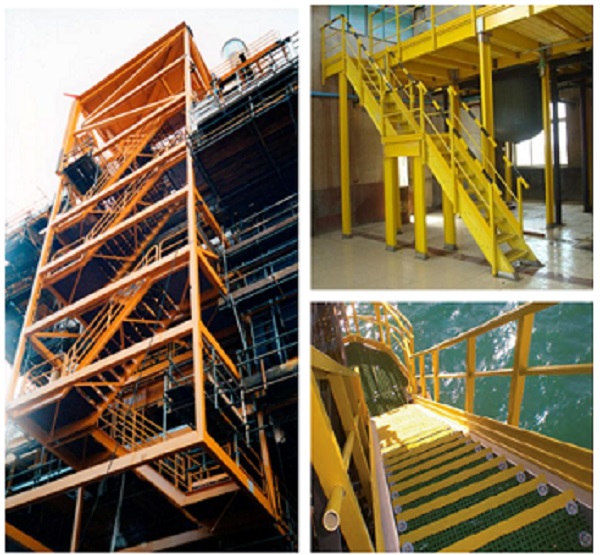
GRP staircases have become a popular choice in many commercial settings. Facility managers in chemical plants, wastewater treatment facilities, and marine environments often select these staircases for their durability and corrosion resistance. In the food and beverage industry, grp staircases stand up to moisture and chemicals, making them a safe and long-lasting solution. Construction sites and industrial buildings benefit from the slip-resistant surfaces and strong construction of grp staircases, which handle high foot traffic with ease.
| Application Area | Benefits |
|---|---|
| Chemical plants | Durability and corrosion resistance |
| Wastewater treatment facilities | Suitable for challenging environments |
| Marine applications | Versatile and long-lasting |
| Construction and industrial sites | Safety and slip resistance |
| Food and beverage industry | Resistant to moisture and chemicals |
| Oil and gas facilities | Maintains integrity in harsh conditions |
| Water treatment plants | Prevents deterioration of materials |
Tip: Slip-resistant grp stair treads help prevent accidents in busy commercial spaces.
Residential Use
Homeowners and builders value grp staircases for their adaptability and low maintenance. These staircases fit well in both indoor and outdoor settings. In homes, grp staircases resist weathering and do not require frequent painting or repairs. Their lightweight structure makes installation quick and easy, even in tight spaces or on upper floors. Residents appreciate the non-slip surfaces, which add safety for children and older adults. GRP staircases also offer a range of colors and finishes, allowing homeowners to match their style preferences.
- GRP staircases work well for decks, patios, and garden steps.
- They provide a safe and sturdy option for basements and attics.
- Homeowners enjoy long-lasting performance with minimal upkeep.
Industrial Use
Industrial environments demand staircases that can withstand tough conditions. GRP staircases meet these needs by offering exceptional resistance to chemicals and moisture. Unlike steel, grp does not rust or degrade, which means less maintenance and fewer replacements. Workers benefit from the anti-slip surfaces, which reduce the risk of slips and falls in busy factories and plants.
The table below compares grp staircases with traditional materials in industrial settings:
| Advantage | GRP Staircases | Traditional Materials |
|---|---|---|
| Corrosion Resistance | Exceptional resistance to chemicals/moisture | Prone to rust and degradation |
| Maintenance and Lifecycle Cost | Minimal upkeep, lower lifecycle costs | High maintenance due to corrosion |
| Safety and Slip Resistance | Anti-slip surface reduces accident risk | Often lacks anti-slip features |
| Lightweight and Installation | Easy to transport and install | Heavier, needs more equipment |
| Customization Options | Various sizes and configurations available | Limited customization |
| Compliance | Meets OSHA and building codes | May not meet all safety standards |
- GRP staircases require little maintenance, saving time and money.
- Their durability leads to fewer replacements and lower labor costs.
- Industrial sites trust grp staircases for reliable, long-term performance.
A grp staircase stands out in modern architecture for its strength, safety, and design flexibility. Builders value its lightweight structure and minimal maintenance. Architects appreciate the adaptability and corrosion resistance. Facility managers trust the non-slip surface and fire resistance.
Choosing a grp staircase helps future projects meet high standards for durability and style. NHC offers reliable solutions for those seeking quality grp products.
Main Advantages:
- Lightweight and easy to install
- High safety features
- Customizable for any building
FAQ
What is a GRP staircase?
A GRP staircase uses glass reinforced plastic for its structure. This material provides strength, durability, and resistance to corrosion. Builders often choose it for modern buildings because it is lightweight and easy to install.
How long does a GRP staircase last?
A GRP staircase can last over 25 years with proper care. The material resists rust, decay, and damage from chemicals. Facility managers appreciate its long service life and minimal maintenance needs.
Are GRP staircases safe for wet environments?
Yes. GRP staircases feature non-slip surfaces that help prevent accidents in wet or oily conditions. The material also resists moisture, making it suitable for marine, industrial, and outdoor settings.
Can GRP staircases be customized?
Manufacturers offer many customization options for GRP staircases. Architects can select colors, finishes, and dimensions to match building designs. This flexibility allows GRP staircases to fit unique spaces and styles.
What maintenance does a GRP staircase require?
Routine cleaning and periodic inspections keep a GRP staircase in good condition. Repairs are rare because the material resists wear and corrosion. Most facility managers find maintenance simple and cost-effective.
How does installation compare to traditional staircases?
GRP staircases are lighter than steel or concrete stairs. Workers can assemble them quickly without heavy equipment. This advantage reduces labor costs and project timelines.
Where are GRP staircases commonly used?
Commercial, residential, and industrial buildings use GRP staircases. Chemical plants, water treatment facilities, and homes benefit from their durability and safety features.
Tip: Regular cleaning helps maintain the non-slip surface and appearance of a GRP staircase.