


Advanced fiber-reinforced polymer (FRP) solutions are transforming cooling tower construction in 2026. These high-performance composite materials offer exceptional structural integrity and are engineered for sustained operation in demanding industrial environments. Unlike traditional steel and concrete, which deteriorate rapidly when exposed to moisture and chemical agents, modern FRP composites maintain their mechanical properties throughout decades of service.
The lightweight characteristics of these materials[1] significantly reduce transportation costs and simplify installation procedures, creating measurable time and cost savings during construction phases. Their inherent design flexibility allows for customization into complex geometries, optimizing thermal transfer efficiency. Industry data indicates that FRP-based systems now account for 33.6% of new cooling tower installations, reflecting widespread industry confidence in this technology.
Key Takeaways
FRP materials demonstrate superior resistance to aqueous corrosion, eliminating rust formation and structural degradation common in metal systems
Reduced material density facilitates rapid deployment and lowers installation labor requirements
Modular design architecture enables application-specific configuration and future system expansion
Enhanced thermal insulation properties reduce energy consumption and operational expenses
Minimal maintenance requirements deliver significant lifecycle cost advantages
Inherent flame-retardant and anti-static properties enhance workplace safety across diverse industrial applications
Growing market adoption demonstrates proven reliability in mission-critical applications
Comprehensive customization options and professional support ensure optimal project outcomes
Key Benefits of FRP Products for Cooling Towers
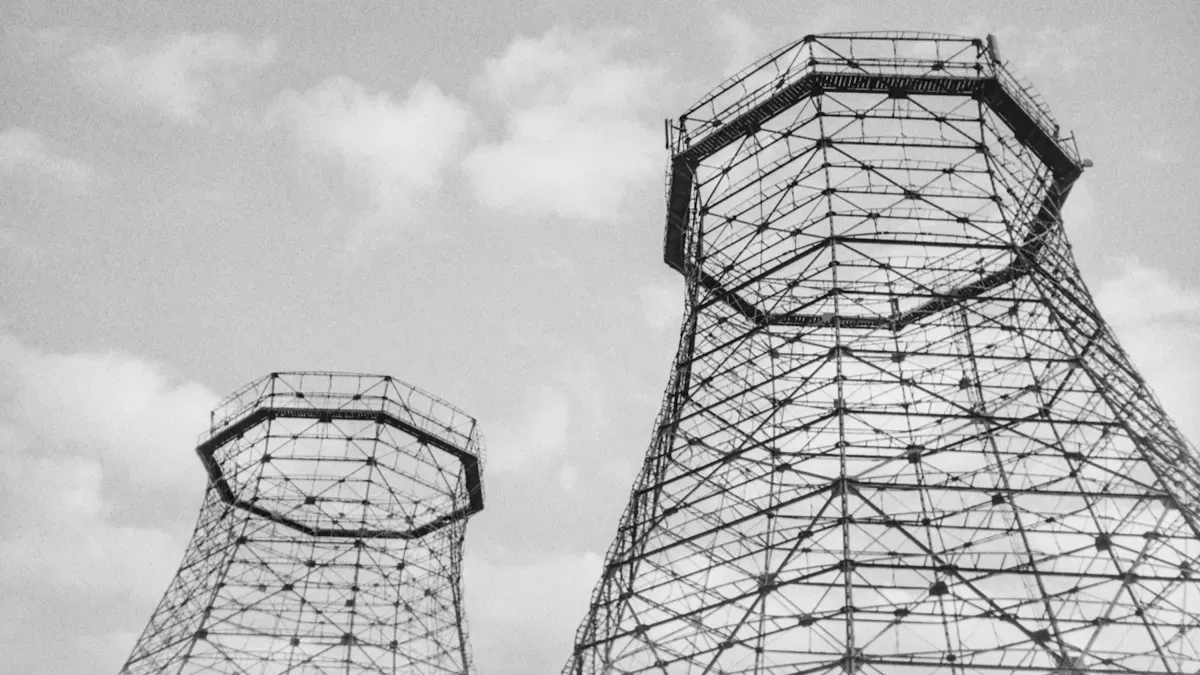
Corrosion Resistance
Performance in Wet Environments
Industrial cooling systems operate continuously in highly corrosive environments characterized by elevated humidity, chemical exposure, and cyclic temperature variations. Fiber-reinforced polymer composites exhibit exceptional resistance to these degradation mechanisms. Unlike metallic alternatives that experience progressive oxidation, FRP materials maintain structural integrity and surface finish throughout extended service periods.
These composite systems incorporate flame-retardant formulations and anti-static additives, addressing critical safety requirements in industrial facilities. The combination of chemical stability and electrical safety properties makes FRP particularly suitable for applications in petrochemical processing, power generation, and other high-risk environments.
Comparison with Steel and Concrete
Traditional construction materials have served the industry for decades, but their limitations become increasingly apparent in aggressive service conditions. Steel structures require extensive protective coating systems and periodic maintenance to prevent corrosion failure. Concrete exhibits cracking, spalling, and chemical attack when exposed to acidic condensate and thermal cycling.
In contrast, FRP composites require no protective coatings and demonstrate superior durability with minimal maintenance intervention. This fundamental difference in material behavior translates to lower total cost of ownership and extended service life, driving widespread industry adoption.
Lightweight and Durable
Easy Transport and Installation
The specific gravity of FRP composites is typically 70-80% lower than steel, creating substantial advantages in logistics and construction. Reduced component mass enables the use of smaller lifting equipment and simplifies site handling. The following comparison illustrates these differences:
| Material | Weight Characteristics | Structural Support Needs |
|---|---|---|
| FRP | Lightweight; simplifies installation & transport | Reduced need for heavy supports |
| Steel | Heavy; requires robust structural support | Requires significant support |
Lower structural loading reduces foundation requirements and building support systems, generating cost savings in the overall project budget. Accelerated construction schedules become achievable, enabling faster project completion and earlier operational start-up.
Long-Term Reliability
Engineering polymers demonstrate exceptional mechanical stability across wide temperature ranges while resisting chemical attack from acids, bases, and salts. The non-corrosive nature of FRP eliminates the progressive weakening observed in metal structures, ensuring consistent performance throughout the design service life.
Maintenance requirements are substantially reduced compared to traditional materials. The absence of coating failure, rust formation, and chemical degradation means longer intervals between inspections and minimal repair costs. This reliability ensures continuous operation and reduces lifecycle expenses.
Design Flexibility
Custom Profiles and Modular Solutions
Pultrusion and molding technologies enable the production of complex cross-sections and custom geometries that would be impractical or impossible with conventional materials. This manufacturing flexibility supports optimized structural design and application-specific solutions:
| Feature | FRP Cooling Towers | Traditional Cooling Towers |
|---|---|---|
| Customization | High, with modular designs available | Limited customization options |
| Installation | Easy and quick installation | Often complex and time-consuming |
| Durability | High durability and corrosion resistance | Prone to corrosion and wear |
| Life-cycle costs | Low life-cycle costs | High operational costs |
| Environmental impact | More sustainable, less water waste | Often considered environmentally harmful |
Modular construction approaches facilitate future expansion and modification. Standard components can be combined in various configurations, while custom elements address unique project requirements. This adaptability ensures that cooling systems can evolve with changing operational demands.
Integration with Modern Tower Designs
Contemporary cooling tower engineering incorporates advanced fill media, efficient drift eliminators, and high-performance fan systems. FRP materials integrate seamlessly with these technologies, serving multiple functions within the system:
Structural framing and casing components provide weather protection and mechanical support
Piping and distribution systems ensure uniform water flow patterns
Fill media maximize heat transfer surface area
Fan assemblies deliver efficient air movement with reduced weight
This comprehensive material solution enables integrated design approaches that optimize both thermal performance and structural efficiency. Advanced manufacturing capabilities ensure consistent quality across all system components.
Looking for Custom FRP Solutions for Your Cooling Tower Project?
Our engineering team specializes in designing and manufacturing high-performance FRP components tailored to your specific requirements. From standard profiles to complex custom assemblies, we deliver quality solutions backed by decades of composite expertise.
Request a QuoteThermal Insulation
Energy Efficiency
The thermal conductivity of glass fiber reinforced polymers is approximately 1/200th that of steel and 1/25th that of aluminum. This low thermal conductivity creates an effective insulation barrier, reducing parasitic heat transfer through tower walls and structural elements.
Temperature stability within the cooling system improves, reducing the energy required to maintain target operating conditions. Field studies document energy consumption reductions of 12-15% in humid climates when comparing FRP towers to steel construction. Some installations achieve energy savings approaching 25% annually when replacing reinforced concrete with advanced FRP systems.
Cooling Performance
Consistent thermal properties across the tower envelope maintain stable internal conditions regardless of ambient temperature fluctuations. This stability enhances process control and reduces cycling stress on mechanical equipment. The combination of low thermal mass and effective insulation enables rapid response to load changes while minimizing energy consumption.
Integrated fire protection and anti-static properties further enhance system safety and reliability. These characteristics are particularly valuable in chemical processing facilities, power plants, and other environments where safety is paramount.
Cost-Effectiveness
Reduced Maintenance
Lifecycle cost analysis consistently demonstrates the economic advantages of FRP construction. While initial material costs may exceed those of carbon steel, the elimination of coating maintenance, reduced inspection frequency, and extended service life generate substantial savings over the asset lifecycle.
The absence of corrosion means no unexpected failures, no emergency repairs, and predictable maintenance budgets. Planned maintenance intervals extend significantly, and when components do require replacement, the modular design facilitates rapid, low-cost upgrades.
Lifecycle Savings
Total cost of ownership encompasses acquisition, installation, operation, maintenance, and eventual decommissioning. FRP cooling towers deliver advantages in each category: lower structural costs due to reduced foundations, faster installation saving labor, lower energy costs from better insulation, minimal maintenance requirements, and longer useful life before replacement.
Industry Insight: Organizations selecting FRP cooling tower technology report reduced operational expenses and minimal unplanned downtime throughout the asset lifecycle.
Comprehensive engineering support and extensive product customization ensure optimal solutions for diverse applications. With proven performance across industries and robust safety certifications, FRP technology represents the evolution of modern cooling tower design.
FRP Products for Cooling Towers vs. Traditional Materials
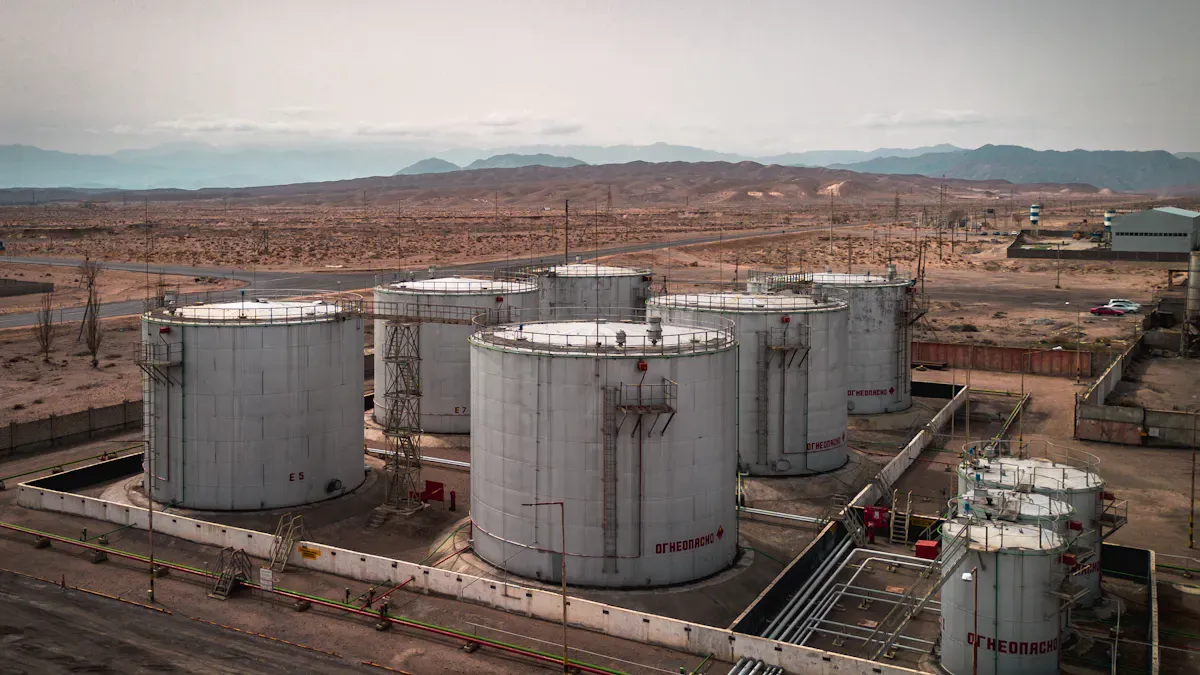
FRP vs. Steel
Corrosion and Maintenance
Steel cooling towers experience progressive deterioration from galvanic corrosion, particularly at welded joints and areas with coating damage. Protective systems require periodic renewal, adding to maintenance costs and creating operational disruptions during recoating operations.
Composite materials eliminate these concerns entirely. The comparison below highlights the fundamental differences:
| Feature | FRP Cooling Towers | Steel Cooling Towers |
|---|---|---|
| Corrosion Resistance | Excellent; minimal maintenance for corrosion control | Susceptible to corrosion; requires coatings |
| Maintenance | Lower; easy repair/replacement of modular components | Higher; periodic repairs and protective measures |
Modular component design enables rapid replacement of damaged elements without extensive disassembly. This approach minimizes downtime and reduces repair costs significantly compared to welded steel construction.
Weight and Setup
Heavy steel assemblies necessitate substantial foundation systems and large-capacity lifting equipment during construction. These requirements increase project costs and extend construction schedules. FRP components reduce these burdens dramatically, enabling faster, safer, more economical installation processes.
FRP vs. Concrete
Durability and Longevity
Concrete structures are vulnerable to alkali-aggregate reactions, sulfate attack, and chloride penetration. These mechanisms cause cracking, spalling, and progressive strength loss, particularly in chemically aggressive environments. Repair is costly and often requires extended outages.
FRP materials are chemically inert to most industrial environments and demonstrate stable mechanical properties throughout their design life. This inherent stability ensures reliable long-term performance without the degradation patterns characteristic of cementitious materials.
Assembly Speed
Concrete construction requires extensive formwork, curing time, and sequential construction methods. These factors extend project schedules significantly. Prefabricated FRP modules arrive ready for assembly, enabling rapid installation that keeps projects on schedule and reduces overall construction costs.
Environmental Impact
Sustainability
Energy-efficient building envelopes contribute to reduced HVAC loads during seasonal extremes. The long service life of FRP components minimizes material consumption over time. Many manufacturers employ production processes that reduce waste and environmental impact. Quality-certified products meet stringent international standards:
| Certification/Standard | Description |
|---|---|
| ISO 9001:2015 | Recognizes the conformance of quality management systems to international standards. |
| NSF International - ANSI NSF 61 | Certification that protects and improves global human health, ensuring safety in products and water. |
| BRE Global Certification | Represents quality and verifies products through Environmental Product Declarations (EPD) process. |
End-of-Life Options
Reduced maintenance requirements and lower water consumption throughout the operational phase contribute to environmental benefits. These systems help organizations meet sustainability objectives and reduce their environmental footprint.
The FRP cooling tower market is experiencing robust growth. From 2023 to 2026, market value is projected to increase from USD 2.05 billion to USD 2.73 billion, representing a compound annual growth rate of 5.2%. This expansion reflects increasing industry preference for FRP technology over traditional construction materials.
Industry Applications of FRP Cooling Towers
Cooling towers serve critical functions across diverse industrial sectors. Advanced FRP solutions address the unique requirements of each application, delivering enhanced performance, cost efficiency, and asset protection.
Power Generation
Performance Metrics
Power generation facilities require cooling systems that maintain precise temperature control under continuous high-load operation. Materials must withstand elevated temperatures, chemical water treatment programs, and year-round environmental exposure. FRP systems excel in these demanding conditions.
Operators evaluate system performance through multiple parameters:
Heat rejection capacity and thermal efficiency
Energy consumption per unit of cooling capacity
Maintenance frequency and associated costs
Expected service life and replacement intervals
FRP installations consistently demonstrate superior reliability metrics, reducing forced outages and optimizing plant availability. The economic benefits of reduced maintenance and extended service life make these systems increasingly attractive for both new construction and retrofit applications.
Note: Customizable profiles and dimensions enable precise matching to site-specific thermal loads and space constraints, ensuring optimal system performance for each installation.
HVAC and Commercial
Adaptation to Building Needs
Commercial buildings present unique challenges: limited rooftop space, aesthetic considerations, and integration with existing building systems. Modular FRP cooling towers address these requirements through compact designs, architectural finishes, and flexible configurations. Building managers appreciate:
Accelerated installation schedules that minimize disruption
Adaptable designs that fit constrained spaces
Reduced structural loading on roof systems
Inherent safety features for occupied buildings
These systems serve office complexes, retail centers, healthcare facilities, and other commercial applications effectively. Complementary products including cable management systems, access ladders, and protective railings create comprehensive installation packages.
| Application | FRP Advantage | Custom Solution |
|---|---|---|
| Office Buildings | Lightweight, modular | Tailored profiles |
| Hospitals | Antistatic, flame retardant | Safety fittings |
| Shopping Malls | Easy integration | Custom cable trays |
Manufacturing and Water Treatment
Chemical Resistance
Industrial manufacturing and municipal water treatment facilities operate cooling systems in highly corrosive environments. Chemical exposure from acids, alkalis, and oxidizing agents would rapidly degrade traditional materials. FRP composites maintain structural integrity and dimensional stability under these severe conditions.
Operational advantages include:
Extended equipment service life
Reduced maintenance interventions
Consistent performance throughout the asset lifecycle
Application-specific engineering ensures proper material selection and component design for each unique environment. Custom fittings and fasteners accommodate site-specific installation requirements, helping organizations avoid costly unplanned outages.
Tip: Comprehensive chemical resistance data and experienced engineering support ensure successful implementation in the most challenging industrial applications.
Ready to Upgrade Your Cooling Tower System?
Discover how our industry-leading FRP solutions can reduce your maintenance costs, improve energy efficiency, and extend the service life of your cooling infrastructure. Our team of experts is ready to discuss your specific requirements and provide tailored recommendations.
Get Expert ConsultationCustomization and Adaptability
Every cooling tower installation presents unique requirements related to thermal load, available space, ambient conditions, and integration with existing systems. Advanced GRP/FRP product lines offer comprehensive flexibility to address these diverse needs through customizable designs and scalable solutions.
Tailored Solutions
Modular Construction
Modular system architecture employs standardized connection interfaces that enable rapid assembly of prefabricated components. Construction teams benefit from simplified installation procedures and reduced field labor requirements. This approach minimizes installation errors and facilitates efficient quality control.
Component-level replacement capability is a significant advantage. When maintenance or upgrade is required, individual modules can be exchanged without extensive system disassembly. This reduces downtime and associated costs significantly.
Benefits of Modular Construction:
Accelerated installation timelines
Simplified maintenance and upgrade procedures
Reduced field labor requirements
Lower total installation costs
Tip: Modular design enables future capacity expansion or configuration changes without requiring complete system replacement, protecting infrastructure investments over time.
Integration with Existing Systems
Retrofit projects demand materials that integrate seamlessly with existing infrastructure. Custom-engineered profiles, connection hardware, and support systems enable successful integration with both legacy and modern equipment. This compatibility protects previous investments while upgrading critical components.
| Integration Feature | GRP/FRP Advantage |
|---|---|
| Custom Profiles | Fit any tower design |
| Flexible Connections | Easy to join with old systems |
| Lightweight Components | No need for extra supports |
Collaborative engineering processes ensure that solutions align with specific project requirements. Technical teams work directly with customers to understand operational constraints and develop optimized system designs that deliver reliable long-term performance.
Scalability
Large and Small Projects
Manufacturing capabilities support projects across a wide capacity range, from small commercial installations to large industrial complexes. Volume flexibility enables efficient production whether the requirement is a few specialized components or complete system packages for multi-unit facilities.
Examples of Scalability:
Large industrial facilities requiring multiple cooling cells receive integrated system packages with standardized components that assemble efficiently on-site
Small commercial buildings benefit from compact, complete cooling units designed for space-constrained rooftop installations
Note: Scalable manufacturing and engineering processes deliver consistent quality and value regardless of project size, ensuring optimal outcomes for every application.
This comprehensive approach to customization and scalability ensures that cooling systems deliver optimal thermal performance, operational efficiency, and long-term reliability across diverse industrial applications.
Trends in FRP Cooling Towers (2026)
Pultruded Profiles
Advanced Manufacturing
Pultrusion technology has become the dominant manufacturing method for structural FRP components. This continuous process pulls fiber reinforcement through resin baths and heated dies, creating profiles with consistent cross-sections and optimized fiber orientation. The result is structural elements with exceptional strength-to-weight ratios and uniform mechanical properties.
Modern manufacturing facilities employ computer-controlled pultrusion lines that maintain precise dimensional tolerances and surface finishes. Quality assurance programs ensure compliance with international standards and specifications. Integrated safety features including flame retardancy and anti-static properties are engineered into the base material formulation, ensuring consistent performance across all applications.
Pultruded profiles enable the construction of cooling towers that deliver superior longevity and reduced lifecycle maintenance compared to traditional alternatives.
Modular Tower Designs
Installation Efficiency
Modular construction methodology is revolutionizing cooling tower installation practices. Factory-fabricated assemblies arrive at job sites ready for final assembly, dramatically reducing field labor requirements. Mechanical connections replace traditional field welding, accelerating installation while improving quality control.
Field installation teams can complete tower erection in a fraction of the time required for conventional construction. The reduced labor requirement translates directly to lower project costs and faster commissioning schedules. Future modifications or capacity increases become practical through the addition of standardized modules.
| Feature | Modular FRP Towers | Traditional Towers |
|---|---|---|
| Installation Time | Short | Long |
| Flexibility | High | Low |
| Upgrade Options | Easy | Difficult |
Modular design philosophy enables organizations to complete projects on accelerated schedules while maintaining operational flexibility for future system evolution.
Market Growth
Industry Adoption
Market analysis indicates robust expansion in FRP cooling tower adoption across multiple industrial sectors. Organizations increasingly recognize the total cost of ownership advantages these systems deliver through reduced maintenance, extended service life, and lower energy consumption.
Recent market research reveals significant growth trends:
Global FRP Cooling Tower Market projected to reach USD 2.73 billion by 2026
Compound annual growth rate of 5.2% from 2023 to 2026
Diverse industrial applications are driving this expansion. Power generation facilities, chemical processors, manufacturing plants, and commercial buildings are all implementing FRP cooling technology. The combination of proven performance, economic advantages, and environmental benefits positions FRP as the preferred solution for modern cooling infrastructure.
Organizations adopting FRP cooling tower technology gain competitive advantages through improved reliability, reduced operating costs, and enhanced sustainability performance.
Choosing the Right FRP Cooling Tower Partner
Selecting a qualified supplier is critical to project success. Evaluation criteria should encompass product quality, manufacturing capabilities, technical support resources, and global logistics infrastructure. The ideal partner delivers consistent quality, responsive service, and comprehensive solutions that address specific project requirements.
Supplier Criteria
Quality Assurance
Rigorous quality management systems ensure consistent product performance across production batches. Multi-stage inspection protocols verify dimensional accuracy, mechanical properties, and surface finish throughout the manufacturing process. This systematic approach delivers reliable products that meet or exceed project specifications.
Essential supplier evaluation criteria include:
| Criteria | Description |
|---|---|
| Product quality and consistency | Superior FRP components demonstrate excellent mechanical properties and corrosion resistance. Consistent quality across production batches is essential, particularly for large-scale projects. |
| Range of solutions | Leading suppliers offer comprehensive product portfolios including structural profiles, connection hardware, and ancillary components. This breadth simplifies procurement and ensures system compatibility. |
| Manufacturing capability | Vertically integrated manufacturers maintain direct quality control throughout production. This structure enables rapid response to custom requirements and ensures consistent delivery performance. |
| Technical support | Qualified engineering teams provide installation guidance, answer technical questions promptly, and deliver comprehensive documentation. This support ensures successful project execution. |
| Distribution and availability | Robust logistics networks ensure on-time delivery to project sites globally. Reliable supply chains minimize schedule risk and support project timeline commitments. |
Vertically integrated manufacturing provides direct control over material selection, process parameters, and quality verification. This approach ensures that products consistently meet demanding application requirements. Adherence to international quality standards provides additional confidence in product reliability and performance.
After-Sales Support
Professional support extends throughout the project lifecycle and beyond. Comprehensive installation documentation, field technical assistance, and responsive customer service ensure successful commissioning and long-term satisfaction. Access to experienced application engineers helps resolve challenges quickly, minimizing downtime and protecting project investments.
Industry Leadership
Customer Satisfaction
Customer-focused organizations invest in understanding specific application requirements and developing optimized solutions. Engineering teams collaborate closely with customers to ensure that products align with technical specifications, operational constraints, and budget parameters.
Comprehensive product portfolios including structural profiles, fastening systems, cable management components, and access structures enable single-source procurement that simplifies project management and ensures system compatibility. Safety, performance, and usability are engineered into every product, supported by extensive testing and certification.
Continuous investment in research and development ensures that customers benefit from the latest material technologies, manufacturing processes, and engineering innovations.
Global Reach
International distribution capabilities support projects worldwide. Established logistics networks ensure reliable delivery regardless of project location. This global infrastructure enables consistent service quality across geographic regions while maintaining responsive local support.
Both large industrial installations and small commercial projects receive the same engineering attention and quality commitment. This consistency ensures successful outcomes across the full spectrum of cooling tower applications.
Conclusion
FRP composite materials represent the current state of the art in cooling tower construction. Their combination of corrosion resistance, structural efficiency, thermal performance, and design flexibility addresses the most demanding industrial applications. Economic advantages from reduced maintenance and extended service life make these systems increasingly attractive across diverse sectors.
Organizations seeking reliable, cost-effective cooling infrastructure should evaluate FRP technology as the foundation for new installations and system upgrades. The proven performance, growing market adoption, and comprehensive supplier support make this an excellent time to implement advanced FRP solutions.
For cooling tower components you can depend on, partnering with experienced manufacturers provides access to quality products, technical expertise, and reliable support that ensure project success.
Frequently Asked Questions
What makes GRP/FRP products ideal for cooling towers?
These composite materials resist corrosion and chemical attack while maintaining structural integrity in wet environments. Their lightweight nature simplifies installation, and integrated safety features including flame retardancy and anti-static properties enhance workplace safety across diverse applications.
How long do FRP cooling towers last?
Properly designed and maintained FRP cooling towers typically deliver 25+ years of reliable service. The corrosion-resistant nature of composite materials eliminates the deterioration mechanisms that limit the service life of metal and concrete structures. Regular inspection and maintenance can extend operational life significantly beyond typical design specifications.
Can FRP products be customized for specific projects?
Yes. Modern manufacturing capabilities support extensive customization including dimensional specifications, profile geometries, surface finishes, and integrated connection systems. Engineering teams collaborate with customers to develop optimized solutions that address unique project requirements.
Are FRP cooling towers easy to maintain?
Maintenance requirements are substantially lower than traditional materials. The absence of corrosion eliminates coating renewal and rust treatment. Modular design facilitates rapid component replacement when required. Comprehensive technical support assists customers with any service requirements that arise during the operational lifecycle.
Do FRP products help save energy?
Yes. Low thermal conductivity creates an effective insulation barrier that reduces parasitic heat transfer. This thermal efficiency reduces energy consumption required to maintain target operating temperatures. Many installations document measurable reductions in operational energy costs following conversion to FRP construction.
Are FRP products safe for use in chemical plants?
FRP composites demonstrate excellent resistance to acids, bases, and many organic chemicals. This chemical stability makes them well-suited for demanding industrial environments including chemical processing facilities and water treatment plants. Specific material formulations can be selected to optimize resistance to particular chemical exposures.
How fast can FRP cooling tower components be delivered?
Established global distribution networks support timely delivery to project sites worldwide. Standard FRP profiles and components typically ship within 2-4 weeks of order confirmation. Custom-engineered solutions may require 4-8 weeks depending on complexity and production schedules. Manufacturing flexibility enables responsive production scheduling to support demanding project timelines, with expedited options available for critical applications.
What support is available after installation?
Comprehensive technical support extends throughout the product lifecycle. This includes detailed installation manuals, on-site commissioning assistance, and ongoing technical consultation. Most manufacturers offer warranty coverage ranging from 5-15 years on structural components, with extended warranty options available. Responsive customer service teams address inquiries within 24-48 hours, ensuring minimal downtime in the event of any issues.