


FRP vs Steel Structural Shapes Which Material Wins in Harsh Environments

FRP structural shapes generally win in harsh environments. They resist corrosion and need less maintenance. Steel remains the better choice for high-load and high-temperature applications. This comparison examines corrosion, durability, weight, strength, installation, and lifecycle cost. A quick comparison: FRP vs steel at a glance shows clear trade-offs. Fiber reinforced polymer, or FRP, offers distinct advantages in chemical plants and coastal sites. FRP and steel each serve different project needs. Which material should you choose for your project? The answer depends on your environment and load requirements. This article provides a direct FRP vs. steel evaluation to guide that decision.
Key Takeaways
FRP resists corrosion and needs less maintenance in harsh environments.
Steel handles high loads and high temperatures better than FRP.
FRP lasts over 50 years in marine settings with minimal maintenance.
Steel typically requires repainting every 3-5 years and may need replacement by year 15 in severe environments.
FRP weighs 70-75% less than steel, making installation easier.
FRP costs 1.5-2.5 times more upfront but can cut 20-year ownership cost.
Choose FRP for chemical, coastal, and wastewater projects. Choose steel for heavy loads, high heat, and seismic zones.
FRP vs Steel: Material Composition Basics
What FRP Structural Shapes Are Made Of
Fiberglass Reinforcement and Resin Matrix
FRP structural shapes combine glass fibers with a resin matrix. The fibers carry load. The resin binds them and shields them from the environment. Pultrusion pulls fiber rovings and mats through a resin bath, then through a heated die that shapes and cures the profile. This continuous process yields constant cross-section profiles — rods, bars, tubes, angles, channels, I-beams — at 0.5-2 m/min with consistent fiber volume fraction (55-65%[1]) and excellent dimensional repeatability. That high fiber loading gives structural FRP its strength.
Resin Types and Corrosion Resistance
Resin choice determines chemical durability. The hierarchy runs epoxy > vinyl ester > isophthalic polyester > orthophthalic polyester. Vinyl ester uses an epoxy backbone with reactive groups only at chain ends, so fewer exposed ester linkages resist hydrolysis, acids, alkalis, and water absorption. Isophthalic polyester handles 25% sulfuric acid up to 170°F and 10% hydrochloric acid up to 140°F. Orthophthalic polyester suits general applications only.
| Resin Type | Fiber Type | Relative Cost Level | Common Use |
|---|---|---|---|
| Polyester | E-Glass | Low | Most common, general FRP profiles |
| Vinyl Ester | E-Glass or S-Glass | Medium | Chemical and marine environments |
| Epoxy | Carbon or S-Glass | High | High-performance structural members |
| Polyurethane | E-Glass | Medium to High | Advanced pultrusion, impact resistance |
What Steel Structural Shapes Are Made Of
Carbon Steel and Its Variants
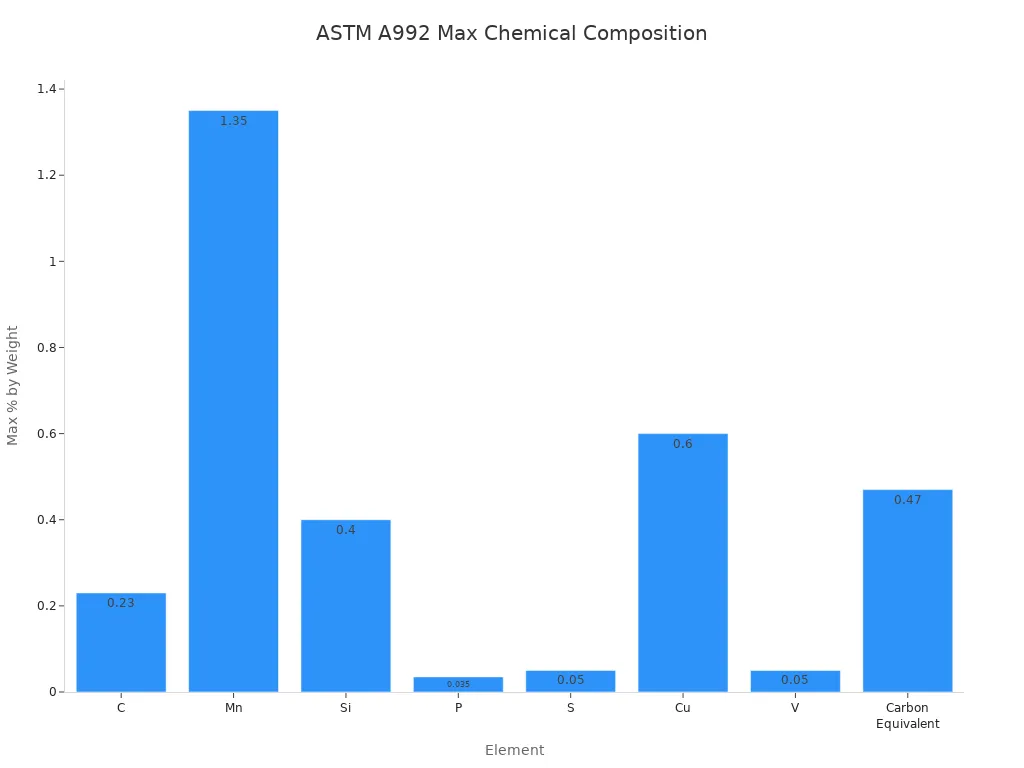
ASTM A36[2] steel contains roughly 98% iron, 0.25-0.29% carbon, 1.03% manganese, and small amounts of copper, silicon, phosphorus, and sulfur. Its minimum yield strength is 36,300 psi, with ultimate tensile strength of 58,000-80,000 psi. ASTM A992[3] steel offers a minimum yield strength of 50,000 psi (345 MPa for thickness up to 16 mm) and ultimate tensile strength of 65,000 psi. A992 caps carbon at 0.23% and adds vanadium for grain refinement.
Protective Coatings and Limits
Steel relies on coatings — paint, galvanizing, or powder — to resist corrosion. These barriers work well until they scratch, chip, or wear through. Once breached, rust spreads beneath the coating surface, often unnoticed until structural loss occurs.
Why Composition Drives Performance
Molecular Structure and Failure Modes
The comparison between fiber reinforced polymer and steel starts at the molecular level. Steel's metallic bonds allow plastic deformation, so it yields and bends before breaking. FRP's cross-linked polymer matrix behaves elastically until brittle fracture. Each failure mode suits different safety philosophies.
Material Choice As First Defense
Material selection is the first defense against environmental attack. A fiber-reinforced polymer profile with vinyl ester resin resists chemical attack inherently. Steel needs continuous protection. This FRP vs steel comparison shows that composition dictates corrosion resistance, maintenance needs, and service life before any design detail matters.
Corrosion Resistance and Durability Comparison

This section examines the core differentiator in the FRP vs steel debate for harsh environments. The comparison reveals why project specifications often favor composite materials. Understanding corrosion resistance and durability helps engineers avoid premature failures.
FRP Corrosion Resistance By Environment
Chemical and Acidic Exposure
Fiber reinforced polymer structural shapes resist a broad spectrum of chemicals. Vinyl ester resin profiles withstand concentrated sulfuric acid at temperatures up to 170°F. Polyester-based profiles handle hydrochloric acid up to 140°F. The polymer matrix does not react electrochemically with acids or alkalis. This inherent corrosion resistance eliminates pitting or stress corrosion cracking. Facilities handling aggressive chemicals choose corrosion-resistant fiberglass-reinforced polymer profiles. They avoid the frequent replacements that steel requires.
Saltwater and Coastal Conditions
Marine environments aggressively attack metals through chloride ions. A fiber reinforced polymer profile remains inert to saltwater. No galvanic corrosion occurs[4] when FRP contacts dissimilar metals. Coastal infrastructure such as piers and boardwalks relies on FRP for service lives exceeding 50 years. The material requires no anodic protection or coatings. This advantage matches the needs of coastal, chemical, and marine environments.
Wastewater and High-Moisture Settings
Wastewater treatment plants expose materials to hydrogen sulfide gas, moisture, and biological acids. Steel corrodes rapidly. FRP shows no degradation. A 20-year wastewater facility case report documented FRP structural shapes requiring no painting or recoating. Coated steel needed three painting cycles and full replacement by year 15. The total cost for steel reached $650 per unit versus $280 for FRP, reporting a 57% lower 20-year cost in that case. The difference between FRP and steel becomes stark in such environments.
Steel Corrosion Resistance By Environment
Rust and Oxidation in Humid or Marine Air
Steel begins rusting when moisture contacts its surface. In humid coastal air, oxidation progresses rapidly. Protective paint systems slow this process but require strict application. Once scratched, rust spreads beneath the coating. Hidden section loss occurs without visible warning.
Chemical Attack and Coating Breakdown
Exposure to acids or caustic solutions accelerates coating failure. Small breaches allow chemicals to attack the underlying metal. Standard carbon steel offers no intrinsic chemical resistance. Owners must budget for periodic repainting. This applies to structural shapes and grating systems alike.
Galvanized and Stainless Steel Limits
Hot-dip galvanizing adds a zinc layer that sacrifices itself. In highly acidic or alkaline environments, the zinc dissolves quickly. Stainless steel 316L resists chloride pitting. It still suffers crevice corrosion in stagnant seawater or chlorine gas environments. Both options carry a significant cost premium compared to standard steel.
Maintenance Requirements Over Time
FRP Maintenance Frequency and Cost
FRP requires no painting, coating, or cathodic protection for corrosion management. Inspection cycles focus only on mechanical damage from impact or overload. In the wastewater example, no maintenance was required over the 20-year observation period. This eliminates labor, material, and downtime costs. The material wins when lifecycle expenses matter.
Steel Maintenance Frequency and Cost
Coated carbon steel requires annual inspections and touch-up painting every three to five years. Full recoating is needed every ten to fifteen years. In severe environments, replacement becomes necessary at year 15. Each painting cycle incurs costs for surface preparation, application, and production lost during downtime.
| Metric | Coated Carbon Steel | FRP (Fiberglass) |
|---|---|---|
| Initial material cost | Lower (baseline) | 1.5-2.5x higher |
| Installation cost | Higher (heavier) | Lower (lighter) |
| Painting/coating cycles | 3 cycles required | Not required |
| Inspection & maintenance | Required | None |
| Replacement timing | Year 15 | None within 20 years |
| Service life in corrosive environments | ~15 years | 50+ years |
| 20-year total ownership cost | $650 | $280 |
| Cost savings | - 57% lower over 20 years | |
The table confirms that for coastal, chemical, and marine environments, the material decision favors composites when total cost matters. By eliminating maintenance, FRP provides a predictable, low-cost alternative. Steel maintains an advantage only in high-load or high-temperature applications.
Weight and Installation Advantages
FRP Weight Advantages: One-Quarter The Weight Of Steel
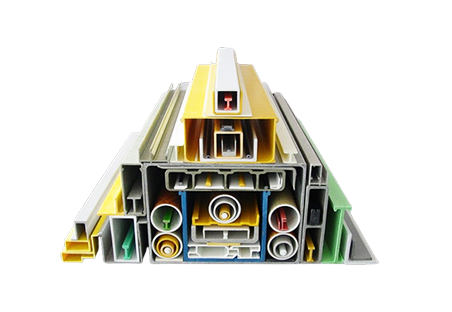
Weight defines the installation strategy for any structural project. Pultruded FRP offers a dramatic reduction here. The material weighs roughly 70-75% less than steel for equivalent profiles. A 38 mm molded FRP panel weighs 15-20 kg/m². An equivalent steel grating panel weighs 40-60 kg/m². This gap stems from density. Pultruded FRP has a density near 1.8 g/cm³. Structural steel measures 7.85 g/cm³. That difference creates a high strength-to-weight ratio that changes how crews handle materials on site.
| Material | Density (g/cm³) | Panel Weight (kg/m²) |
|---|---|---|
| Pultruded FRP | ~1.8 | 15-20 (38 mm molded panel) |
| Structural Steel | 7.85 | 40-60 (equivalent grating) |
Reduced Labor and Equipment Needs
Two workers can carry and position FRP panels by hand. No cranes or hoists are needed for most installations. This eliminates welding, hot-work permits, and heavy lifting equipment. Field modifications require only standard hand tools. Steel field modifications require welding or grinding equipment. That adds cost and schedule risk in hazardous environments. The advantages of FRP become most visible on elevated platforms, retrofits, offshore decks, and remote sites where access is limited.
Steel Weight On Site
Heavy Lifting and Equipment Requirements
Steel's mass demands mechanical lifting for large installations. Cranes and hoists become mandatory. Each lift requires rigging plans, certified operators, and safety zones. These requirements multiply labor hours and equipment rental costs. The logistical burden grows with project height and distance from staging areas.
Transportation and Logistics Challenges
Heavy steel sections increase freight costs. They limit the number of pieces per truckload. They require reinforced staging areas and specialized handling equipment. Remote sites face particular difficulty. Every ton shipped adds fuel, permits, and scheduling complexity. These factors compound the delivered cost of steel structures.
Installation Cost Comparison
Short-Term Savings With FRP
The installation comparison favors FRP in most field conditions. Lighter components mean faster placement. Crews complete more work per shift. Equipment rental periods shrink. Safety risks decline when workers handle lighter loads. These factors produce measurable short-term savings. Project schedules compress when welding and hot-work permits disappear from the critical path.
When Steel's Weight Is Not A Drawback
Steel's weight becomes an asset in certain cases. High-load foundations and heavy industrial floors benefit from steel's mass. Bottom-heavy structures gain stability from steel's density. When cranes and welding crews are already mobilized on site, the incremental cost of handling steel drops. In these scenarios, the weight penalty of steel becomes a fair trade against its structural capacity.
Strength and Structural Performance
Load-Bearing Capacity Of FRP
Tensile and Flexural Strength
Fiber reinforced polymer delivers impressive tensile capacity. Glass fiber pultruded FRP reaches 300-600 MPa ultimate tensile strength. Carbon fiber variants climb to 1,400 MPa. These values rival or exceed A36 steel, which measures 400-600 MPa. Flexural strength follows a similar pattern. The resin matrix transfers stress between fibers efficiently. This mechanism allows FRP structural shapes to carry significant loads without yielding.
| Material | Ultimate Tensile Strength (MPa) |
|---|---|
| Glass fiber pultruded FRP | 300-600 |
| Carbon fiber pultruded FRP | up to 1,400 |
| A36 steel | 400-600 |
Strength-To-Weight Ratio Advantage
The comparison shifts dramatically when weight enters the equation. FRP's strength-to-weight ratio far exceeds steel's. A pultruded profile weighs roughly one-quarter as much as an equivalent steel section. This high strength-to-weight ratio enables longer spans with lighter support structures. Engineers gain design flexibility. Transport and erection costs drop. The FRP vs steel comparison favors composites whenever dead load matters.
Load-Bearing Capacity Of Steel
High-Load and High-Temperature Applications
Steel dominates where loads reach extreme levels. A36 steel provides 58,000-79,800 psi ultimate tensile strength. It maintains structural integrity at elevated temperatures. FRP softens as heat rises. Steel does not. Heavy industrial floors, bridge girders, and pressure vessels rely on steel's capacity. These applications demand performance that composites cannot match.
Where Steel Remains Unmatched
Certain conditions favor steel exclusively. High-temperature processes exceed FRP's thermal limits. Impact-heavy environments benefit from steel's toughness. Seismic zones often specify steel for its ductility. The FRP strength vs. steel strength debate ends here. Steel wins when raw load capacity and thermal stability matter most.
Stiffness, Deflection, and Safety
Elastic Modulus and Deflection Limits
Stiffness separates these materials sharply. FRP has an elastic modulus of 2,800,000 psi[5]. Steel's modulus reaches approximately 29,000,000 psi. This gap means FRP deflects more under identical loads. Designers manage this through geometry. FRP pedestrian bridges use a live load deflection limit of L/240[5]. A service load limit of L/250 applies in many designs. Spans above 20 meters prefer L/400 for user comfort. Vibration serviceability requires vertical frequency above 5 Hz.
Elastic modulus of FRP: 2,800,000 psi
Live load deflection limit: L/240
Service load deflection limit: L/250 maximum
Spans above 20 meters: L/400 preferred
Vibration serviceability: vertical frequency >5 Hz
Brittle Versus Plastic Failure Behavior
Failure modes differ fundamentally. Steel yields and bends before breaking. This plastic behavior provides warning and redistributes load. FRP fractures suddenly with little deformation. Engineers must design FRP and steel structures with different safety factors. The properties and performance of each material demand distinct design approaches. Understanding these differences ensures safe, reliable structures in every application.
Common Challenges Of FRP And Steel
Challenges With FRP Structural Shapes
Lower Stiffness and Elastic Modulus
FRP has a lower elastic modulus than steel. This means FRP deflects more under the same load. Designers must account for this by using deeper sections or adding support. Long spans may require additional bracing. This adds material and cost. Engineers who understand this limitation can design around it effectively.
UV Degradation and Fire Performance
Sunlight degrades unprotected FRP over time. Ultraviolet radiation breaks down the resin surface. This causes fiber bloom and color fading. Fire performance also presents challenges. FRP burns unless manufacturers add fire retardants. These additives change the resin chemistry. They may reduce other properties slightly. Proper formulation balances fire safety with structural needs.
Fabrication Familiarity and Availability
Many contractors know steel fabrication well. They know less about working with fiber reinforced polymer. Cutting and drilling FRP requires different tools and techniques. Dust control matters more. Local suppliers may not stock FRP shapes. This can extend lead times. Training and planning help crews adapt to these differences.
Challenges With Steel Structural Shapes
Hidden Corrosion Under Coatings
Steel corrodes beneath intact coatings. A small scratch lets moisture reach the metal. Rust spreads outward from that point. Inspectors cannot see this damage without removing the coating. By the time rust shows on the surface, significant section loss may have occurred. This hidden threat drives frequent inspections.
Thermal Expansion and Fatigue
Steel expands and contracts with temperature changes. This movement stresses connections over time. Repeated cycles cause fatigue cracking. Welded joints are especially vulnerable. Designers add expansion joints and detail connections carefully. These measures add complexity and cost to steel projects.
Sustainability and Regulatory Pressure
Steel production generates significant carbon emissions. Regulators increasingly target heavy industry. Owners face pressure to choose lower-impact materials. The comparison between FRP and steel now includes environmental factors. This trend favors composites in some applications.
Mitigating Weaknesses
Design and Coating Strategies For Steel
Engineers extend steel life through smart design. They avoid traps where moisture collects. They specify proper drainage and ventilation. Coating systems require correct surface preparation. Multiple coats with compatible chemistries provide better protection. Regular inspections catch coating failures early.
Resin Selection and Additives For FRP
Manufacturers improve FRP durability through formulation. UV stabilizers absorb or reflect harmful radiation. Surface veils create a resin-rich barrier against moisture and abrasion. Gel coats add a sacrificial layer. Pigments block UV and darker colors offer better protection. The most effective approach combines UV stabilizers in the resin with surface protection like gel coats or synthetic veils. This multi-layer defense delivers the longest service life outdoors.
| Protection Method | Function | Limitation |
|---|---|---|
| UV Stabilizers | Absorb or neutralize UV radiation | Deplete over time |
| Surface Veils | Sacrificial barrier against UV and moisture | Surface-level only |
| Gel Coats | Shield structural core from attack | Requires maintenance |
| Pigmentation | Blocks and scatters UV | Darker colors absorb heat |
Performance, Cost, and Application Comparison
Upfront Material and Fabrication Costs
FRP Structural Shapes Pricing Factors
Fiber reinforced polymer pricing depends on resin type, fiber content, and profile complexity. Vinyl ester resins cost more than polyester. Carbon fiber reinforcement pushes prices far above glass fiber. Custom shapes require new dies, which adds tooling expense. Production volume also matters. Large orders spread die costs across more units. A quick comparison: FRP vs steel at a glance shows FRP carries a higher upfront price. The material typically costs 1.5 to 2.5 times more than coated carbon steel for equivalent profiles.
Steel Structural Shapes Pricing Factors
Steel pricing tracks raw material markets. Carbon steel remains the baseline for structural shapes and grating. A36 and A992 grades are widely available. Fabrication costs include cutting, welding, drilling, and coating. Galvanizing adds a zinc layer. Stainless steel 316L carries a significant cost premium. Market volatility affects steel prices more than FRP prices. Buyers who order steel in bulk may secure better rates.
Total Cost Of Ownership Over 20-30 Years
Maintenance, Repair, and Replacement
The FRP cost vs. steel cost picture changes over time. Coated carbon steel demands three painting cycles over 20 years. Full replacement becomes necessary at year 15 in severe environments. FRP requires no painting or coating for corrosion resistance. A 20-year wastewater case report documented zero painting for FRP. Steel needed three painting cycles and full replacement by year 15. This comparison favors composites when service life exceeds 15 years.
Downtime and Production Loss
Maintenance creates downtime. Painting steel requires surface preparation, application, and curing time. Production stops during these periods. Replacement of corroded steel sections causes longer outages. FRP eliminates these scheduled interruptions. Facilities maintain continuous operation. The cost of lost production often exceeds the direct maintenance expense.
| Metric | Coated Carbon Steel | FRP |
|---|---|---|
| Initial material cost | Lower (baseline) | 1.5-2.5x higher |
| Painting cycles (20 years) | 3 | 0 |
| Replacement timing | Year 15 | None within 20 years |
| 20-year total cost | $650 per unit | $280 per unit |
| Cost savings | - 57% lower | |
The table confirms that performance, cost, and application comparison favors FRP in corrosive settings. Steel wins only when loads or temperatures exceed FRP limits.
Best-Fit Applications For Each Material
FRP In Chemical, Marine, And Wastewater Settings
FRP applications thrive in aggressive environments. Chemical plants use FRP profiles for walkways, platforms, and support structures. Coastal facilities specify FRP for piers, boardwalks, and handrails. Wastewater treatment plants rely on FRP for grating, ladders, and cable trays. These settings expose materials to acids, saltwater, and hydrogen sulfide gas. FRP profiles resist chemical attack without coatings. Service lives exceed 50 years in many marine installations.
Steel In High-Load And High-Temperature Settings
Steel remains unmatched for extreme loads and heat. Bridge girders, heavy industrial floors, and pressure vessels require steel's capacity. A36 steel provides 58,000-79,800 psi ultimate tensile strength. Steel maintains integrity at elevated temperatures where FRP softens. Seismic zones specify steel for its ductility. Impact-heavy environments benefit from steel's toughness. An application guide: when to choose FRP vs steel must account for these conditions. Steel wins when raw load capacity and thermal stability matter most.
FRP vs Steel Decision Guide
Decision Checklist For Material Selection
Key Questions Before Choosing
Every project begins with conditions that narrow the material choice. A structured checklist helps engineers evaluate the most critical factors before committing to a design. The table below summarizes the key questions and their implications.
| Question | Consider Composite | Consider Metal |
|---|---|---|
| Is corrosion a major concern? | Yes | No |
| Is weight a critical factor? | Yes | No |
| Is long-term maintenance budget limited? | Yes | No |
| Is electrical conductivity a concern? | Yes | No |
| Is initial cost the primary driver? | No | Yes |
| Are very high compressive loads expected? | No | Yes |
| Is sustained high-temperature service required? | No | Yes |
| Is recyclability mandatory? | No | Yes |
| Is ductile failure required (e.g., seismic)? | No | Yes |
Engineers tally the YES and NO responses. A majority of YES answers points toward composite materials. A majority of NO answers suggests metallic materials.
When To Consult An FRP Structural Shapes Manufacturer
Projects with multiple YES answers benefit from early manufacturer engagement. Specialists recommend specific resin systems, fiber architectures, and profile geometries. Readers who seek a dependable supplier of pultruded profiles, fasteners, cable trays, ladders, handrails, and fences may consider NHC. A broad product line offers both standard and custom solutions for corrosive environments.
Matching Material To Project Conditions
Environment Severity and Load Demand
The service environment dictates the first filter. A walkway inside a chemical process area demands corrosion resistance. A bridge girder requires high load capacity. The FRP vs steel decision narrows quickly when engineers classify severity and demand together. A coastal walkway with moderate pedestrian loads fits fiber reinforced polymer perfectly. A heavy industrial crane runway favors metal.
Budget, Timeline, and Service Life
Initial cost dominates early discussions. Metallic materials carry a lower upfront price. Composite materials save money over decades by eliminating painting and replacement. The timeline also matters. Composite installation proceeds faster due to lighter weight. Service life expectations shift the calculation. A 10-year project may tolerate frequent maintenance. A 50-year structure demands materials that resist degradation.
Final Verdict By Scenario
When FRP Wins
Composite materials win in chemical plants, wastewater facilities, and marine environments. Weight reduces foundation and rigging costs. The list of FRP applications includes walkways, handrails, cable trays, and ladders in aggressive settings. This application guide: when to choose FRP vs steel points to composites whenever corrosion or maintenance dominate.
When Steel Wins
Metallic materials win under extreme loads and high temperatures. Heavy industrial floors, bridge girders, and pressure vessels require high capacity. Seismic zones demand ductile failure behavior. Metallic structural shapes remain the standard where load governs. The total cost comparison favors metal when initial budget constraints override long-term maintenance savings.
Conclusion
FRP structural shapes win in harsh environments. They deliver corrosion immunity, lower maintenance needs, and a significantly longer service life. Steel remains the better choice for high-load and high-temperature applications where ductility matters. Four factors guide this material decision: environment severity, load requirements, available budget, and project timeline. Readers should apply the FRP vs steel decision checklist to their specific conditions before making a final choice. These criteria determine whether composite or metallic materials best serve the project's unique demands. A structured approach eliminates guesswork and reduces long-term risk.
Project teams seeking a dependable FRP structural shapes manufacturer may consider NHC. The company provides pultruded profiles, fasteners, cable trays, ladders, handrails, and fences engineered for corrosive environments.
Need FRP Structural Shapes for a Corrosive Environment?
From pultruded profiles and grating to cable trays and handrails, our team can recommend the right resin system and profile geometry for your project conditions. Send your specification and get a tailored proposal.
Next: How Are FRP Pultruded Tubes Made? A Step-by-Step Guide
FAQ
How long do FRP structural shapes last in corrosive environments?
FRP profiles resist chemical attack and do not rust. Marine installations often exceed 50 years of service. A wastewater case report showed zero painting over 20 years. Steel in the same setting needed replacement by year 15.
Do FRP structural shapes cost more than steel upfront?
Yes. FRP typically costs 1.5 to 2.5 times more than coated carbon steel for equivalent profiles. Resin type, fiber content, and custom tooling drive the price. Large orders spread die costs across more units and reduce the per-unit price.
Can FRP replace steel in high-temperature applications?
No. FRP softens as heat rises, while steel maintains integrity at elevated temperatures. High-temperature processes exceed FRP's thermal limits. Steel remains the standard for pressure vessels, bridge girders, and heavy industrial floors where heat and load govern.
What maintenance does steel need in coastal or chemical settings?
Coated carbon steel requires annual inspections and touch-up painting every three to five years. Full recoating occurs every ten to fifteen years. In severe environments, replacement becomes necessary at year 15. Each cycle adds labor, material, and downtime costs.
How much lighter are FRP shapes compared to steel?
Pultruded FRP weighs roughly 70-75% less than steel for equivalent profiles. Its density is near 1.8 g/cm³ versus 7.85 g/cm³ for structural steel. Two workers can often carry and position FRP panels by hand without cranes.
Does FRP fail suddenly like glass?
FRP fractures with little deformation, so it offers less warning than steel. Steel yields and bends before breaking, which redistributes load. Engineers must apply different safety factors for each material. Proper design accounts for this brittle behavior.
When should a project choose steel over FRP?
Steel wins under extreme loads, high temperatures, and seismic conditions. It provides ductile failure behavior and high compressive capacity. Heavy industrial floors, bridge girders, and pressure vessels require steel's performance. Initial budget constraints may also favor steel.
Can crews fabricate FRP shapes in the field?
Yes, but the methods differ from steel. Crews cut and drill FRP with standard hand tools, though dust control matters more. Welding and hot-work permits disappear from the schedule. Training helps workers adapt to composite fabrication techniques.
References
American Composites Manufacturers Association (ACMA). https://www.acmanet.org/
ASTM International — ASTM A36/A36M-14, Standard Specification for Carbon Structural Steel. https://www.astm.org/a0036_a0036m-14.html
ASTM International — ASTM A992/A992M-22, Standard Specification for Structural Steel Shapes. https://www.astm.org/a0992_a0992m-22.html
National Institute of Standards and Technology (NIST) — Gap Analysis for Durability of Fiber Reinforced Polymer Composites in Civil Infrastructure. https://tsapps.nist.gov/publication/get_pdf.cfm?pub_id=853764
AASHTO — LRFD Guide Specifications for the Design of FRP Pedestrian Bridges (2nd Edition). https://store.transportation.org/Common/DownloadContentFiles?id=2538