


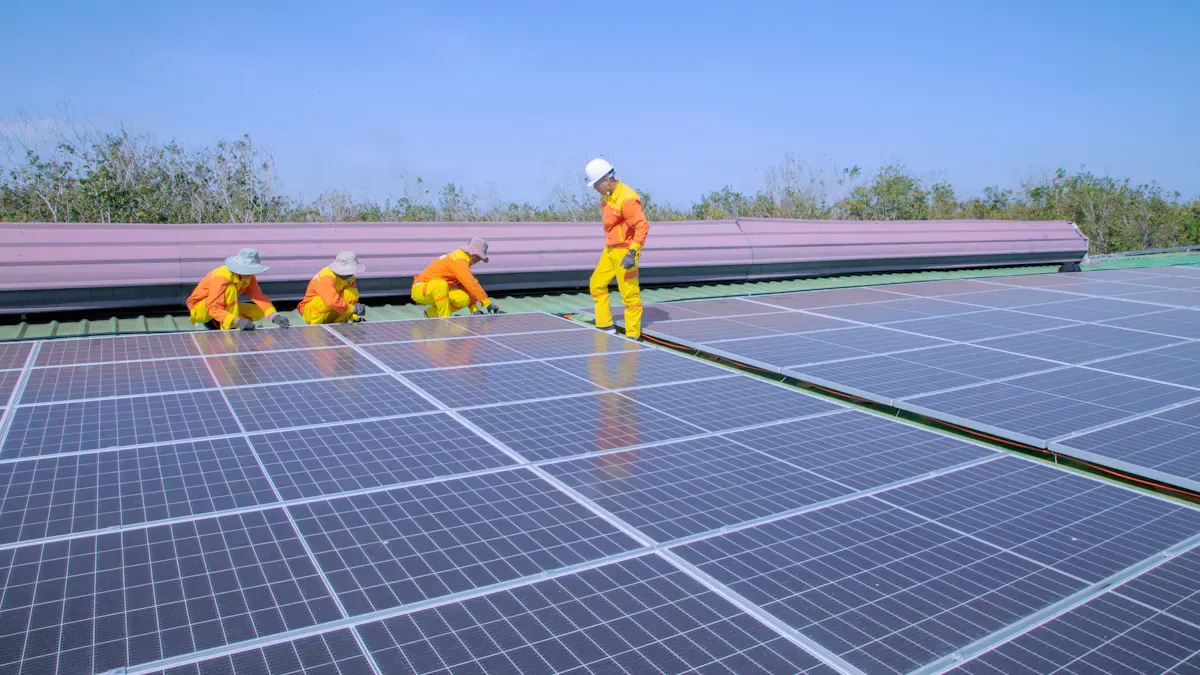
FRP solutions have changed how the energy industry approaches asset maintenance. Energy companies need to ensure asset longevity and reliability to avoid costly failures. The unique properties of FRP, such as high corrosion resistance and strength, make these solutions ideal for harsh environments. NHC's GRP/FRP products offer advanced FRP options that help protect vital energy infrastructure. By understanding how FRP solutions improve asset performance, organizations can make smarter choices for their energy operations.
Key Takeaways
FRP solutions significantly enhance the durability of energy assets by resisting corrosion, which reduces maintenance needs and costs.
Using lightweight FRP materials simplifies installation, especially in remote locations, leading to faster project completion and less downtime.
FRP's minimal maintenance requirements allow energy companies to save time and money, extending the lifespan of critical infrastructure.
Safety and compliance are improved with FRP, as its non-conductive properties reduce electrical hazards and meet strict industry standards.
Regular inspections and preventive maintenance strategies can help identify vulnerabilities early, ensuring better asset management.
FRP products are ideal for renewable energy systems, providing durability against UV rays and harsh weather conditions.
Collaborating with trusted manufacturers like NHC can lead to innovative and cost-effective FRP solutions tailored to specific energy asset needs.
Maintenance Challenges for Energy Assets
Corrosion and Environmental Factors
Corrosion stands as one of the most persistent threats to energy asset management. Steel and iron structures, especially those covered in concrete, often suffer from corrosion over time. This process can cause severe structural problems such as spalling in reinforced concrete bridges. The economic impact is significant, with billions lost each year due to pipe failures and insurance claims. Corrosion can also lead to physical breaches in water distribution systems, allowing contaminants to enter and reducing disinfectant levels.[4] Iron corrosion increases biofilm growth, making it harder to keep systems clean and safe. These issues affect not only traditional energy assets but also renewable installations like wind and solar farms.
High Costs and Downtime
Maintenance costs for energy assets can be very high, especially when using traditional materials that are prone to corrosion. Industries are moving toward advanced materials like FRP because these solutions reduce the need for frequent repairs. FRP's resistance to corrosion means fewer replacements and less downtime. When downtime occurs, it can disrupt energy supply and lead to lost revenue. Common maintenance challenges include:
Resource variability, especially in renewable energy systems
Aging infrastructure that needs more frequent maintenance
Remote locations that make management and repairs difficult
Strict regulatory compliance that requires detailed record-keeping[5]
Safety and Compliance
Safety and compliance are critical in energy asset management. Operators must follow strict standards to protect workers, the public, and the environment. The table below highlights key standards that guide maintenance management:[6]
| Standard | Description |
|---|---|
| IEC 60255 | Requirements for measuring relays and protection equipment |
| IEC 61850 | Communication networks and systems for power utility automation |
| IEC 61000 | Electromagnetic compatibility guidelines |
| ISO 9001 | Quality management standard for consistent reliability |
| IEC 61508 | Functional safety for electrical and electronic systems |
| IEEE C37 Series | Power system protection, relay testing, and performance |
| NFPA 855 | Fire safety for battery energy storage systems |
| UL 1973 | Safety for stationary battery systems |
| UL 9540 | Safety for energy storage with renewables |
Access and Harsh Conditions
Energy assets often operate in locations that are difficult to reach — offshore platforms, remote wind farms, and isolated substations. Maintenance teams face unique challenges in these environments, including expensive travel, unpredictable weather delays, and the need for specialist tools. The table below summarizes the key challenges in remote environments:
| Challenge | Description |
|---|---|
| Monitoring Multiple Systems[7] | Numerous subsystems and components can fail and require maintenance. Physical inspections and wired sensors add complexity and cost. |
| Withstanding Harsh Environments | Utility substations must endure severe conditions such as water, dust, extreme temperatures, and electromagnetic radiation, which can damage monitoring equipment. |
What Are FRP Solutions?
FRP Materials and Properties
FRP stands for fiber-reinforced polymer. This material combines strong fibers — such as glass or carbon — with a polymer resin, resulting in a lightweight yet tough composite. FRP resists corrosion, fire, and UV radiation, and provides electrical and thermal insulation critical for industrial applications. Key properties are summarised below:[8]
| Property | Description |
|---|---|
| Fatigue Resistance | Handles repeated loading without losing strength — ideal for wind turbines and bridges |
| Design Flexibility | Can be shaped and moulded for custom needs and complex structures |
| Electrical Insulation | Low conductivity, making it safe for electrical enclosures and utility sites |
| Thermal Insulation | Reduces heat transfer, improving energy efficiency in buildings and equipment |
| Non-Magnetic | Does not interfere with sensitive equipment or electronics |
| Environmental Resistance | Stands up to UV rays, moisture, and temperature changes for long-lasting performance |
Types of FRP Products
FRP comes in many forms to meet different needs. NHC manufactures a wide range of GRP/FRP products, each designed for specific applications:
Structural supports — used in wind and solar farms for stability and strength
Protective coatings — shields structures from weather and chemicals
Electrical enclosures — provides safe, non-conductive housing for electrical systems
Chemical tanks — stores liquids safely in power plants and industrial sites
Utility structures — durable solutions for remote or hard-to-reach locations
FRP vs. Traditional Materials
Traditional materials like steel, concrete, and aluminium have long been used in energy infrastructure. However, FRP offers several advantages in lifecycle performance:
| Material | Strength | Weight | Corrosion Resistance | Cost | Maintenance |
|---|---|---|---|---|---|
| Steel | High | Medium | Moderate | Low upfront | Needs coatings and regular inspections |
| Concrete | High | Heavy | Variable | Low upfront | Needs frequent inspection and treatment |
| Aluminium | Moderate | Light | High | Higher upfront | Less maintenance in corrosive environments |
| FRP | Moderate | Light | High | Higher upfront | Minimal — especially in harsh areas |
How FRP Solutions Improve Energy Asset Maintenance
Corrosion Resistance
Corrosion resistance is a key factor in enhancing durability for energy asset management. FRP materials protect assets from rust and chemical damage — particularly important where moisture, salt, and chemicals are present. Corrosion-related failures account for over 25% of total safety incidents in the oil and gas industry.[1] By choosing FRP, companies can focus on enhancing durability and improving energy efficiency.
Lightweight and Easy Installation
FRP materials are much lighter than traditional options like steel or concrete. This feature makes installation faster, which is vital for asset management in remote or hard-to-reach locations. Lightweight FRP profiles simplify transportation and handling, reducing labour costs and project timelines:
| Aspect | Benefit |
|---|---|
| Transportation | More square footage per truck, lower fuel costs |
| Handling | Easier manual handling, reduced need for heavy lifting equipment |
| Installation | Faster installation, fewer crew members, simpler tools |
| Overall Impact | Shorter schedules, reduced risk of delays, simplified installation on existing structures |
Minimal Maintenance Needs
FRP solutions offer low maintenance requirements, making them ideal for asset management. These materials resist corrosion, weather, and wear — meaning fewer repairs and replacements.[2]
| Evidence Type | Details |
|---|---|
| Maintenance Reduction | FRP can reduce material turnover by up to 40%, indicating lower maintenance needs |
| Labour Cost Savings | Labour costs can be 30–40% lower due to simplified installation processes |
| Extended Lifespan | FRP roofs typically require replacement every 30 years vs. 15 years for traditional roofs |
| Warranty Benefits | Many FRP systems come with warranties extending over 20 years |
| Corrosion Resistance | FRP properties lead to fewer maintenance interventions than traditional materials |
| Energy Savings | Buildings with FRP roofs can see HVAC cost reductions of up to 30% |
Safety and Compliance Benefits
FRP is non-conductive — reducing the risk of electrical shocks in areas with high-voltage equipment. Its corrosion resistance prevents material failure and maintains structural integrity across platforms, substations, and other energy assets. Real-world examples illustrate this:
A nuclear power plant in Pennsylvania used FRP to upgrade its safety infrastructure, reducing hazards and creating a more secure workplace.[9]
An electrical substation on the Texas Gulf Coast replaced metal components with FRP, solving problems caused by saltwater corrosion and grounding issues.
| Feature | Safety Benefit | Compliance Support |
|---|---|---|
| Non-conductive | Reduces risk of electrical shock | Meets electrical safety standards |
| Corrosion resistant | Prevents material failure and hazards | Supports long-term reliability |
| Fire-retardant | Limits fire spread in case of accidents | Complies with fire safety regulations |
| Antistatic | Reduces risk of static discharge | Meets industry-specific requirements |
| Lightweight | Eases handling, lowers risk of injury | Supports safe installation practices |
FRP Solutions in Renewable Energy Asset Management
Applications in Solar and Wind
FRP plays a key role in renewable energy asset management, supporting solar and wind projects with strong, reliable materials. In solar installations, FRP mounting systems resist UV rays and temperature changes, preventing damage and keeping panels secure. Wind farms use FRP for platforms and support structures that handle harsh weather and reduce repair frequency.
| Application Area | Benefits |
|---|---|
| Offshore Wind Installations | Corrosion resistance eliminates maintenance challenges, reducing costs significantly[10] |
| Solar Installations | Durability against UV exposure and thermal cycling, preventing degradation of mounting systems |
| Floating Solar Installations | Lightweight and corrosion-resistant, allowing higher panel density and reduced buoyancy needs |
| Substation Structures | Non-conductivity enhances safety and reduces grounding infrastructure costs |
| Transmission Line Cross-Arms | Lightweight and maintenance-free, ensuring longevity in various weather conditions |
Sustainability and Efficiency
Sustainability is a top goal in renewable energy asset management. FRP materials support this goal by lasting longer and needing less maintenance, which saves resources and reduces lifecycle environmental impact. Their lightweight nature makes transport and installation easier, and the high tensile strength of FRP allows wind turbines and solar panels to work better and last longer.[11]
UV and Weather Resistance
Renewable energy asset management often takes place outdoors. FRP products stand up to sun, rain, and extreme temperatures. Their seamless design prevents leaks and rust, protecting equipment from weather damage. FRP resists corrosion from salt-fog and chemicals, making it ideal for coastal and offshore renewable energy projects:
Seamless design eliminates weak points, reducing the risk of rust and leaks
Corrosion resistance ensures a longer service life compared to metals
Temperature adaptability means FRP expands and contracts like concrete, preventing cracks and water damage
Real-World FRP Applications in Energy
Oil & Gas Pipelines
Oil and gas pipelines face tough conditions every day. Corrosion, leaks, and abrasion can cause failures and safety risks. Many companies now use FRP for pipeline repairs and upgrades. The table below highlights several documented case study scenarios illustrating the value of FRP in pipeline maintenance:[12]
| Application | Description |
|---|---|
| Riser Pipe Refurbishment | FRP helps refurbish riser pipes in oil and gas pipelines |
| Low Pressure Gas Leak Repair | FRP's effectiveness in fixing low-pressure gas leaks |
| Natural Gas Pipeline Repair | Use of FRP in repairing natural gas pipelines |
| Nitrogen Line Rehabilitation | FRP rehabilitates nitrogen line pipes |
| Corrosion Protection Over a River | FRP protects pipes from corrosion in harsh bridge environments |
| Abrasion Resistant Pipeline Coating | FRP coatings that increase pipeline durability |
| Petrochemical Pipeline Refurbishment | FRP in refurbishing petrochemical pipelines |
Offshore Platforms
Offshore platforms operate in some of the harshest environments. Saltwater, wind, and waves can damage traditional materials quickly. FRP has become a popular choice because it resists corrosion and lasts for decades:
FRP composite grating and louvers do not rust, meaning less maintenance and fewer shutdowns
The material is lightweight, making it easier to install and transport on offshore structures
Non-slip surfaces improve worker safety, while impact resistance reduces hazards
FRP grating can last over 50 years, lowering the need for replacements[13]
Power Plants and Utilities
Power plants and utility companies need materials that last a long time and require little upkeep. FRP is used in poles, cable trays, and support structures. Key performance outcomes are shown below:[3]
| Outcome | Description |
|---|---|
| Long Service Life | FRP poles can last 50 to 80 years, reducing the need for replacements |
| Low Maintenance Costs | FRP needs almost no maintenance, saving money on repairs and inspections |
| Superior Corrosion Resistance | FRP does not rust or rot, keeping structures strong in harsh settings |
Ready to Upgrade Your Energy Asset Maintenance?
NHC's GRP/FRP solutions are engineered for demanding environments — offshore platforms, solar farms, power plants, and beyond. Get in touch with our technical team today for a tailored solution and competitive quote.
Request a Quote NowResponse within 24 hours · Custom profiles available · ISO-certified manufacturing
Implementing FRP Solutions for Asset Longevity
Assessing Needs and Suitability
Asset management teams must first evaluate their infrastructure to determine where FRP solutions will provide the most value. Start by identifying assets exposed to harsh environments such as offshore platforms or remote substations. Review maintenance records to find areas with frequent repairs or corrosion issues. Consider load requirements, safety standards, and compatibility with existing systems.
Product Selection and Partners
Choosing the right FRP products and manufacturing partners is essential for successful asset management. Look for suppliers who offer a wide range of solutions, consistent quality across production batches, and strong technical support. Key selection criteria:
| Criteria | Description |
|---|---|
| Product quality and consistency | Excellent mechanical properties and corrosion resistance across all batches |
| Range of solutions | Comprehensive portfolios simplify procurement and ensure compatibility |
| Manufacturing capability | Vertically integrated manufacturers maintain direct quality control and respond to custom needs |
| Technical support | Qualified engineering teams provide guidance and documentation |
| Distribution and availability | Reliable logistics networks ensure on-time delivery and minimise schedule risk |
Asset management teams should consult with reputable manufacturers like NHC. Their expertise and advanced production capabilities support successful deployment of FRP solutions.
Installation and Maintenance Planning
Effective installation and maintenance planning ensures that FRP solutions deliver long-term benefits. Develop a clear schedule for installation, considering site access and weather conditions. Train maintenance teams on proper handling and inspection techniques. Establish routine checks to monitor asset performance and address any issues early. Document all procedures and keep records for compliance and future reference.
Future Trends in FRP for Energy Assets
Material Innovations
Material science continues to advance, bringing new possibilities for FRP in the energy sector. Researchers are developing stronger fibres and resins that improve durability and efficiency. Some new FRP materials can withstand higher temperatures and more aggressive chemicals. Improved fire-retardant and antistatic properties also help meet strict safety standards. These trends show that FRP will continue to play a key role in the future of energy asset management.
Digital Monitoring Integration
Digital technology is changing how companies manage renewable assets. Smart sensors and remote monitoring systems now work together with FRP structures, collecting real-time condition data. This supports predictive maintenance strategies that reduce downtime and maintenance costs.[14] As digital monitoring becomes more common, energy companies can expect safer and more reliable operations.
Recent advancements in non-destructive Structural Health Monitoring (SHM) have significantly enhanced asset management systems. By utilising data from non-destructive sensors, asset managers can implement predictive maintenance strategies that reduce downtime and maintenance costs, with sensors acting as early warning systems to detect anomalies and prevent asset failures.
Evolving Standards
Industry standards for FRP and renewable energy assets are always changing. New guidelines focus on safety, environmental impact, and long-term performance. Regulatory bodies update standards to reflect the latest material innovations and digital tools. As the energy industry evolves, strong management practices and advanced FRP solutions will remain essential for success.
FRP solutions transform asset strategies by increasing longevity and reducing maintenance needs. To maximise asset value, consider these steps:
Schedule routine inspections to spot vulnerabilities early
Use preventive maintenance to extend asset lifespan
Analyse failures to guide future asset care
Collaborate with manufacturers to design sustainable, efficient systems
Consulting with trusted partners like NHC can help upgrade asset infrastructure with innovative, cost-effective solutions.
FAQ
What is FRP and why is it used in energy asset maintenance?
FRP stands for fiber-reinforced polymer. It is a strong, lightweight material that resists corrosion and weather. Energy companies use FRP to protect assets and reduce maintenance needs.
How does FRP compare to steel or concrete?
FRP is lighter than steel or concrete. It does not rust or rot, needs less maintenance, and lasts longer in harsh environments — making it a smart choice for many energy projects.
Can FRP be used in renewable energy systems?
Yes. FRP works well in solar and wind energy systems. It resists UV rays, moisture, and chemicals, helping renewable energy assets last longer and perform better.
Is FRP safe for workers and the environment?
FRP is non-conductive and fire-retardant. It helps prevent electrical shocks and limits fire risks. FRP also supports sustainability because it lasts longer and needs fewer replacements.
What types of FRP products does NHC offer?
NHC offers GRP/FRP profiles, fasteners, cable trays, ladders, handrails, and custom solutions. Each product is designed for strength, safety, and durability in tough settings.
How does FRP help reduce maintenance costs?
FRP resists corrosion and weather damage. This means fewer repairs and less downtime. Companies save money on labour and replacement parts over the life of the asset.
Can FRP be installed in remote or hard-to-reach locations?
Yes. FRP is lightweight and easy to handle. Teams can transport and install it in remote areas without heavy equipment — ideal for offshore platforms and distant substations.
Does FRP meet industry standards for energy assets?
Yes. High-quality FRP products, like those from NHC, meet strict safety and performance standards covering fire safety, electrical insulation, and environmental resistance.
References
CDI Products — Understanding the Impact of Corrosion on the Oil and Gas Industry
PVC Roof Sheet — Maintenance Reduction with FRP Translucent Roof Systems
Verified Market Research — FRP Poles Market Report
PMC / NCBI — Corrosion and Water Distribution System Contamination (PMC7147732)
Propel Apps — Effective Asset Management in Renewable Energy
UL Resources — Guide to Battery Energy Storage Regulatory Compliance
Systems With Intelligence — Maintaining Remote Substations: Four Challenges Utilities Can Overcome
Strongwell — Nine Key Properties of Pultruded Fiber-Reinforced Polymer
Power Magazine — The Role of FRP Structures in Mitigating Workplace Hazards
F1 Composite — FRP in the Energy Industry
CNPS — How FRP Solutions Enhance Asset Longevity in the Energy Industry
USIG Groups — Riser Pipe Refurbishment Case Study
Sino-Grate — FRP Grating for Offshore Platforms
Wikipedia — Corrosion (Wikipedia)