


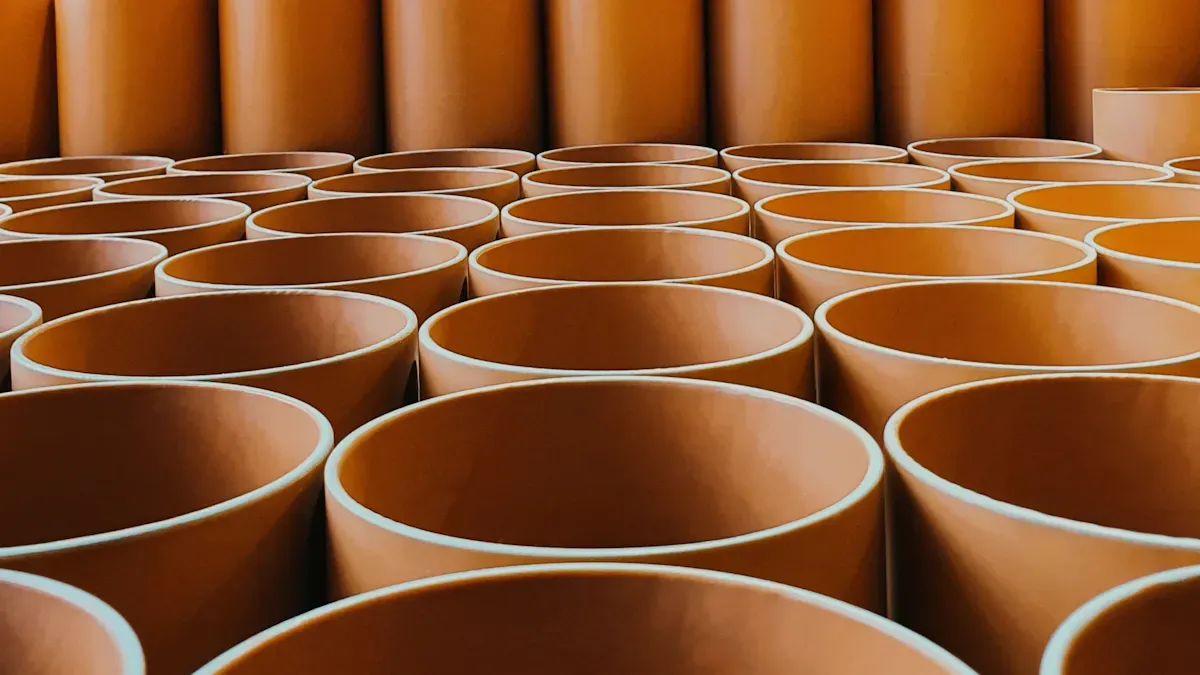
FRP pultruded tubes have clear benefits over metal tubes in building today. FRP is special because it does not rust, is light, strong, safe around electricity, and saves money. These tubes last longer in tough places where metal can rust. FRP can be up to 75% lighter than steel, so moving and putting it in is easier. More people want FRP because they want things that last and do not need much fixing. New ideas, like UV-protected FRP and making FRP in better ways, help people want it for strong and flexible use for a long time.
Key Takeaways
FRP pultruded tubes are very light. They can be up to 75% lighter than steel. This makes them easy to move and put in place.
These tubes do not rust. They also resist corrosion very well. This makes them great for tough places like chemical plants and near the ocean.
FRP tubes need very little care. They can last more than 50 years. This saves a lot of money over time compared to metal tubes.
Putting in FRP tubes is faster and costs less. Their light weight can cut labor costs by 40-60%.
FRP pultruded tubes can be made for many uses. They fit special project needs. They also give safety and last a long time.
What Are FRP Pultruded Tubes?
FRP Material Basics
FRP means fiber-reinforced plastic. It mixes strong glass fibers with plastic resin. This makes a material that is strong and light. Many builders use frp square tube because it does not rust. It also stands up to chemicals. Fiberglass reinforced plastic is another name for frp. It keeps buildings strong and is not heavy. These features help frp work well in many projects. According to research published by the Journal of Composites Science, fiber-reinforced polymers demonstrate superior strength-to-weight ratios compared to traditional construction materials.
Pultrusion Process Overview
Companies use pultrusion to make frp square tube. Pultrusion makes tubes that are always the same size and quality. The steps are:
| Step | Description |
|---|---|
| Feeding | Fibers are lined up and put into the machine. |
| Impregnation | Fibers get soaked with resin so they stick together. |
| Forming | Wet fibers are shaped in a hot mold and start to harden. |
| Pulling | The hard tube is pulled out to keep its shape. |
| Cutting | The tube is cut to the right length for use. |
Each step helps the frp square tube stay strong and keep its shape. Pultrusion lets companies make tubes in many shapes and sizes. The Composites World technical guide provides detailed insights into how this manufacturing process ensures consistent quality and dimensional accuracy.
Key Features of Pultruded Fiberglass Tubes
Nanjing Hypro Composites Pultruded Fiberglass Tubes show how frp works in real life. These frp square tube products have special features:
Strong and light
Does not rust
Safe around electricity
Stops fire and has no halogen
Can be made for different jobs
Has ISO 9001 and ISO 14001 certificates
These tubes last a long time, even in tough places. They are easy for engineers and builders to use. People use frp square tube in escalators, push rods, and tool handles. FRP is strong, safe, and easy to use. That is why it is good for modern construction.
Ready to Transform Your Construction Project?
Discover how FRP pultruded tubes can reduce costs, increase durability, and simplify installation for your next project. Our team of experts is ready to provide customized solutions tailored to your specific needs.
Get Your Free Quote NowFRP vs Steel Tubes in Construction
Strength and Weight Comparison
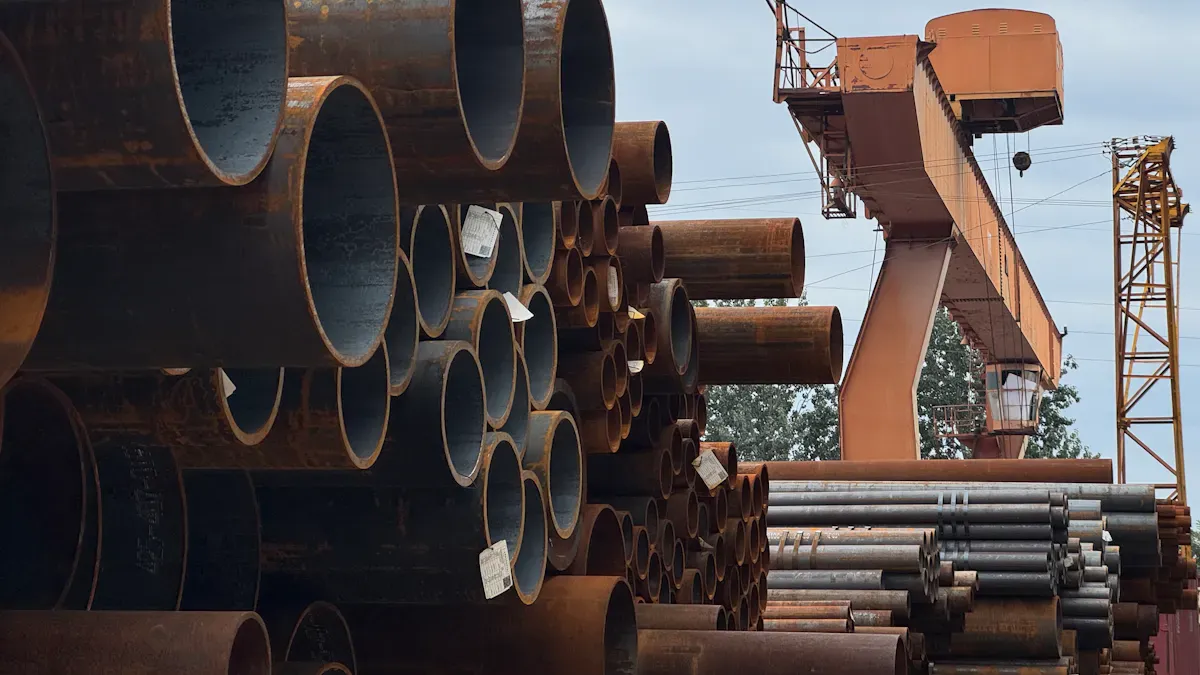
Builders often look at frp and steel for building. Both are strong, but they do not weigh the same. Steel tubes are very strong, with a tensile strength of 400-550 MPa. Frp pultruded tubes have a tensile strength of 300-500 MPa. Both can hold heavy things. But frp pultruded tubes are much lighter than steel. Frp weighs only 1.8-2.1 g/cm³. Steel weighs 7.8 g/cm³. Research from Materials Science and Engineering demonstrates that composite materials achieve comparable structural performance at significantly reduced weight.
| Property | FRP Tubes | Steel |
|---|---|---|
| Tensile Strength (MPa) | 300-500 | 400-550 |
| Weight (g/cm³) | 1.8-2.1 | 7.8 |
The table shows frp pultruded tubes are strong and light. Workers can carry and put in frp tubes more easily. Using frp in things like escalators or bridges makes the whole thing lighter. This helps builders work faster and safer.
Corrosion Resistance Differences
Corrosion is a big problem in building. Steel tubes can rust if they touch water, salt, or chemicals. Rust makes steel weaker over time. Frp pultruded tubes do not rust. They have high corrosion resistance. Frp does not get damaged by chemicals, saltwater, or wet places. This makes frp better for bridges near the sea, chemical plants, or places that clean water. Studies published in the ASME Journal of Pressure Vessel Technology confirm the superior corrosion resistance of fiber-reinforced polymers in harsh environmental conditions.
Tip: Engineers pick frp instead of steel where there is a lot of corrosion. Frp stays strong and lasts longer, even in tough places.
Corrosion resistance is a big reason people use frp today. Frp works better than steel when it is wet or has chemicals around. Frp pultruded tubes help stop damage and need fewer repairs.
Maintenance and Longevity
All building materials need care. Steel tubes need to be checked and fixed often, especially where there is a lot of rust. Frp pultruded tubes do not need much care. They do not need paint or coating to stop rust. This saves time and money for owners.
Frp lasts much longer than steel in hard places. Frp can last over 50 years with little care. Steel lasts about 15-25 years in the same place and needs big repairs every 5-7 years.
| Material | Expected Service Life | Maintenance Requirements |
|---|---|---|
| FRP | 50+ years in corrosive environments | Minimal maintenance |
| Steel | 15-25 years in corrosive environments | Major maintenance every 5-7 years |
The table shows frp lasts longer and needs less fixing than steel. Frp pultruded tubes help keep buildings safe for more years. Many engineers pick frp because it lasts long and is easy to take care of.
Installation and Cost Benefits of FRP
Lightweight Handling and Transport
FRP pultruded tubes make handling and transport much easier on construction sites. Workers can lift and move these tubes without heavy equipment. The low weight means a two-person crew can carry and install them by hand. This reduces the need for cranes or forklifts. The following table shows how frp compares to steel in key areas:
| Property | FRP Square Tube | Steel Tubing Square |
|---|---|---|
| Corrosion Resistance | Excellent | Poor (rusts) |
| Weight | Light (1-2 lbs/ft) | Heavy (10-15 lbs/ft) |
| Maintenance | Low | High |
The light weight of frp helps lower fuel costs during shipping. It also makes it safer for workers to move tubes around the job site.
Reduced Installation Costs
FRP offers big savings during installation. Crews can work faster because the tubes are lighter and easier to handle. Smaller teams can finish jobs quickly, which lowers labor costs. Many projects report installation times that are 40-60% faster than with metal tubes. The need for heavy equipment drops, saving thousands of dollars each day. Here are some key points:
FRP is 75% lighter than steel, so transport costs drop.
Installation is 40-60% faster with smaller crews.
Heavy equipment costs go down, with less crane use.
Total installation savings can reach $35,000 on large projects.
Lifecycle Cost Savings
FRP pultruded tubes give long-term savings over their lifespan. While the initial cost may be higher than steel, the total cost of ownership is much lower. FRP does not rust, so it needs little maintenance. The tubes last 50-75 years, much longer than steel. Over 20 years, the total cost for frp can be $33 per foot, compared to $130 per foot for steel. This big difference comes from lower repair costs, less downtime, and fewer replacements. The National Institute of Standards and Technology provides detailed lifecycle cost analysis methodologies that support these findings.
Note: Choosing frp means fewer repairs, lower maintenance, and a longer lifespan for construction projects.
FRP helps builders save money at every stage, from delivery to long-term use. The combination of low weight, high corrosion resistance, and long service life makes frp a smart choice for modern construction.
Application Versatility of FRP Pultruded Tubes

Structural Uses in Modern Construction
FRP pultruded tubes are used in many building jobs. Engineers pick these tubes when they need strong and light parts. You can find them in escalators, push rods, and tool handles. They are also used in cooling towers and walkways in tough places. Chemical storage tanks use frp for support. The table below shows how frp helps in real projects:
| Application | Key Benefits |
|---|---|
| Chemical Plant Access Structure, Teesside | Needs 70% less fixing in 10 years, installs fast, no painting needed |
| Wastewater Treatment Plant, Bristol | 80% lighter than steel, no painting, no damage after 5 years in hard places |
FRP lasts a long time and needs fewer repairs. Builders like frp because it is strong, light, and does not rust.
Electrical and Safety Applications
FRP pultruded tubes help keep workers safe at work. These tubes do not carry electricity, so they are good for power plants. FRP ladders and grating meet fire safety rules like ASTM E84. Factories use fire-safe frp where sparks or heat can happen. This keeps people safe and protects machines. According to NFPA safety standards, non-conductive materials significantly reduce electrical hazard risks in industrial environments.
Tip: FRP is a smart pick for electrical and safety jobs because it does not carry electricity and can handle fire.
Customization and Project-Specific Solutions
FRP pultruded tubes can be made for many different needs. Companies can choose from resin types like unsaturated polyester, vinyl ester, epoxy, or polyurethane. Each resin has its own strengths. Vinyl ester is good against chemicals. Epoxy is extra strong. The table below shows some choices:
| Resin Types | Benefits |
|---|---|
| Unsaturated Polyester | Good for most jobs, saves money |
| Vinyl Ester | Works well with harsh chemicals |
| Epoxy | Very strong and resists heat |
| Polyurethane | Flexible and tough |
FRP tubes come in many shapes and sizes. They can use E-glass, carbon, or basalt fibers for different jobs. These tubes meet standards like ISO 9001 and ISO 14001. Quality checks make sure every tube is safe and strong. Builders get the right tube for each project.
Need Expert Guidance on FRP Solutions?
Our engineering team has decades of experience in custom FRP fabrication. Whether you need standard profiles or specialized solutions, we're here to help you select the perfect materials for your application.
Contact Our Specialists TodayEnvironmental and Safety Advantages of FRP
Sustainability and Low Environmental Impact
FRP is good for the environment in many ways. Making frp pultruded tubes does not make as much pollution as making steel or aluminum tubes. This way of making frp also makes less trash. FRP tubes can last from 75 to 150 years. Because they last so long, builders do not have to replace them often. Needing fewer new tubes means less trash and saves more resources.
The pultrusion process for frp uses less energy and makes less pollution. This is why frp is better for projects that want to help the planet. Many builders pick frp because it helps them reach green building goals. Since frp lasts a long time and does not need much fixing, less waste goes to landfills. The EPA's sustainable materials management framework recognizes composite materials for their reduced lifecycle environmental impact.
Tip: Using frp can help building projects get points for being green.
Fire Retardant and Non-Conductive Properties
Safety matters in every building job. FRP pultruded tubes help keep people safe in many ways. These tubes do not let electricity pass through, so workers are safe from electric shocks. This makes frp a good choice for places near power lines or electrical machines.
FRP also does well in fires. The insulation in frp slows down heat, so the tube stays strong during a fire. With the right insulation, frp can handle fire for hours. This gives people more time to leave safely. It also helps keep the building safe from fire damage.
FRP does not rust, so it stays strong even where there is a lot of corrosion. The strong corrosion resistance of frp makes it safe and dependable for many jobs.
| Property | FRP Pultruded Tubes | Metal Tubes |
|---|---|---|
| Electrical Conductivity | Non-conductive | Conductive |
| Fire Resistance | High (with insulation) | Varies |
| Corrosion Resistance | Excellent | Poor to Moderate |
FRP gives builders a material that is safe, strong, and helps the environment.
Limitations and Considerations of FRP
When to Choose Metal Tubes
Sometimes, engineers pick metal tubes instead of fiberglass tubes. Metal tubes are better when a project needs very high strength. They also work well if there is a lot of heavy stress. Steel and aluminum can bend and shape more easily on site. This helps if builders need to change things during work. Metal tubes connect well with other metal parts. You can use welding or bolts to join them.
Some jobs need materials that can take high heat or strong hits. Metal tubes do better in these cases. For example, factories with hot machines often use metal tubes. Places with heavy moving loads also use metal tubes. The table below shows how fiberglass and metal tubes are different in key ways:
| Feature | Fiberglass Tubes | Metal Tubes |
|---|---|---|
| Weight | Lightweight | Heavy |
| Strength | Moderate | High |
| Corrosion Resistance | Excellent | Good (with treatment) |
| Cost | Lower | Higher |
| Environmental Suitability | Great for moisture/chemicals | Great for mechanical stress |
Note: Builders should think about what the project needs. Metal tubes might be best for jobs with lots of stress or heat.
Project-Specific Factors
Every job is different and has its own needs. Builders must look at the job site, the weight, and the weather. They should also know what each material cannot do. Some main limits of fiberglass tubes are:
They are less flexible, so they may not fit odd shapes.
Special adhesives are needed to stick them, which can change how they work.
Many people believe things about fiberglass tubes that are not true. Experts explain the facts:
Some think fiberglass is only for light or pretty jobs. But it works well for big jobs like bridges and walkways.
Some say fiberglass costs too much. But it saves money over time because it lasts longer and needs less fixing.
Some believe fiberglass cannot be made in many ways. But it comes in many shapes, colors, and sizes.
Some think fiberglass is new and not tested. But it has worked in hard places for many years.
Some say steel is always better for heavy loads. But fiberglass can hold heavy loads and is lighter.
Builders should talk to experts before picking a material. They should match the material to the job for the best results. Using frp or metal tubes depends on the job, the place, and safety needs.
Summary
FRP pultruded tubes are a good choice for builders today. They are strong, light, and safe to use. These tubes do not get damaged by chemicals. They last much longer than metal tubes. This means you do not have to fix them as often. The table below shows how different tubes work best for each job:
| Fiber or Resin Type | Best Use Case |
|---|---|
| Glass Fibers | Structural support |
| Carbon Fibers | Weight-sensitive designs |
| Vinyl Ester | Harsh environments |
| Epoxy | Demanding applications |
Think about if the tubes will touch chemicals or need to stop slipping.
Check if you need fire safety or if the tubes should not carry electricity.
Nanjing Hypro Composites gives smart solutions and good help for every job.
FAQ
What makes FRP pultruded tubes different from metal tubes?
FRP pultruded tubes do not rust or get damaged by chemicals. They are lighter than metal tubes. These tubes also stop electricity from passing through. This makes them good for many building jobs.
Can FRP pultruded tubes handle outdoor weather?
Yes, FRP pultruded tubes can be used outside. They do not get weak from sun, rain, or hot and cold weather. They do not rust when left outdoors. Builders use them for bridges, walkways, and supports outside.
Are FRP pultruded tubes safe for electrical projects?
FRP pultruded tubes do not let electricity pass through. This keeps workers safe from shocks. Many engineers use them in power plants and near electric machines.
How long do FRP pultruded tubes last?
FRP pultruded tubes can last more than 50 years. They do not need much fixing. Their strength and ability to fight rust help them last a long time.
Can builders customize FRP pultruded tubes for special projects?
Yes, builders can get FRP pultruded tubes made for their needs. Makers can change the size, shape, or resin type. Builders can ask for fire safety or extra strength if needed.