


FRP Fence vs Wood vs Metal: Which One Actually Lasts Longer?
If you want a fence that outlasts your home, an FRP fence is worth serious consideration. Industry data suggests a well-specified FRP fence can last 25–50+ years, while wood typically lasts 5–15 years depending on species and maintenance. Metal sits in between: galvanized steel can last 20–50 years with proper coating, and aluminum 20–40 years. But lasting long isn't everything. Cost, upkeep, and weather resistance matter too. You need a fence material that fits your needs. This guide compares FRP, wood, and metal using real-world data. NHC, a leading FRP manufacturer, offers reliable options. Their FRP fencing is highly resistant to rot, rust, and corrosion, reducing the need for frequent repairs. Look at the whole picture before you pick your fence.
Key Takeaways
An FRP fence can last 25–50+ years with minimal maintenance, depending on resin system and environment.
Wood fences generally need staining or sealing every two to three years.
Metal fences may require repainting or rust treatment every five to ten years, especially in coastal areas.
FRP resists salt, moisture, and temperature swings better than most traditional materials.
Wood fence total cost over 30 years can be several times the initial investment due to maintenance and replacement.
FRP fences typically offer lower lifetime ownership costs despite higher upfront pricing.
Choose FRP for long-term value and a low-maintenance fence solution.
Lifespan Numbers: FRP vs. Wood vs. Metal
You need to know the real lifespan numbers before you choose a fence material. Each option delivers a different service life. The table below gives you a quick comparison of how FRP, wood, and metal stack up against each other.
| Material | Typical Lifespan | Maintenance Required | Upfront Cost | Weather Resistance |
|---|---|---|---|---|
| FRP | 25–50+ years | Minimal (periodic inspection/cleaning) | Medium–high | Excellent in most climates |
| Wood | 10–20 years (up to 30 with premium species and care) | High (staining, sealing, repairs) | Low–medium | Poor (rot, insects, moisture) |
| Metal (steel/aluminum) | 20–50 years | Moderate (painting, rust prevention) | Medium | Good (except rust in coastal/industrial areas) |
The numbers tell a clear story. FRP offers a long service life with minimal maintenance. Wood costs less upfront but demands constant care. Metal sits in the middle on most measures. Now let's look at each material in detail.
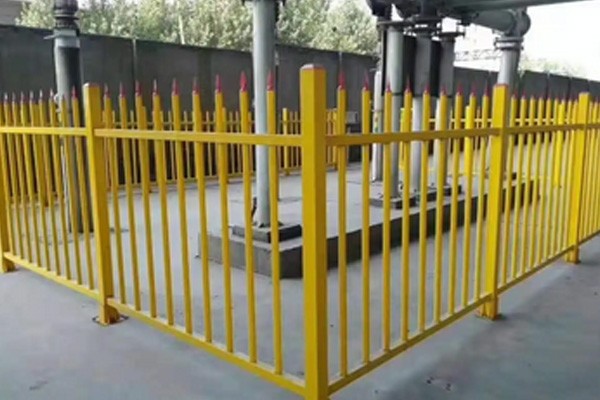
FRP Fence Lifespan: 25–50+ Years of Durability
An FRP fence delivers strong durability. The fiberglass-reinforced plastic construction is highly resistant to rot, rust, and corrosion. Unlike wood or metal, FRP does not require regular painting, sealing, or chemical treatment. With UV-stabilized resin systems, the panels can withstand sunlight exposure without significant fading or brittleness over time. Research from the U.S. National Institute of Standards and Technology (NIST) confirms that FRP composite systems offer significant corrosion resistance advantages over traditional metals, though long-term performance depends on resin formulation and exposure conditions.[1]
NHC's FRP fencing uses advanced pultrusion technology. This process creates panels with consistent strength throughout. The material is dimensionally stable and resists warping, twisting, or cracking under normal temperature variations. These panels handle a wide range of temperatures, from freezing winters to hot summers. They also resist moisture and salt air, making them well-suited for coastal properties.
A 25–50+ year service life means you install the fence once and rarely need to think about it. No frequent replacement costs. Minimal repair bills. No weekend staining projects. The panels stay strong and attractive for the life of your property. This durability makes FRP a smart choice for long-term value.
Wood Fence Lifespan: 10–20 Years (or More with Care)
Wood fencing offers a classic look but comes with a shorter lifespan. Most wood fences last 10 to 20 years under normal conditions. In demanding climates, that number can drop to 5–10 years, especially for in-ground posts.
The type of wood you choose makes a significant difference:
Pressure-treated pine: 15–25 years (ground-contact posts can reach 25–30+ years when properly installed)
Untreated pine/spruce: 5–10 years
Western Red Cedar: 15–25 years
Redwood: 20–30 years
Cedar with steel posts: 20–25 years
The main enemies of wood are rot, insects, and moisture. The U.S. Forest Service notes that decay fungi require wood moisture content above 20–25% to thrive, and proper preservative treatment can significantly extend service life.[2] You should stain or seal the fence every two to three years. This regular maintenance adds up in both time and money. Even with care, you will eventually need to replace boards or sections.
Using metal posts can extend the lifespan of a wood fence. The posts take the brunt of ground moisture and insect pressure. This approach raises the upfront cost but reduces long-term replacement needs. Even so, the wood panels themselves will eventually degrade.
Metal Fence Lifespan: 20–50 Years of Strength
Metal fences offer strength and security but face their own challenges. Wrought iron fences installed over a century ago are still standing in some locations, demonstrating the potential longevity of metal when properly maintained. However, real-world conditions—humid summers, freezing winters, coastal salt air, and heavy snowfall—can reduce lifespan if the fence is not maintained properly.
The table below shows typical lifespans for different metal types:
| Material | Lifespan (years) | Conditions Reducing Lifespan |
|---|---|---|
| Aluminum | 20–30+ | Coastal salt air, industrial pollution, lack of maintenance, physical impact |
| Steel (galvanized/powder-coated) | 20–50+ | Coastal salt air, industrial pollution, moisture exposure, coating damage |
Aluminum offers good corrosion resistance. It is lighter than steel and does not rust in the same way, forming a protective oxide layer. However, aluminum can still degrade in industrial environments or with physical impact. Steel provides superior strength but requires a protective coating. The American Galvanizers Association reports that a properly specified hot-dip galvanized coating can deliver 50–75+ years of maintenance-free protection in many atmospheric environments, though coastal and industrial conditions accelerate corrosion.[3] Once the coating is damaged, rust can begin.
A metal fence may need periodic painting or rust treatment to maintain its appearance and structural integrity. This is especially important in coastal areas where salt air accelerates corrosion. Without proper maintenance, rust spots can weaken the structure over time. The metal panels themselves are strong, but the connections and fasteners often fail first.
Why FRP Fence Offers Long-Term Durability
An FRP fence lasts decades because of how it is made. It uses glass fibers embedded in a strong resin matrix. This combination gives the fence excellent resistance to damage from harsh chemicals and saltwater. It also handles hot and cold weather without significant dimensional change. So the fence stays strong and looks good for many years.
Minimal Maintenance: Resistant to Rot, Rust, and Corrosion
You rarely deal with rot, rust, or corrosion when you have an FRP fence. Wood rots over time. Insects can attack it. Steel rusts when it gets wet. Aluminum can degrade in salty or polluted air. FRP resists acids, alkalis, salts, and moisture. It does not decay or corrode like traditional materials.
This means you skip most regular maintenance work. You do not need to paint the fence. You do not need to seal it. You do not need to treat it with chemicals. The panels stay in good condition year after year. Think about a wood fence—you must stain or seal it every few years. A metal fence needs periodic painting to stop rust. FRP needs very little of this work beyond occasional cleaning and inspection.
You save a lot of time. You spend weekends on fun projects instead of fence work. You save money too. You rarely need to buy paint, stain, or sealant. You rarely pay someone to fix broken parts. The FRP fence panels truly need minimal maintenance.
Standardized tests support this durability. Salt spray tests simulate harsh coastal conditions. UV aging tests evaluate how well the material handles sunlight. Thermal cycling tests show how the material performs under temperature changes. When properly formulated with UV-stabilized resins, FRP panels resist cracking, bending, and significant color change.
UV Resistance and Structural Integrity
Sunlight affects many outdoor materials over time. Wood fades and cracks. Metal gets hot and coatings can degrade. FRP handles sunlight differently when formulated with UV-stabilized resins. Independent tests confirm that properly formulated panels retain their color and strength for years.
Temperature changes are another challenge for fences. It gets hot in the day and cold at night. Seasons change too. Materials expand and contract. This can cause cracking or bending. FRP generally handles these temperature swings well when installed with appropriate allowance for thermal movement.
The strength of FRP comes from its design. Typical pultruded FRP has a flexural modulus of approximately 10–28 GPa and flexural strength of 150–480 MPa, depending on fiber content and resin system. These numbers mean the panels resist bending and breaking under pressure. They stay straight and strong even in high winds or heavy snow loads.
The panels also have a Barcol hardness of 35 to 50 for many polyester/vinylester systems. This hardness resists scratches and impacts from daily use. You do not need to worry as much about dents or dings. The FRP fence panels keep their look and function for a long time.
ASTM International standards define test methods for these properties.[4] ASTM D638 covers tensile properties of plastics. ASTM D790 covers flexural properties. ASTM D695 covers compressive strength. ASTM D570 covers water absorption. These standardized tests help ensure the material performs as expected under stress.
NHC's FRP Fencing: Engineered for Demanding Environments
NHC makes FRP fencing with advanced pultrusion technology. This process creates strong, consistent panels every time. The FRP panels are built to withstand harsh environments.
The pultrusion process allows for customization. You can pick different resin systems and fiber mixes. This means the fence can be tailored for specific environments. Offshore platforms need corrosion resistance. Water treatment plants need chemical resistance. Infrastructure projects need strength and durability. NHC's fencing can meet these varied needs.
The material is also lightweight. Pultruded FRP is approximately 75–80% lighter than steel for comparable sections, yet offers a high strength-to-weight ratio. This makes installation easier. You can move and place the panels without heavy machinery. The long single lengths reduce connection points. Fewer connections mean fewer potential weak spots.
You also have design choices. The fence can be customized in color and finish. The height, size, and installation method are customizable. You can choose base mounting or embedded installation based on your site.
Builders prefer FRP for these reasons. They see the long-term value. They know their clients will not need to replace the fence soon. The durability and low maintenance make it a great choice for many properties.
NHC provides product data for fencing uses. The company lists handrail, ladder, and fence applications on their website. They also offer solutions for offshore platforms, water treatment, and infrastructure. These are all demanding environments where other materials may struggle. The panels are built to work in extreme conditions. You get a fence that can last for decades with minimal maintenance.
Wood Fence: A Classic Choice with a Shorter Service Life
A wood fence gives your yard a classic, natural look. It offers privacy and charm. Wood fences create a warm, inviting boundary for your property. But the trade-off is a shorter lifespan. The downsides include rot, insects, and constant upkeep. The data shows you will likely replace it much sooner than you expect.
The Inevitable Downfall of Wood: Rot and Insects
Moisture is the enemy of wood. Fungi thrive in warm, humid conditions. They attack the fibers and cause rot. In humid climates, the posts can show significant rot at the base within 5 to 10 years. Termites also pose a threat. Even pressure-treated wood deters but does not eliminate termite risk. The lifespan varies by material type. Here is a table of expected lifespans:
| Material Type / Maintenance Level | Expected Lifespan |
|---|---|
| Untreated Pine / Spruce | 5–10 years (minimal care) to 10–15 years (with care) |
| Pressure-Treated Lumber | 15–25+ years; 25–30+ years if posts are set in concrete with proper drainage |
| Cedar / Redwood (minimal maintenance) | 10–20 years |
In-ground posts decay faster, especially in wet or clay-heavy soil. This accelerates the need for replacement. In hot, humid, or rainy climates, decay accelerates. You can extend the life of the structure by using metal posts. Combine metal posts with pressure-treated wood panels. This approach can push the lifespan to 20–25 years, as seen with cedar and steel posts. The metal posts resist ground moisture and insects. The panels still need care, but the posts last longer.
Wood Fence Maintenance Reality: Staining and Repairs
Maintenance is a constant task. You should stain or seal the wood every two to three years. This protects it from moisture and UV damage. Without this care, the surface degrades. Cracks form, and the wood absorbs more water. A wood fence with minimal maintenance typically lasts only 8 to 12 years. You also need to consider privacy—the fence needs even more attention to keep its look. Inspect for loose boards. Rusting fasteners can cause boards to fall off. Replacing panels or boards adds to the workload. In termite-active regions, annual inspection and treatment may be necessary. Staining every two to three years is essential to prevent cracking.
The True Cost of a Wood Fence Over Time
The upfront cost of a wood fence seems low. Initial installation is relatively affordable. But the total cost over 30 years tells a different story. Annual maintenance, repairs, and eventual replacement add up significantly. The long-term cost of a wood fence can be several times the initial investment. That is much higher than the initial price suggests. The panels offer privacy, but a wood fence may look worn over time. The long-term costs are significant. This is a major consideration for wood.
Metal Fence: Strength with a Hidden Weakness
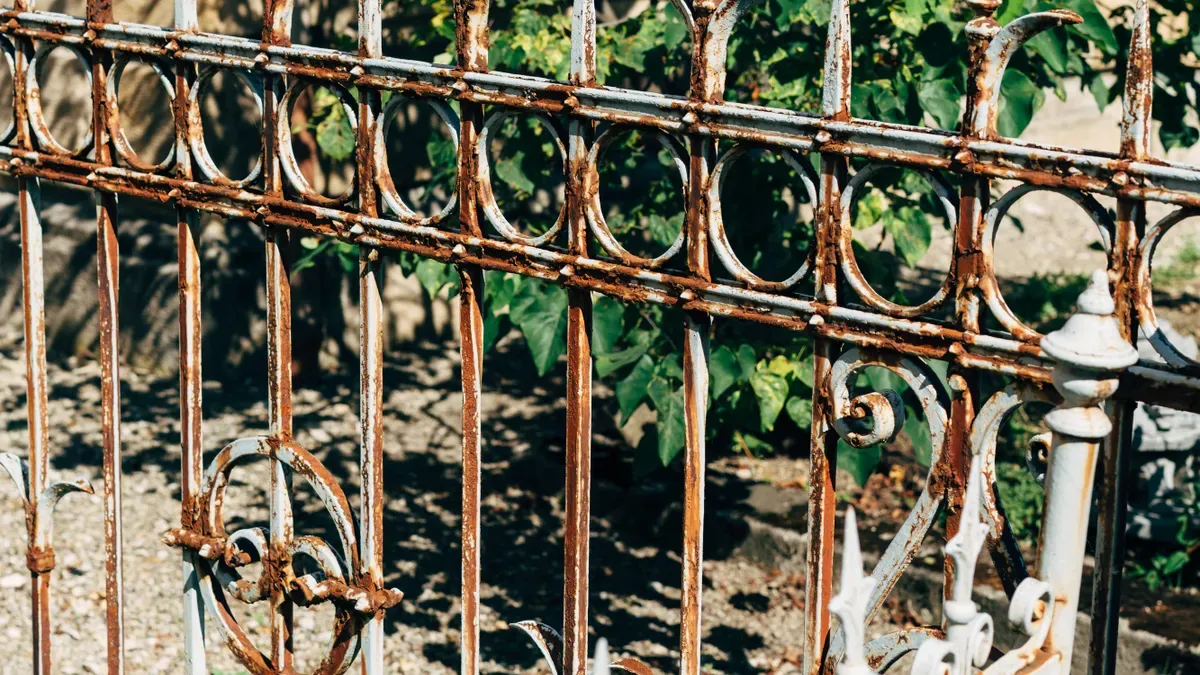
A metal fence makes your property very secure. Steel and wrought iron resist impacts and intrusion better than most materials. You get a solid barrier that stands firm against wind and weather. But every metal option shares one weakness: corrosion. Rust attacks the very structure that gives you security. Knowing this weakness helps you decide if metal truly fits your needs.
The Battle Against Rust: Steel vs. Aluminum
Steel offers the most strength but needs proper care. The protective coating on steel is your main shield against moisture. Once that coating fails, the base metal becomes exposed. A scratch, chip, cut edge, or poor installation detail can eventually become a corrosion point. Rain adds to the problem too. Water collects on the metal surface, providing moisture that leads to rust. Being near the ocean increases your risk further. Salt in the air creates a corrosive environment that speeds up the rusting process.
Aluminum presents a different trade-off. It weighs less than steel, making installation easier. Aluminum resists rust better because it forms a natural oxide layer. However, this material costs more upfront. It also dents more easily than steel. In industrial environments with heavy pollution, aluminum can still break down over time. You must weigh these factors carefully.
Steel fencing can rust over time. Once the protective system is damaged, or if the coating and pretreatment were not done properly in the first place, the base metal is vulnerable.
Metal Fence vs. FRP: Weather Resistance Comparison
Your local climate plays a huge role in how long a metal fence survives. Coastal areas punish metal with salt spray. Humid regions create constant moisture exposure. Freezing temperatures cause expansion and contraction that stress coatings. Each of these conditions can shorten the life of your metal fence.
FRP panels handle these same conditions with greater resilience. The fiberglass-reinforced plastic resists salt, moisture, and temperature swings. You do not need to worry about scratches becoming rust points. You do not need to repaint to protect the surface. The panels retain their structural integrity across most environments. This weather resistance gives FRP a clear advantage over metal in corrosive climates.
Long-Term Cost of Metal Fence Ownership
The initial price of a metal fence looks reasonable. But the long-term expenses can add up. You may face routine maintenance costs every few years, including repainting, rust treatment, and panel replacements. These expenses add up over time. You also face a decision: when repair costs become too high, replacement becomes more economical. This means you might replace your entire metal fence sooner than expected. The metal fence drawbacks become clear when you calculate total ownership costs over 30 years. FRP panels require far less of these ongoing expenses. You install them once and rarely pay for maintenance again. The strength of metal cannot always make up for its ongoing financial burden.
Ready to Specify a Low-Maintenance FRP Fence for Your Project?
Get expert guidance on FRP fencing materials, custom profiles, and installation options. NHC's engineering team helps you choose the right resin system and profile for your environment—coastal, industrial, or residential.
Request a Quote / Send InquiryCost Analysis: Upfront vs. Lifetime Value
FRP vs. Lumber vs. Metal: Cost Over Time
When you look at the upfront price, lumber seems like the cheapest option. A wood fence costs less to install than many other materials. But the true cost is not just the purchase price. You must consider the total cost over 30 years. This is where the numbers change completely.
An FRP option has a higher upfront cost. But you pay almost nothing after that. The panels require minimal maintenance. Compare this with a lumber structure. You pay for staining every two to three years. You pay for board replacements. Over 30 years, these costs pile up.
A 15-year-old structure might not justify new paint, posts, and repairs if neighboring sections will fail soon after. A new vinyl or aluminum barrier can last 30–40 years with virtually no upkeep. The upfront cost may be higher, but the lifetime savings far outweigh the investment. This same logic applies to FRP.
A metal option sits in the middle. It costs more than lumber upfront but less than FRP. Yet you still face periodic painting. Rust treatment adds unexpected expenses. The cost comparison shows FRP as a strong contender for lifetime value.
Hidden Costs: Repairs, Replacements, and Labor
Hidden costs trap many homeowners. You do not see them at the time of purchase. They appear later as repair bills and labor hours.
The option with the highest labor intensity also requires rot assessment, sister-posting, and stain matching. You also face disposal fees for old materials. Over 30 years, you spend many hours on staining and sealing, which adds up to significant time.
Aesthetic deterioration is another hidden cost. A deteriorating lumber fence actively detracts from curb appeal and property value. An engineered option like FRP composite fence panels maintains its appearance through the full 30-year period.
For a metal option, hidden costs include rust treatment and repainting, which can be expensive over time.
Why FRP Delivers Strong ROI
The return on investment for an FRP fence is compelling. The total cost of a lumber structure over 30 years is typically significantly higher than that of an FRP fence, which offers savings through minimal maintenance. You rarely pay for paint, stain, or labor. The panels do not rot, rust, or corrode. They seldom need replacement. A lifecycle cost analysis shows that FRP can be the most economical choice over the long term.
A lumber option might look cheaper today. But the hidden costs make it far more expensive over time. A metal fence offers better value than lumber but still requires ongoing maintenance. FRP gives you a set-it-and-forget-it solution with strong long-term value.
Climate Impact on FRP, Wood, and Metal Fences
Your local weather decides how long your fence will last. Salt air from the coast, high humidity, desert heat, and freezing winters all affect materials in different ways. Knowing these effects helps you pick a fence that lasts.
Performance in Coastal and High-Humidity Areas
Coastal areas challenge fences with salt spray and moisture. Salt air quickly damages metal surfaces. Steel rusts when the protective coating wears off. Aluminum fights rust better but still can break down in polluted areas. You may have to repaint every few years just to slow the damage.
Wood does poorly in damp places. Water gets into the wood fibers. This creates perfect conditions for rot and fungi. In warm, wet climates, wood posts can start to rot within 5 to 10 years. Termites also cause problems. Even treated wood cannot fully stop these attacks.
FRP fence panels handle coastal conditions well. The material is largely chemically inert, so it does not react with salt, water, or most acids. You do not need to worry about rust spots or rotting posts. The panels stay strong year after year. This makes them well-suited for beachfront homes and humid areas.
| Property | Evidence | Climate Suitability |
|---|---|---|
| Corrosion Resistance | Chemically inert, immune to salt spray, moisture, and most acids | Coastal cities, industrial zones |
| UV & Weather Resistance | UV-stabilized resins resist fading, cracking, and damage | Desert zones, high-sun regions |
| Dimensional Stability | Resists warping, shrinkage, or shape change under stress or weather | Outdoor structural uses, variable climates |
Performance in Extreme Heat and Freezing Temperatures
Desert areas bring strong sun and dry heat. Wood dries out, cracks, and fades under constant sunlight. Metal heats up and can become too hot to touch. Both materials need regular care to survive these conditions. In very dry, hot places, metal is often considered better than wood. But even metal needs protective coatings that eventually fail.
Freezing temperatures cause a different problem. Wood soaks up snow and rain. When water freezes, it expands inside the wood fibers and causes cracks. Repeated freeze-thaw cycles make this damage worse. Cedar lasts longer than pine but still has problems. You should seal wood before winter to slow the damage.
FRP panels generally perform well in freeze-thaw conditions. Thermal cycling tests validate the material's performance under repeated temperature changes. This means the material stays strong through cold winters and hot summers.
FRP Fence: A Strong Choice for Any Climate
The facts point to one clear answer. FRP fencing works well in most climates. The material resists salt, humidity, UV rays, and freezing temperatures with minimal degradation. You install the panels once and rarely worry about weather damage again.
This durability also helps the environment. A fence that lasts 25–50+ years cuts down on waste and resource use. You avoid the environmental cost of making replacement materials. Choosing FRP can be a greener choice for eco-conscious property owners.
The composite material uses glass fibers with strong resins. This creates a material that outperforms both wood and metal in many climates. You skip the staining, painting, and sealing that other fences need. Your fence stays strong and looks good for decades, no matter where you live.
When you compare the environmental impact of each option, FRP often comes out ahead. Wood needs constant treatment with chemicals. Metal needs paint and rust preventers. FRP needs very little. The panels stay stable without extra products. This cuts down on your maintenance work and your environmental impact at the same time.
For property owners who want a low-maintenance solution, FRP gives strong value. The panels handle coastal storms, desert heat, and freezing winters well. You make one investment and enjoy decades of reliable service.
Choosing the Right Fence for Your Property
You now have the full picture. Each material brings distinct strengths and trade-offs. Your final choice depends on what matters most: upfront savings, natural beauty, lasting durability, or security. Let's break down which fence fits which priority.
FRP Fence: Best for Long-Term Value and Low Maintenance
An FRP fence wins when you plan to stay in your property for decades. The panels cost more upfront, but they deliver strong value over time. You rarely need to paint, stain, or seal them. You rarely need to replace rotting boards or rusted sections. The 25–50+ year service life means you install once and forget about it.
The math becomes clear when you compare total costs. A wood fence might save you money today, but you will spend thousands on maintenance and replacement over 30 years. An FRP composite fence system costs a fraction of that over the same period. The composite material resists salt, moisture, UV rays, and freezing temperatures with minimal care.
You also gain peace of mind. No weekend projects. No surprise repair bills. No worry about termites or rust weakening your boundary. The panels keep their color and strength for decades. For property owners who value simplicity and long-term savings, FRP delivers a strong return on investment.
Wood Fence: Best for Budget and Natural Look
A wood fence offers the lowest entry price. It is generally more affordable upfront than other materials. The natural grain and warm tones blend beautifully with landscaping. Many homeowners love that classic, organic appearance.
But you must understand the trade-offs. Wood fence advantages include affordability and aesthetics. The disadvantages involve constant upkeep. You will stain or seal the fence every two to three years. You will replace boards that rot or warp. In humid climates, the posts may fail within 5 to 10 years. Termites pose an ongoing threat in many regions.
The long-term cost tells a different story. A traditional wood fence often has the lowest initial price tag, but maintenance adds up quickly. Over 30 years, you could spend significantly more on staining, repairs, and replacement than the initial cost. If you love the look and accept the work, wood works. Just budget for the ongoing care.
Metal Fence: Best for Strength and Security
A metal fence provides a strong barrier against intrusion. Steel and wrought iron withstand significant physical force without bending or breaking. High-strength materials make cutting difficult. You can add anti-climb designs or spear-top pickets for extra protection. These features deter unauthorized access effectively.
Metal fences offer clear advantages in security. For maximum security, metal is hard to beat. For balanced value, consider your climate and willingness to maintain the surface. If you want strength without the rust worries, explore FRP options that combine durability with minimal upkeep. NHC's FRP fencing delivers that combination of durability and low maintenance.
The comparison between these materials ends with a clear picture. FRP delivers a 25–50+ year service life and requires minimal maintenance. Wood costs less upfront but demands constant staining and repairs. Metal provides strength yet remains vulnerable to rust over time. For property owners who want a low-maintenance solution, an FRP fence is a logical choice. NHC's FRP composite fence panels are manufactured with advanced pultrusion technology, ensuring consistent quality. These panels need no painting, sealing, or regular upkeep beyond occasional cleaning. This material withstands salt, humidity, and temperature swings. You make one investment and enjoy decades of reliable service. Choose wisely and your fence will last a lifetime.
FAQ
How long does an FRP fence actually last?
An FRP fence can last 25–50+ years, depending on the resin system, fiber content, and exposure environment. The fiberglass-reinforced plastic is highly resistant to rot, rust, and corrosion. You install it once and rarely need to replace it. Wood typically lasts 10–20 years. Metal lasts 20–50 years with proper coating maintenance. FRP typically outlasts wood by a significant margin and offers comparable or better longevity than metal in corrosive environments.
Do I need to paint or seal my fence regularly?
No. An FRP fence requires minimal maintenance beyond occasional cleaning and inspection. You do not need to paint, stain, or seal the panels. Wood needs staining every 2–3 years. Metal may need periodic repainting to prevent rust. FRP saves you time and money on upkeep.
Which fence material offers the best privacy?
All three materials can block visibility when installed correctly. Wood panels provide solid privacy but may develop gaps as boards warp. Metal pickets leave spaces between bars. FRP panels stay flat and tight for decades. You get consistent privacy without gaps forming over time.
How does salt air affect fence materials?
Salt air damages wood and metal more quickly. Steel rusts when salt attacks the protective coating. Wood absorbs moisture and rots faster near the coast. FRP resists salt well. The material is largely chemically inert. It handles coastal conditions without significant damage.
What is the true cost of a fence over 30 years?
A wood fence typically costs significantly more over 30 years due to maintenance and replacement. A metal fence costs less but still may require painting and rust treatment. An FRP fence usually costs less over the same period because it requires minimal maintenance. The upfront price is higher, but you save long-term.
Will extreme temperatures damage my fence?
Freezing and heat affect wood and metal. Wood cracks when water freezes inside the fibers. Metal coatings can fail under temperature stress. FRP generally performs well in freeze-thaw conditions, ensuring it remains strong through extreme temperatures when properly installed.
Can I install an FRP fence myself?
Yes. FRP panels weigh approximately 75–80% less than steel for comparable sections. You can move and place them without heavy equipment. The long single lengths reduce connection points. You choose base mounting or embedded installation. The lightweight design makes DIY installation practical.
Which fence adds the most value to my home?
An FRP fence can deliver a strong return on investment. You avoid maintenance costs for 25–50+ years. The panels keep their color and strength with minimal repairs. Wood and metal require ongoing expenses that reduce their net value. FRP gives you a durable, attractive boundary that can pay for itself over time.
References & Sources
National Institute of Standards and Technology (NIST). "Reliability of Fiber Reinforced Polymer (FRP) Composite Systems for Resilient Infrastructure." https://www.nist.gov/programs-projects/reliability-fiber-reinforced-polymer-frp-composite-systems-resilient
U.S. Forest Service. "Preservative-Treated Wood and Alternative Products in the Forest Service." https://www.fs.usda.gov/eng/pubs/htmlpubs/htm06772809/page07.htm
American Galvanizers Association. "Corrosion Rate — Hot-Dip Galvanized Coatings." https://galvanizeit.org/corrosion/corrosion-process/corrosion-rate
ASTM International. "Composite Standards." https://www.astm.org/products-services/standards-and-publications/standards/composite-standards.html