


How to choose the right FRP ladder supplier for my project
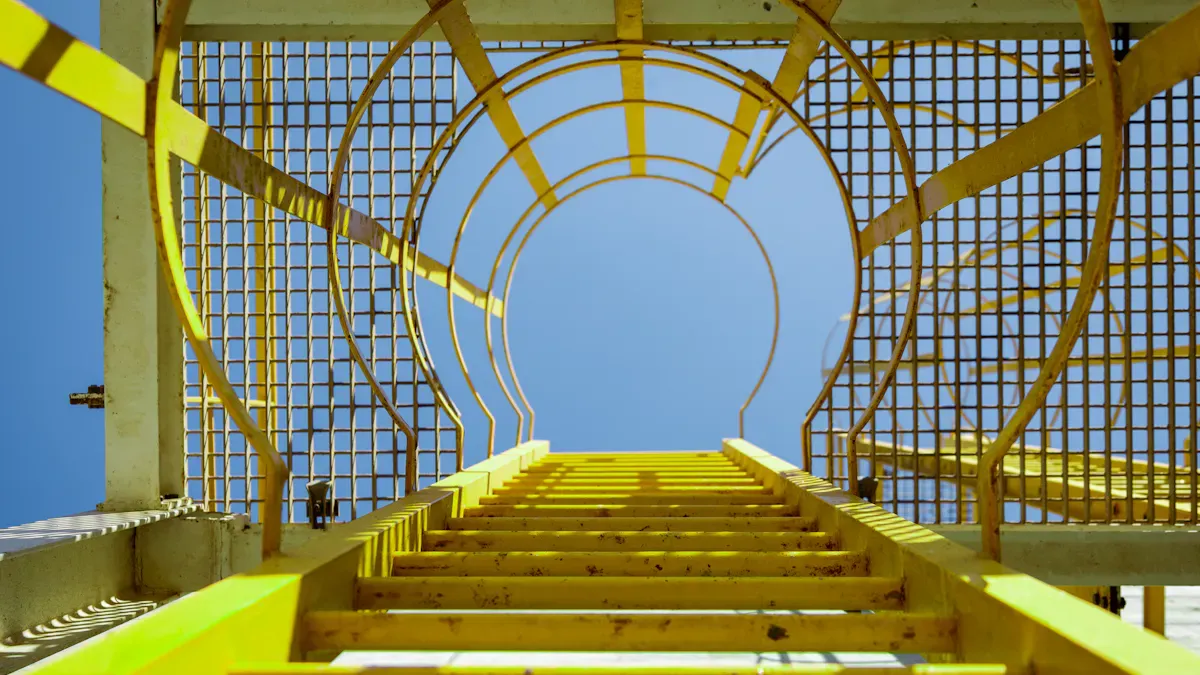
Selecting the right frp ladder supplier demands careful attention to expertise, product quality, certifications, customization, and ongoing support. The supplier’s credentials directly affect project safety, efficiency, and long-term value. When choosing among grp ladder suppliers, decision-makers face common risks:
Poor product quality
Lack of certifications such as ISO, OSHA, or CE
Delayed response times
Unreliable supply chain transparency
Low reorder rates from dissatisfied customers
A supplier with strong expertise, verified credentials, and proven reliability helps protect the project from these issues.
Key Takeaways
Define your project needs clearly. Assess weight capacity, usage frequency, and environmental factors to choose the right FRP ladder.
Prioritize safety and compliance. Ensure the supplier meets industry standards like OSHA and ISO for quality and safety.
Evaluate supplier expertise. Look for suppliers with proven experience, relevant certifications, and a strong reputation in the FRP industry.
Request product samples. Inspect the quality and features of the FRP ladder before making a large order to ensure it meets your expectations.
Compare pricing transparently. Obtain itemized quotes and be aware of potential hidden costs to avoid budget surprises.
Check for customization options. A good supplier should offer tailored solutions to meet specific project requirements and challenges.
Review customer feedback. Look at online ratings and request references to gauge the supplier's reliability and product performance.
Ensure strong after-sales support. Choose a supplier that provides installation guidance, maintenance advice, and responsive customer service.
Define Your FRP Ladder Project Needs

Load & Usage Requirements
Weight Capacity
Project managers must determine the load capacity required for each application. The ladder reach guide helps teams assess the maximum reach and weight demands for their site. The selected frp ladder must support both static and dynamic loads, ensuring a safety factor of at least four times the maximum intended load. This approach aligns with OSHA and ANSI safety standards. High-quality resins, such as isophthalic polyester or vinyl ester, enhance the ladder’s performance under load. Teams should review product specifications to confirm that the ladder meets or exceeds the required load capacity for all users and equipment.
Assess the number of users and equipment weight.
Confirm the ladder’s load capacity matches or exceeds project needs.
Ensure compliance with safety standards for load-bearing requirements.
Frequency of Use
The frequency of use impacts the selection of frp solutions. High-volume procurement teams often prefer standardized models for frequent access, while specialty contractors may require unique features for occasional use. The ladder reach guide assists in evaluating how often the ladder will be used and under what conditions. Frequent use demands robust construction and consistent load capacity, while occasional use may allow for lighter models with specialized features.
Environment & Application
Indoor/Outdoor
The installation environment plays a critical role in specifying frp ladders. Teams must decide if the ladder will be used indoors, outdoors, or in both settings. Outdoor applications require enhanced UV resistance and weatherproofing. Indoor environments may prioritize insulation and fire retardancy. The ladder reach guide provides insight into the maximum reach required for each setting.
Chemical/Weather Exposure
Environmental factors such as chemical exposure, humidity, and temperature fluctuations influence material selection. The following table outlines key considerations:
Factor | Description |
|---|---|
Sustainability Factors | Evaluate the environmental impact of material extraction, manufacturing, and disposal. |
Durability | Choose materials that balance corrosion, UV, and weather resistance with cost. |
Environmental Resistance | Fiberglass resists UV degradation better than aluminum, while aluminum offers better corrosion resistance in wet areas. |
Project teams should select frp solutions with the right resin and coating for their specific environment, ensuring long-term durability and safety.
Ladder Type & Specs
Fixed, Portable, Custom
The type of ladder required depends on the application. Fixed ladders offer permanent access for industrial sites, while portable models provide flexibility for maintenance tasks. Custom ladders address unique site challenges, such as unusual mounting locations or special safety features. The ladder reach guide helps teams determine the maximum reach and mounting requirements for each type.
The table below summarizes common types and their specifications:
Type of Ladder | Specifications |
|---|---|
Fixed Ladders | Up to 20' without safety cages, floor/wall mounted, high chemical and corrosion stability. |
Caged Ladders | Designed for safety at height, includes a cage for added protection. |
Insulation Ladders | Superior insulation, ideal for electrical applications. |
Features | Anti-slip rungs, OSHA compliance, UV resistance, flame retardant, low maintenance. |
Dimensions & Features
Project managers must review all dimensions and features before supplier selection. The maximum reach, rung spacing, width, and safety cage dimensions must align with site requirements. Teams should confirm that the frp ladder includes non-slip supports, handrails, and other safety enhancements. Reviewing product specifications ensures the ladder meets all technical and safety needs.
Tip: Clarify all technical and safety requirements before selecting a supplier. This step prevents costly changes and ensures compliance with industry standards.
Safety & Compliance
Industry Standards
Every project manager must prioritize safety and compliance when selecting an FRP ladder supplier. Industry standards set the foundation for safe ladder design, manufacturing, and installation. Suppliers who meet recognized standards demonstrate a commitment to quality and user protection.
Key standards include:
OSHA (Occupational Safety and Health Administration): OSHA outlines strict requirements for fixed ladders, including load capacity, rung spacing, and safety cage design. For example, OSHA section 1910.27 specifies a minimum live load and safety factor for industrial ladders.
ISO (International Organization for Standardization): ISO 9001-2015 certification confirms that a supplier maintains a robust quality management system. ISO 45001-2018 addresses occupational health and safety management, ensuring safe working conditions.
CE Marking: For projects in Europe, CE certification indicates compliance with essential health and safety requirements.
A reliable FRP ladder supplier will provide documentation for these certifications. They will also conduct regular product testing, such as load and deflection tests, to verify compliance. NHC’s GRP Cat Access Roof Ladder, for instance, meets OSHA and ISO standards, offering peace of mind for safety-focused projects.
Tip: Always request proof of compliance and recent test reports from your shortlisted suppliers. This step helps confirm that the products meet industry benchmarks.
Project-Specific Codes
Beyond general industry standards, each project may have unique codes or requirements. These can include local building codes, sector-specific regulations, or client-driven specifications. A top-tier FRP ladder supplier will understand these nuances and offer solutions tailored to your project.
Consider the following checklist when reviewing project-specific codes:
Local Building Codes: Check for regional requirements on ladder installation, materials, and safety features.
Sector Regulations: Water treatment plants, offshore platforms, and energy facilities often have additional safety protocols.
Client Specifications: Some clients may require enhanced fire retardancy, anti-static properties, or custom dimensions.
A supplier with experience in your industry will help interpret these codes and integrate them into the ladder design. They will also provide engineering support to ensure full compliance.
Note: Clarifying all safety and compliance requirements before supplier selection prevents costly redesigns and project delays.
Choosing an FRP ladder supplier with a strong track record in safety and compliance protects your team and ensures long-term project success.
Evaluate Supplier Expertise & Credentials
Selecting the right frp ladder supplier starts with a thorough evaluation of expertise and credentials. A supplier with proven experience, recognized certifications, and a strong reputation ensures project safety and long-term value. This section outlines the key factors to consider when assessing supplier expertise and reliability.
Supplier Experience
Years in Industry
A supplier’s track record in the frp industry speaks volumes about their expertise. Reliable manufacturers typically have at least five years of experience, which demonstrates their ability to deliver consistent quality and adapt to evolving standards. NHC, for example, brings over two decades of industry knowledge, setting a high benchmark for supplier expertise.
Relevant Projects
Experience with diverse and challenging projects highlights a supplier’s ability to meet unique requirements. Look for manufacturers who have completed projects such as:
ADA-compliant frp wheelchair ramps in harsh climates, where corrosion resistance and safety are critical.
FRP balconies for residential properties, which require low maintenance and a clean appearance.
Customized non-conductive frp structures for advanced technology applications.
These examples show that a supplier can handle a range of environments and technical demands, from public infrastructure to specialized industrial needs.
Tip: Ask potential suppliers for case studies or references from similar projects to verify their expertise.
Certifications & Compliance
ISO, OSHA, CE
Certifications validate a supplier’s commitment to quality and safety. The most reputable frp ladder suppliers hold certifications such as ISO 9001 for quality management, OSHA compliance for workplace safety, and CE marking for European standards. NHC’s GRP Cat Access Roof Ladder, for instance, meets ISO 9001-2015, ISO 14001-2015, and ISO 45001-2018 standards, providing assurance of rigorous quality control.
Certification Type | Description |
|---|---|
EN131 | European safety standard |
ANSI A14 | American ladder requirements |
ISO 9001 | Quality management standard |
OSHA | Compliance documentation |
TUV | Certification for load testing |
A supplier with these certifications demonstrates a strong foundation in both product quality and regulatory compliance.
Product Testing
Comprehensive product testing is essential for verifying frp ladder performance and safety. Reliable manufacturers conduct tests such as:
Standard | Description |
|---|---|
BS 476 PART 7 CLASS 1 | Vertical flame spread test, common for fire safety certification |
ASTM D257 | Measures volume and surface resistivity |
BS 476 PART 6 | Fire propagation index |
ASTM D792 | Density measurement |
ISO 4589-2 | Burning behavior by oxygen index |
ASTM E84 | Weathering test for flame spread and smoke emissions |
ASTM D635 | Rate and duration of burning in plastic products |
NHC’s in-house load and deflection testing, along with third-party certifications, set a high standard for product verification. Always request recent test reports to confirm that the supplier’s products meet or exceed industry benchmarks.
Reputation & Reliability
Financial Stability
A supplier’s financial health impacts their ability to deliver on time and support projects over the long term. Key indicators include compliance with regulations, investment in research and development, stable supply chains, and a focus on total lifecycle costs. These factors ensure that the supplier can provide consistent quality and support throughout the project’s lifespan.
Indicator | Description |
|---|---|
Compliance | Meets current and future regulations |
Innovation | Invests in R&D for advanced solutions |
Supply Chain Stability | Maintains reliable sourcing and logistics |
Total Lifecycle Costs | Offers products with strong ROI and low maintenance |
Delivery Record
A supplier’s reputation depends on more than just product quality. Reliable manufacturers maintain strong delivery records, offer a wide range of frp solutions, and provide customization options to fit specific project needs. They also back their products with solid warranties and responsive after-sales support.
Criteria | Description |
|---|---|
Quality Standards | Adheres to ANSI and OSHA for safety and quality |
Material Selection | Uses durable materials like fiberglass for longevity |
Product Range | Offers ladders for industrial, commercial, and residential use |
Customization Options | Provides tailored solutions for height, weight, and features |
Warranty and Support | Delivers strong warranty terms and after-sales service |
Reviews and Reputation | Receives positive customer feedback for quality and satisfaction |
Note: Research online reviews and request direct references to assess a supplier’s reputation for reliability and customer satisfaction.
A thorough evaluation of supplier expertise, certifications, and reliability helps ensure that your frp ladder project meets the highest standards for safety, performance, and long-term value.
Assess FRP Ladder Quality & Performance
Material & Build Quality
FRP Grade
Project managers must evaluate product quality by examining the grade of frp used in ladder construction. High-grade frp offers several advantages:
Poor electrical conductivity protects workers in electrical environments.
Durability ensures the ladder withstands frequent use and harsh conditions.
Strength supports heavy loads without deformation.
Light weight allows easy handling and installation.
Flame and heat resistance improves safety in industrial settings.
Better visibility, often achieved with safety colors, reduces accidents.
Manufacturers select frp grades based on the intended application. For example, ladders used in marine, petroleum, chemical plants, and waterparks require enhanced corrosion resistance and durability. These properties contribute to the long lifespan of frp ladders, minimizing maintenance and replacement costs.
Manufacturing Process
The manufacturing process directly impacts the quality and durability of frp ladders. Advanced pultrusion technology creates a lightweight and strong structure. The process embeds glass fibers within a polymer matrix, resulting in superior tensile and compressive strength. This structure resists failure from dynamic loads and maintains material integrity over years of cyclic stresses.
Key benefits of high-quality manufacturing include:
Superior resistance to rain, snow, ice, and extreme temperatures.
Chemical resistance suitable for industrial environments with corrosive substances.
UV resistance prevents fading, cracking, and degradation.
Non-conductive properties enhance safety near electrical hazards.
Easy installation reduces labor costs.
FRP ladders remain virtually maintenance-free. They do not rot or corrode when exposed to harsh chemicals and acids, which lowers ownership costs by eliminating the need for painting, rust removal, or replacing corroded parts.
Testing & Safety
Load Testing
Manufacturers conduct rigorous load testing to ensure frp ladders meet safety requirements. Testing verifies that ladders support the intended weight capacity and maintain a safety factor of at least four times the maximum load. This process confirms the ladder’s strength and durability, preventing accidents caused by structural failure.
Durability Checks
Durability checks assess the ladder’s ability to withstand environmental stressors. Tests include exposure to UV radiation, extreme temperatures, and corrosive chemicals. These checks guarantee corrosion resistance and confirm the long lifespan of frp products. Regular durability testing ensures ladders remain safe and reliable throughout their service life.
Standards Compliance
OSHA, ISO, CE
Compliance with international standards demonstrates a supplier’s commitment to quality and safety. The following table summarizes key requirements:
Standard | Description |
|---|---|
1910.269(h)(2)(ii) | Portable ladders and platforms may not be loaded in excess of the working loads for which they are designed. |
1910.269(h)(2)(iii) | Portable ladders and platforms shall be secured to prevent them from becoming dislodged. |
1910.269(h)(2)(iv) | Portable ladders and platforms may be used only in applications for which they are designed. |
1910.269(h)(3) | Conductive ladders may not be used near exposed energized lines or equipment, except in specialized high-voltage work. |
Suppliers must provide documentation proving compliance with OSHA, ISO, and CE standards. These certifications assure buyers that the frp ladder meets industry benchmarks for quality and safety.
Third-Party Verification
Independent certification from a third-party body enhances confidence in frp ladder quality. Third-party verification involves thorough testing and auditing. It confirms that ladders are constructed from quality materials and comply with safety regulations. This assurance helps buyers trust that the product is fit for its intended purpose.
Tip: Always request third-party certification and recent test reports when selecting an frp ladder supplier. This step ensures the ladder’s quality, durability, and compliance with safety standards.
Customization & Support from Supplier
Custom FRP Ladder Solutions
Tailored Design
Leading suppliers recognize that every project has unique requirements. They offer customization options that address specific site challenges and safety needs. NHC demonstrates this approach by providing custom built ladders with features such as walkthrus, rail extensions, and safety gates. Teams can request caged or fixed ladder designs for secure access, or ask for lockable security panels and safe landing access. The ability to fabricate ladders according to project specifications ensures that each solution fits the intended environment.
Feature | Description |
|---|---|
Non-Skid Rungs | Provides safety and stability during use. |
Compliance Standards | Meets OSHA 1910.23 and 1910.1053 Standards. |
Flame Retardant and UV Coated | Enhances durability and safety in harsh conditions. |
Installation Options | Variety of installation and mounting options available. |
Suppliers who offer extensive customization help clients achieve optimal safety and performance for their frp ladder systems.
Engineering Support
Engineering support plays a critical role in customization. FRP profiles possess excellent hardness and high load capacity, making them suitable for diverse applications. Engineers assess load-bearing capacities, stability, ergonomics, and regulatory compliance. This process ensures that ladders meet safety standards and function reliably in demanding environments. By integrating technical and regulatory factors, engineering teams tailor ladder systems to fit specific needs.
Engineering support enhances the usability and safety of frp ladders, especially when projects require specialized solutions.
Installation & After-Sales
Professional Setup
Installation support from top-tier suppliers simplifies the process and reduces operational costs. NHC uses lightweight materials that minimize labor and equipment needs. No welding is required, which saves time and ensures a safer worksite. Suppliers provide correct anchoring, foundation preparation, safety positioning, and regular inspection routines. These steps guarantee compliance with safety regulations and maximize the lifespan of the frp ladder.
Feature | Benefit |
|---|---|
Lightweight Materials | Reduces labor and equipment needs, making installation easier and more cost-effective. |
No Welding Required | Simplifies the installation process, saving time and reducing operational costs. |
Maintenance & Warranty
After-sales support is essential for long-term satisfaction. Suppliers offer tailored technical consultation, site evaluation, installation recommendations, maintenance advice, and prompt delivery. NHC stands out by providing responsive after-sales support and customized solutions. Warranty coverage for frp ladders typically extends up to five years, with some suppliers offering extended warranties up to fifteen years. Annual maintenance contracts are available to ensure ladders remain free from manufacturing defects and structurally stable under rated load classes.
Product Category | Warranty Coverage |
|---|---|
FRP Handrails & Ladders | 5 Years |
Extended Warranties | Up to 15 Years |
Annual Maintenance Contracts | Yes |
Ladders resist corrosion, weathering, and UV degradation.
Products remain stable in shape, color, and dimension under normal use.
Certified as per IS, ASTM, and ISO standards.
Responsive after-sales support and flexible solutions distinguish reliable suppliers. Teams should prioritize those who communicate clearly and resolve issues quickly.
Choosing a supplier with strong customization capabilities and comprehensive support ensures that frp ladder systems deliver safety, durability, and value throughout their lifecycle.
Compare Pricing, Value & Delivery
Selecting the right frp ladder supplier involves more than just evaluating product features. Project managers must compare pricing structures, assess long-term value, and review delivery reliability to ensure the best outcome for their investment.
Transparent Quotes
Itemized Pricing
Reputable suppliers provide clear, itemized quotes for frp ladder projects. They break down each component, such as ladder sections, safety cages, handrails, and mounting hardware. This transparency allows buyers to understand exactly what they are paying for and to compare offers from different suppliers. Companies like National Grating and GRM Custom Products use detailed order forms and direct communication to ensure clients receive accurate pricing based on their specific requirements. Customization options, including preassembly, handrails, and safety gates, are listed separately to avoid confusion.
Hidden Costs
Hidden costs can impact the total project budget. Buyers should investigate all potential expenses beyond the initial quote. The following table highlights common hidden costs associated with frp ladder procurement:
Cost Type | Details |
|---|---|
Installation Cost | $2–$5 per meter (varies by method) |
Transport Cost | ~40% lower freight cost than steel |
Storage & Handling | Minimal corrosion protection reduces costs |
Understanding these factors helps teams avoid unexpected charges and ensures a more accurate comparison between suppliers.
Value vs. Cost
Quality Investment
Investing in high-quality frp ladders often results in higher upfront costs. These ladders use advanced materials and manufacturing techniques, which increase the initial price. However, the benefits include superior durability, low maintenance, and resistance to water and chemical corrosion. Over time, these features reduce repair and replacement expenses, making the investment worthwhile.
Superior durability extends service life.
Low maintenance requirements save time and money.
Resistance to harsh environments protects the ladder’s integrity.
Rapid and affordable installation reduces labor costs.
Versatile design capabilities support a wide range of applications.
Although frp ladders may cost 20-35% more initially, the long-term savings and enhanced performance often outweigh the higher purchase price.
Long-Term Savings
Choosing frp ladders as a cost-effective choice delivers significant savings over the project lifecycle. Their durability and minimal maintenance needs lower total ownership costs. Many buyers find that, despite the higher initial cost, frp ladders outperform traditional materials in terms of longevity and reliability. This approach supports profitability and reduces the risk of unexpected expenses.
Delivery & Logistics
Lead Times
Timely delivery is essential for project success. Most frp ladder suppliers offer lead times ranging from 25 to 40 days for standard orders of around 1,000 units. Orders with additional features, such as non-slip coatings or folding mechanisms, may require an extra 5 to 10 days. Understanding these timelines helps project managers plan installations and avoid delays.
Shipping Reliability
Reliable shipping ensures that frp ladders arrive on schedule and in good condition. Some suppliers, including leading manufacturers, have achieved perfect on-time delivery rates. This reliability is crucial for time-sensitive projects and helps maintain workflow continuity. Teams should confirm a supplier’s track record for shipping accuracy and responsiveness before finalizing their selection.
Tip: Always request a detailed quote, clarify all potential costs, and confirm delivery schedules to ensure a smooth procurement process.
Project Case Studies
Similar Applications
Case studies demonstrate how suppliers address real-world challenges. NHC’s frp ladders serve in demanding environments such as offshore platforms, cooling towers, and transportation facilities. These projects require corrosion resistance, flame retardancy, and compliance with strict safety codes. By reviewing case studies, buyers see how suppliers adapt frp ladder designs to meet unique site requirements.
Infrastructure teams use frp ladders for secure access in water treatment plants.
Energy companies install frp ladders for maintenance on solar and wind platforms.
Transportation facilities rely on frp ladders for safe vertical access.
Case studies show the versatility and durability of frp solutions across industries.
Problem-Solving Examples
Suppliers often solve complex problems by customizing frp ladder systems. NHC engineers design ladders with safety cages, non-slip rungs, and insulated materials for hazardous locations. Teams benefit from tailored solutions that address site-specific risks. For example, a water treatment facility required an frp ladder resistant to chemicals and UV exposure. NHC delivered a ladder with advanced resin and protective coatings, ensuring long-term performance.
Reviewing problem-solving examples helps buyers understand the supplier’s technical capabilities and commitment to safety.
Project managers should reference successful projects and customer testimonials when selecting an frp ladder supplier. This approach builds confidence in the supplier’s reliability and supports informed decision-making.
Final Steps to Choose the Best FRP Products
Selecting the right supplier involves more than reviewing brochures or exchanging emails. Teams that want to choose the best frp products should take extra steps to verify quality and reliability before making a final decision.
Request Samples or Visits
Product Inspection
Project managers often request a physical sample before placing a large order. This step allows them to inspect the frp ladder’s build quality, finish, and safety features. They check for smooth edges, sturdy rungs, and proper coatings. Teams also test the sample for weight, rigidity, and non-slip properties. By handling the product, they confirm that it meets their expectations and project requirements. This hands-on approach helps them choose the best frp products with confidence.
Tip: Always ask for a production sample and conduct basic load or durability tests on-site.
Factory Tour
A factory visit gives buyers a clear view of the supplier’s manufacturing capabilities. Teams can schedule an in-person tour or arrange a virtual walkthrough. During the visit, they observe the production process, quality control measures, and storage conditions. They also meet the engineering team and discuss customization options. This direct interaction builds trust and helps teams choose the best frp products for their needs.
Note: If travel is not possible, a third-party inspection or video call can provide valuable insights into the factory’s operations.
Decision Checklist
Key Criteria Review
A structured checklist ensures that teams do not overlook important details when they choose the best frp products. The following table outlines essential criteria for evaluating frp ladder suppliers:
Criteria | Description |
|---|---|
Company Registration | Verify company registration and export license. |
Product Specifications | Request full product specification sheet. |
Certification Verification | Confirm certification numbers with issuing bodies. |
Production Sample | Obtain and test a production-sample ladder. |
Factory Inspection | Inspect factory via video call or third party. |
Contract Terms | Clarify MOQ, payment terms, and lead time in contract. |
Penalty Clauses | Include penalty clauses for late delivery. |
Warranty Coverage | Define warranty coverage and replacement process. |
Pre-shipment Inspection | Arrange pre-shipment inspection by independent agency. |
Packaging Review | Review packaging for drop-test suitability. |
Teams that follow this checklist can choose the best frp products and avoid costly mistakes.
Supplier Comparison
Comparing multiple suppliers helps buyers identify the best fit for their project. Teams should create a side-by-side comparison of each supplier’s strengths and weaknesses. They evaluate factors such as frp quality, customization options, certifications, delivery record, and after-sales support. They also consider pricing, warranty terms, and customer feedback. This method ensures that they choose the best frp products for safety, durability, and value.
Teams that document their findings and review all criteria make informed decisions and achieve successful project outcomes.
By following these final steps, project managers can choose the best frp products with confidence, knowing they have verified quality, compliance, and supplier reliability.
Choosing the right frp ladder supplier requires a clear process. Teams should define project needs, evaluate supplier experience, and check certifications. They must assess frp quality, review customization, and compare value. Teams should also inspect samples and review feedback. Safety, compliance, and long-term value matter most. Use a checklist to guide each step. Teams should contact shortlisted suppliers for more details or samples. The right frp supplier will provide strong support, reliable frp products, and lasting project success.
FAQ
What certifications should an FRP ladder supplier have?
A reliable FRP ladder supplier should hold ISO 9001, ISO 14001, and ISO 45001 certifications. OSHA and CE compliance also indicate strong safety and quality standards. These certifications show the supplier’s commitment to industry best practices.
How can a project manager verify FRP ladder quality before purchase?
Project managers should request product samples, review recent test reports, and check for third-party certifications. They can also schedule a factory visit or virtual tour to inspect manufacturing processes and quality control measures.
Why is customization important when selecting an FRP ladder supplier?
Customization ensures the FRP ladder fits specific site requirements and safety needs. Suppliers who offer tailored solutions can address unique challenges, such as unusual mounting locations or special safety features, improving project outcomes.
What after-sales support should a good FRP ladder supplier provide?
A reputable supplier offers installation guidance, maintenance advice, and warranty coverage. Responsive after-sales support helps resolve issues quickly and ensures the FRP ladder remains safe and reliable throughout its service life.
How does supplier experience impact FRP ladder selection?
Experienced suppliers understand industry standards and project challenges. They deliver consistent quality and adapt to evolving requirements. A supplier with a strong track record increases confidence in product performance and long-term reliability.
What factors affect the total cost of an FRP ladder project?
Total cost includes product price, installation, shipping, and maintenance. High-quality FRP ladders may cost more upfront but offer long-term savings through durability and low maintenance. Transparent quotes help avoid hidden expenses.
How can customer feedback help in choosing an FRP ladder supplier?
Customer reviews and case studies reveal the supplier’s reliability, product quality, and service standards. Positive feedback from similar projects builds trust and supports informed decision-making.
What safety features should be standard in FRP ladders?
Standard safety features include non-slip rungs, safety cages, handrails, and high-visibility finishes. Compliance with OSHA and ISO standards ensures the ladder meets essential safety requirements for industrial and commercial use.