


In 2026, fiberglass-reinforced polymer (FRP) fasteners outperform traditional metal options in many demanding environments. Recent advances in FRP technology have boosted strength and durability. Corrosion resistance leads the list of benefits — especially for chemical or marine use. FRP weighs less than metal and offers better safety in electrical and fire-prone settings, while also delivering outstanding long-term value. The right choice depends on cost, strength, safety, and lifecycle durability.
Key Takeaways
FRP fasteners outperform metal in corrosive environments — chemical plants, marine platforms, and water treatment facilities.
They are significantly lighter than metal, reducing installation effort and shipping costs.
FRP fasteners reduce long-term maintenance costs due to superior corrosion resistance.
Electrically insulating and non-magnetic — ideal for substations, power plants, and electrical installations.
Customizable in shape, size, and color — suited for architectural and structural applications alike.
Despite a higher upfront price, FRP delivers strong total cost of ownership over a 10-year horizon.
Nanjing Hypro Composites offers high-quality FRP fasteners certified to international standards.
FRP vs Metal: Cost Comparison
Initial Price
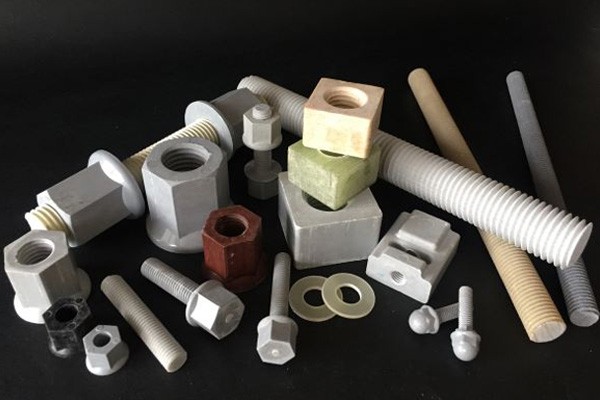
FRP fasteners have become more affordable in recent years due to advanced production methods, though they can still carry a higher upfront price than standard steel or stainless steel options. Metal fasteners typically have a lower initial cost, but that figure can shift quickly with commodity market swings.
Installation and Labor Costs
FRP is much lighter than metal, so workers can carry and install fasteners with less effort, reducing injury risk and speeding up the process. Average installation costs for FRP wall panels range from $3.50 to $7.50 per square foot.[1] FRP and plastic fasteners are also easy to cut and drill on-site, saving labor time versus metal, which often requires special tools or extra steps.
Long-Term Value
The long-term advantage of FRP fasteners becomes clear in harsh environments. Metal fasteners corrode, leading to expensive repairs, scaffolding for bolt replacement, and shutdown costs that often exceed the initial price difference. Industry data shows:[2]
| Environment Type | 10-Year Cost Advantage (FRP) | Typical Payback Period |
|---|---|---|
| Chemical / Marine | 30% – 60% | 3 – 5 years |
| General Industrial | 10% – 20% | 5 – 7 years |
FRP prices also remain far more stable than metal, which fluctuates with raw material markets — making budget planning easier for long-cycle infrastructure projects.
Tip: Choosing FRP fasteners for modular platforms can lead to lower maintenance costs and fewer replacements, especially in tough environments.
Strength and Mechanical Performance
Tensile and Shear Strength
FRP fasteners deliver high tensile and shear strength, making them suitable for many demanding applications. Metal fasteners — particularly steel and stainless steel — provide exceptional strength in both categories, which remains their key advantage in pure load-bearing scenarios.
| Fastener Type | Tensile Strength | Shear Strength |
|---|---|---|
| FRP Fasteners | High | High |
| Metal Fasteners | Exceptional | Exceptional |
Load Capacity
Steel fasteners can operate at 90% of their rated capacity for decades if corrosion does not occur.[3] FRP fasteners at the same proportional load typically last only minutes or hours at room temperature, with performance declining further at elevated temperatures. This distinction makes metal the preferred choice in pure structural, high-load, non-corrosive conditions.
Fatigue and Impact Resistance
FRP fasteners resist fatigue well in environments where vibration and chemical exposure are common. They also exhibit high impact resistance — preventing dents or sharp edges when objects are dropped, which enhances workplace safety and extends the lifespan of industrial platforms.[4]
Real-World Infrastructure Applications
Bridge rehabilitation (New York City): FRP tubes replaced corroded steel beams, reducing maintenance costs and extending service life.
Wastewater treatment (California): Pipeline upgrades using FRP improved chemical resistance and operational efficiency.
Offshore platform (North Sea): FRP structural supports ensured longevity against harsh marine conditions.[5]
Durability and Corrosion Resistance
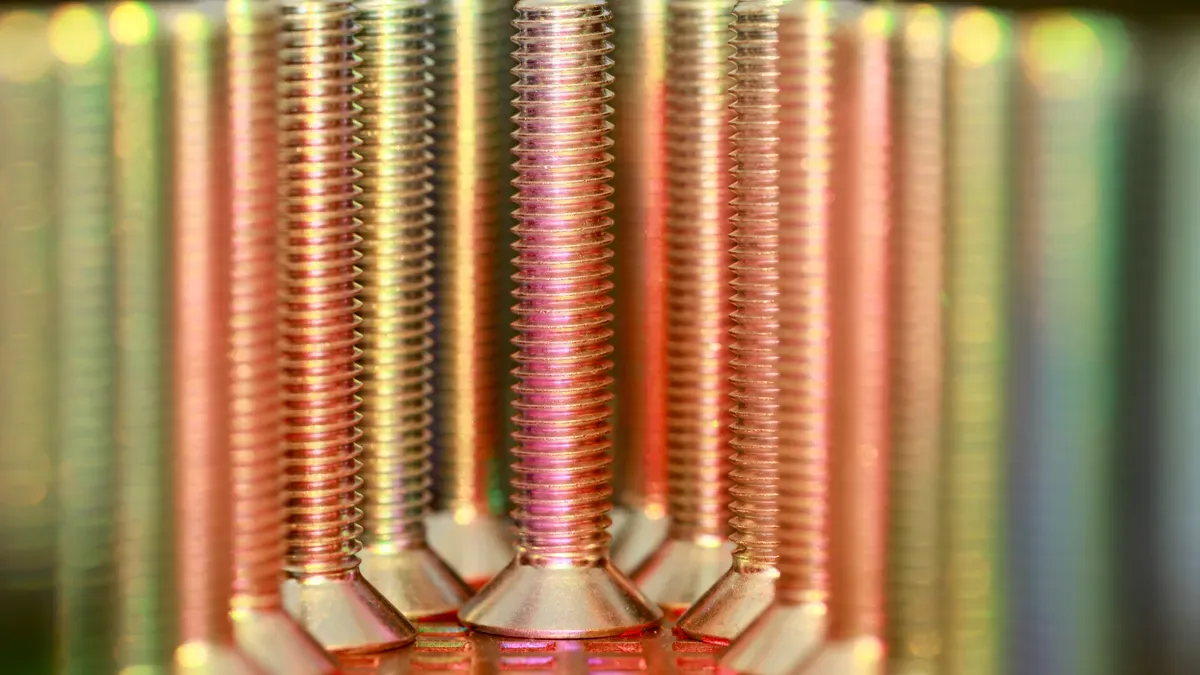
FRP fasteners maintain integrity in salt spray tests exceeding 3,000 hours without visible degradation.
Chemical and UV Resistance
FRP composite fasteners do not rust or pit. They resist dilute acids, alkalis, and chlorinated environments. In ASTM B117 salt-spray testing, FRP fasteners exceed 3,000 hours without visible degradation — a performance level that stainless steel cannot consistently match in chloride-heavy environments.[6] FRP also maintains structural integrity under prolonged UV and humidity exposure, eliminating the need for protective coatings.
Maintenance Requirements Compared
| Maintenance Task | FRP Fasteners | Metal Fasteners |
|---|---|---|
| Cleaning | Annual wash with mild detergent | Quarterly rinse + annual inspection |
| Anti-corrosion coating | Not required | Every 5–8 years |
| Structural inspection | Annual visual; full survey every 10 yrs | Annual visual + corrosion probe |
| Fastener re-tensioning | Year 1–2 check; thereafter if disturbed | Every 3–5 years (corrosion-driven) |
| Panel replacement | Selective at 15 years | Partial at 10–15 yrs; full at 20 yrs |
| Painting / surface treatment | Not required | Every 7–10 years |
Tip: FRP fasteners can significantly reduce maintenance costs and extend project lifespan — especially important for offshore, chemical, and water treatment assets.
Safety Advantages
Fire Resistance
Fire resistance is a critical factor in construction and industrial environments. FRP fasteners are self-extinguishing and do not support combustion. Metal fasteners, by contrast, can lose structural strength rapidly at high temperatures — steel begins to soften significantly above 300°C — and conduct heat, creating additional burn hazards in overhead applications.
| Property | FRP Fasteners | Metal Fasteners |
|---|---|---|
| Combustion Support | No | Yes |
| Self-Extinguishing | Yes | No |
| Heat Conductivity | Low | High |
| Structural Integrity Under Fire | Maintained | May weaken |
Electrical Insulation
FRP fasteners are electrically insulating and non-magnetic, making them the standard choice for switchgear, transformer stations, electrical substations, and railway systems. Metal fasteners conduct electricity — a significant liability in these environments. FRP eliminates the risk of accidental shocks, short circuits, and equipment damage from stray currents.
Compliance and Standards
FRP fasteners comply with international and local building codes, meeting requirements for fire resistance and electrical insulation. They are widely specified for schools, hospitals, chemical processing facilities, and offshore platforms where safety certification is mandatory. Nanjing Hypro Composites tests and certifies products for critical-application use.
Lifecycle and Maintenance Costs
Inspection Intervals
FRP requires significantly less frequent inspection than metal. In infrastructure applications such as Forest Service trail bridges, FRP components are scheduled for inspection at least every five years.[7] Metal structures in similar environments typically require annual or more frequent checks due to corrosion risk.
Lifecycle Cost Analysis
| Aspect | FRP Fasteners | Metal Fasteners |
|---|---|---|
| Corrosion Resistance | Superior — no rust formation | Prone to rust and degradation |
| Maintenance Requirements | Minimal, predictable | Higher, with unexpected repairs |
| Installation Speed | Faster due to lighter weight | Slower; may need special tooling |
| Energy Costs | Lower (better thermal insulation) | Higher |
| Useful Life | Longer in corrosive environments | Shorter in harsh conditions |
FRP fasteners deliver lower lifecycle expenses by reducing inspection frequency, repair costs, and unplanned replacement events.
Design Flexibility and Customization
Custom Shapes and Sizes
FRP fasteners offer a high degree of customization. Manufacturers can produce threaded rods, nuts, and washers in virtually any length and diameter to fit specific project needs. This flexibility is particularly valuable when working with composite or engineered plastic substrates where standard metal fasteners cause delamination or cracking.
Compatibility with Modern Construction
Prefabrication and modular building methods benefit directly from FRP fasteners. Projects using FRP structural cassettes can achieve faster assembly with lower labor costs. FRP also integrates seamlessly with advanced panel systems, supporting the broader industry shift toward lightweight, durable, and moisture-resistant building materials.
Color and Finish Options
Unlike metal fasteners that require painting or coating, FRP fasteners can be manufactured in the desired color from the outset — a practical advantage for architectural applications. Designers can choose between concealed and exposed fastener configurations to meet both aesthetic and structural goals.
Ready to Switch to High-Performance FRP Fasteners?
Nanjing Hypro Composites manufactures FRP fasteners — threaded rods, nuts, washers, and molded fittings — for chemical plants, offshore platforms, cooling towers, electrical infrastructure, and more. Get expert guidance and a tailored quote from our technical team.
Request a QuoteView Product RangeEmail: angela.liu@nhcfrp.com | Tel: +86-150-5181-3993
Nanjing Hypro Composites: Product Range and Expertise
Nanjing Hypro Composites operates a state-of-the-art production facility combining multiple resin matrix and fiber reinforcement combinations. Products meet requirements for lightweight construction, corrosion resistance, high flame retardancy, and anti-static properties.
| Feature | Description |
|---|---|
| Production Technology | Pultrusion + compression molding with multi-resin capability |
| Product Quality | Lightweight, corrosion-resistant, flame-retardant, anti-static |
| Key Applications | Cooling towers, offshore platforms, chemical plants, electrical equipment, hydraulic engineering |
| Customer Commitment | Safer, sustainable, and fully customizable solutions |
The full product line includes threaded rods, hex flanged nuts, washers, and FRP bolt-and-nut assemblies in a wide range of sizes and resin systems. Custom dimensions are available on request.
Frequently Asked Questions
What are FRP fasteners made of?
FRP fasteners combine strong glass fibers with a durable polymer resin — typically vinylester or polyester — produced through pultrusion or compression molding. The result is a lightweight, corrosion-resistant material with defined mechanical properties.
Where are FRP fasteners most useful?
FRP fasteners perform best in chemical plants, marine environments, electrical installations, and water treatment facilities — anywhere corrosion, electrical conductivity, or fire risk would disqualify standard metal fasteners.
How do FRP fasteners compare to metal in weight?
FRP fasteners are approximately 25–30% the weight of equivalent steel fasteners, reducing labor effort, installation time, and shipping costs.
Are FRP fasteners safe for electrical applications?
Yes. FRP fasteners do not conduct electricity and are non-magnetic, providing reliable electrical isolation in switchgear, transformer stations, and power infrastructure.
How long do FRP fasteners last?
Most FRP fasteners last for decades in corrosive environments — often outlasting stainless steel alternatives in chloride or acid-heavy settings — with lower total maintenance costs over the service life.
Can FRP fasteners handle high temperatures?
FRP fasteners resist heat, are self-extinguishing, and do not support combustion — making them suitable for fire-risk environments. However, sustained mechanical loads at very high temperatures should be evaluated against published load/temperature curves for the specific resin system.
Are custom sizes available?
Yes. Nanjing Hypro Composites offers custom threaded rods, nuts, and washers in specific dimensions, resin types, and color requirements.
How do I get a quote?
Contact Nanjing Hypro Composites by email at angela.liu@nhcfrp.com or visit www.nhcfrp.com for product specifications and a detailed project quote.
References
FRP Panel Installation Cost Guide — GTO FRP
FRP Bolts and Nuts: What You Need to Know — Income Pultrusion
Short-Term vs Permanent Fastening: FRP vs Steel — GreenGirt
Industrial Platform Comparison: FRP vs Metal — Bedford Reinforced Plastics
The Role of FRP Tubes in Modern Infrastructure Projects — Sino Grate
FRP Composite Bolts — Product Data — Income Pultrusion
USDA Forest Service: FRP Bridge Inspection Guidelines — US Forest Service